Blog

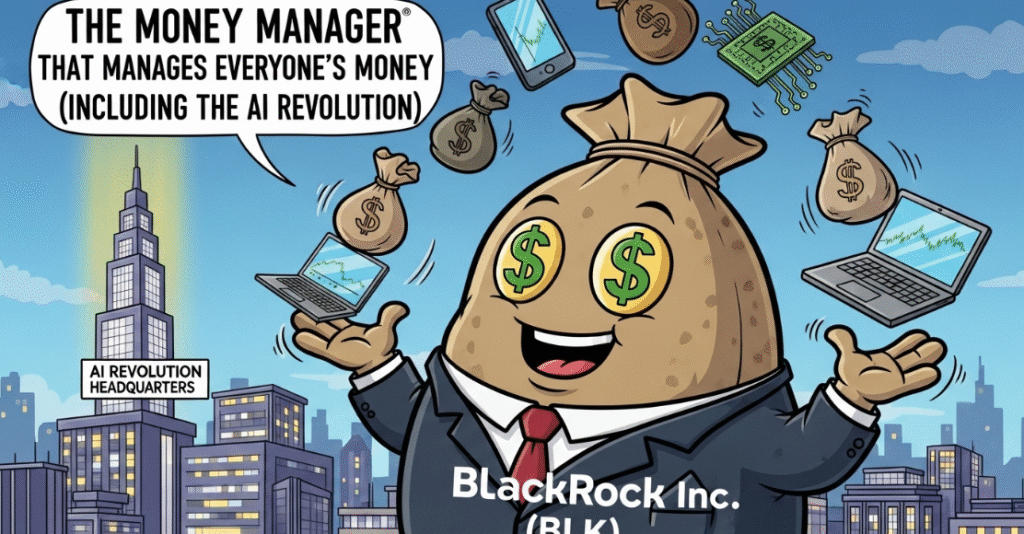
  • BlackRock Inc (BLK): The Money Manager That Manages Everyone’s Money (Including the AI Revolution)

    BlackRock Inc (BLK): The Money Manager That Manages Everyone’s Money (Including the AI Revolution)

    Stock Symbol: BLK | Current Price: ~$900 (September 2025) | Target Price: $1,150+ | Timeframe: 12-18 months

    Not Financial Advise

    BlackRock has quietly evolved from “that big asset management company” to “the company that literally owns everything and is now teaching AI to invest better than humans.” With assets under management reaching a staggering $12.5 trillion in Q2 2025, BlackRock doesn’t just participate in markets – it practically IS the market. The company’s recent $12 billion acquisition of HPS Investment Partners and AI-driven transformation prove that when you manage more money than most countries’ GDP, you can afford to bet big on the future. It’s like being the world’s largest casino, except instead of gambling, you’re professionally investing everyone else’s retirement funds while using artificial intelligence to make sure the house always wins (responsibly, of course).

    The $12.5 Trillion Empire: Size Matters in Asset Management

    BlackRock reported a record $12.5 trillion in assets under management and achieved 6% organic base fee growth, marking the fourth consecutive quarter of at least 5% growth, proving that when people have money to invest, they apparently prefer giving it to the company that already manages everyone else’s money. It’s the financial equivalent of everyone wanting to sit at the popular kid’s lunch table, except the popular kid is a multinational corporation with AI Labs.

    The company recorded $68 billion in net inflows, with $116 billion excluding low-fee institutional index redemptions, which in normal terms means people keep giving BlackRock more money to manage even faster than other people are taking money away. The mathematics of compound growth suggest that BlackRock might eventually manage all the money in the world, which would certainly simplify portfolio allocation decisions.

    Assets under management grew $2.4 trillion or 26% over the last 12 months, with clients entrusting BlackRock with $456 billion of net assets, including a record $221 billion in the third quarter alone. When your quarterly fundraising exceeds the GDP of most nations, you’ve achieved what economists call “really, really big” status in technical terms.

    AI Labs: Teaching Robots to Beat Warren Buffett

    BlackRock AI Labs represents the heart of AI innovation at BlackRock, because apparently the company decided that managing $12.5 trillion manually was becoming inefficient. The integration of artificial intelligence and generative AI across portfolio management, client service, risk management, and operational infrastructure transforms BlackRock from traditional asset manager into AI-powered investment platform.

    The company’s 2025 Thematic Outlook estimates up to $15.4 trillion for the total annual value of AI and analytics across industries, which conveniently happens to be slightly more than BlackRock’s current assets under management. This suggests either remarkable foresight or the confidence that comes from having enough money to buy entire industries if the AI predictions prove accurate.

    AI-driven investment strategies create competitive advantages that scale with assets under management, because when your AI algorithms can analyze more data than human competitors can even access, you’re not just using better technology – you’re playing a different game entirely. It’s like bringing calculators to an abacus competition, except the calculators are supercomputers and the abacus users are traditional fund managers.

    Strategic Acquisitions: Buying the Future
    BlackRock’s recent acquisition of HPS Investment Partners for $12 billion demonstrates the company’s commitment to expanding beyond traditional asset management into private credit and alternative investments. The deal further solidifies BlackRock’s position in private markets, which represent key growth areas as institutional investors seek yield and diversification beyond public markets.

    The $12.5 billion acquisition of Global Infrastructure Partners (GIP), finalized in October 2024, instantly made BlackRock a world-leading infrastructure private markets manager, providing not only deep investment expertise but also direct operational control and proprietary data from infrastructure assets worldwide. It’s like buying the companies that build and operate the roads, bridges, and utilities that support the economy, then using that insider knowledge to make better investment decisions.

    These strategic acquisitions create synergies across BlackRock’s platform while providing access to asset classes that generate higher fees and stronger client relationships. When you can offer everything from index funds to private infrastructure investments, client retention becomes significantly easier because switching costs approach the complexity of changing religions.

    The ETF Empire: Making Indexing Sexy

    BlackRock’s iShares division continues dominating the ETF market, benefiting from the ongoing shift from active management to passive indexing strategies. The company’s thematic ETFs covering AI, geopolitics, and emerging technologies position BlackRock to capture investment flows as these trends reshape global markets.

    The beauty of ETF dominance is that BlackRock profits regardless of market direction, earning management fees whether investors are buying growth stocks, defensive positions, or hedging strategies. It’s like owning the casino, the hotel, and the restaurant in Las Vegas – you win whether people are gambling, sleeping, or eating.

    ETF innovation allows BlackRock to package investment themes into tradeable securities, essentially turning complex investment strategies into consumer products that retail investors can buy through their brokerage accounts. The democratization of sophisticated investment strategies creates massive addressable markets while maintaining premium pricing for expertise.

    Technology Integration: The Aladdin Advantage

    BlackRock’s Aladdin risk management platform processes over $30 trillion in assets globally, serving not only BlackRock’s own funds but also external institutional clients who license the technology. The platform combines risk analytics, portfolio management, and trading execution into comprehensive investment infrastructure that competitors struggle to replicate.

    The integration of AI capabilities into Aladdin creates network effects where improved performance attracts more clients, generating more data that enhances AI algorithms, which improves performance and attracts additional clients. It’s the rare business model where success literally makes future success more likely, which economists call a “virtuous cycle” and investors call “beautiful.”

    Aladdin’s external licensing revenue provides diversification from traditional asset management fees while establishing BlackRock as essential infrastructure for institutional investment management. When your competitors pay you to use your technology platform, you’ve achieved what strategists call “winning the game while collecting rent from other players.”

    Investment Outlook: Following the Smart Money

    The investment case for BlackRock combines defensive characteristics with growth opportunities as the company benefits from multiple secular trends simultaneously. Rising asset values increase management fees, net inflows drive organic growth, acquisitions expand addressable markets, and AI integration improves operational efficiency.

    Key risks include market corrections that reduce assets under management, competitive pressure from low-cost providers, regulatory scrutiny of market concentration, and execution challenges from rapid technological change. However, BlackRock’s diversification across asset classes, geographic markets, and client segments provides resilience against individual risk factors.

    The company’s financial strength and strategic positioning create multiple pathways to continued growth as global wealth accumulation drives demand for investment management services. BlackRock’s comprehensive platform approach ensures the company captures value regardless of which specific investment strategies become popular.

    Price Target: Betting on the House

    Based on BlackRock’s market dominance, successful AI integration, strategic acquisition execution, and expanding alternative investment capabilities, the company presents a compelling investment opportunity with a 12-18 month price target of $1,150+ per share. This reflects both multiple expansion as markets recognize the AI transformation and fundamental growth from continued asset gathering and fee expansion.

    Key catalysts include continued net inflow growth, successful integration of recent acquisitions, AI-driven performance improvements, expansion in private markets, and potential dividend increases supported by strong cash generation. BlackRock has successfully evolved from traditional asset manager to comprehensive financial technology platform, creating sustainable competitive advantages in an increasingly AI-driven investment landscape.

    For investors seeking exposure to the professional money management industry through the company that essentially IS the industry, BlackRock represents the ultimate “own the casino” investment strategy. They’ve transformed from managing money to managing the systems that manage money, which is the kind of meta-business model that tends to compound wealth very efficiently over time.


    Disclaimer: This analysis contains references to owning casinos and should not be considered personalized investment advice. Past performance does not guarantee future results, though BlackRock’s track record suggests they’re remarkably good at this whole “managing other people’s money” business. Consult with a qualified financial advisor who hopefully understands both artificial intelligence and the concept of assets under management.

    Last Updated: September 2025
    Next Review: December 2025

  • Anthropic IPO Case Study: The AI Company That Actually Claims “I am an Honest ai”

    Anthropic IPO Case Study: The AI Company That Actually Claims “I am an Honest ai”

    Company: Anthropic
    Ticker Symbol: TBD (Maybe CLDE? NICE? HLPFL?)
    Sector: Artificial Intelligence / “Making Robots That Won’t Lie to Your Face”

    The Pitch

    While other AI companies are busy promising to replace your job, your therapist, and your grandmother, Anthropic has taken the radical approach of building AI that admits when it’s confused. In a world where ChatGPT will confidently tell you that Napoleon invented the hamburger, Claude politely says “I’m not sure about that” and suggests you double-check.

    This refreshing honesty could be either their greatest strength or their biggest weakness in a market that loves overconfident AI pronouncements.

    Why 2026 Could Be Their Year

    The AI hype bubble is showing signs of fatigue. Investors are starting to ask uncomfortable questions like “Does this actually work?” and “Why did our AI chatbot just try to sell insurance to our refrigerator?” Anthropic’s focus on safety and reliability might suddenly look less boring and more profitable.

    Plus, they’ve got that sweet, sweet enterprise money rolling in from companies that are tired of explaining to their legal departments why their AI keeps making up facts about contract law.

    The Bull Case

    Constitutional AI sounds way cooler than it actually is, but it works. While competitors are playing AI roulette, Anthropic is building the Volvo of artificial intelligence. Not the flashiest, but you probably won’t die using it.

    Their partnership deals suggest they’re the AI company that big corporations trust with their actual important stuff, not just generating marketing copy about synergy and disruption.

    The Bear Case

    Being the “responsible AI company” is like being the designated driver at a party where everyone else is doing shots and having way more fun. Sure, you’ll get home safely, but will anyone want to hang out with you?

    The market might decide that boring, reliable AI is for losers, and continue throwing money at whoever promises to achieve artificial general intelligence by next Tuesday.

    The Verdict

    If 2026 is the year the AI market grows up and starts caring about things like “accuracy” and “not hallucinating legal advice,” Anthropic could be sitting pretty. If it’s another year of AI hysteria and moon-shot promises, they might be the smart kid who peaked too early.

    Either way, they’ll probably handle the whole thing with more grace than most Silicon Valley companies, which is refreshing in its own right.

    Disclaimer: This is not financial advice. We just think it’s funny that there’s an AI company that actually admits uncertainty exists.

  • SpaceX IPO: Literally Shooting for the Moon (And Your Portfolio)

    SpaceX IPO: Literally Shooting for the Moon (And Your Portfolio)

    Expected IPO: 2025-2026 | Estimated Valuation: $350+ Billion | Target Entry: Day One

    NOT FINANCIAL ADVISE

    SpaceX represents the most anticipated IPO since Facebook decided to monetize your personal life, except this time instead of selling your data, they’re selling rocket rides to Mars. With over $13 billion in annual revenue and a $350 billion valuation, Elon Musk’s space venture has transformed from “billionaire’s expensive hobby” to “the company that makes NASA look like they’re using public transportation.” The potential Starlink spinoff serves 4.5 million customers who apparently prefer their internet beamed down from space rather than crawled through underground cables, because honestly, everything sounds cooler when satellites are involved. It’s like investing in the company that’s simultaneously fixing rural broadband and planning humanity’s backup planet, which is peak Elon efficiency.

    Starlink has evolved from “crazy idea involving thousands of satellites” to “legitimate business serving 4.5 million customers globally,” proving that sometimes the most ridiculous-sounding plans actually work. The satellite internet constellation currently generates a growing share of SpaceX’s $13+ billion annual revenue while expanding into emerging markets where terrestrial internet is about as reliable as weather forecasts.

    The beauty of Starlink is that it solved the “last mile” problem by eliminating the last 340 miles entirely. Instead of running cables to remote locations, they just launched an entire internet infrastructure into orbit. It’s like deciding that instead of building roads to your house, you’ll just use helicopters for everything, except the helicopters are autonomous and there are thousands of them.

    Average revenue per user growth and expanding market penetration create recurring revenue streams that don’t depend on convincing people to buy $100,000 rockets. The subscription model generates predictable cash flows while the satellite constellation becomes more valuable with each additional user, creating network effects that would make social media companies jealous.

    Launch Services: The Uber of Space Transportation

    SpaceX completed over 138 successful launches in 2024, making space access so routine that rocket launches have become less “historic achievement” and more “Tuesday afternoon logistics.” The company’s reusable Falcon 9 system has dramatically reduced launch costs while increasing frequency, turning space transportation from exclusive government program into competitive commercial service.

    The rocket reusability breakthrough represents one of the most significant cost innovations in aerospace history. Instead of throwing away entire rocket systems after single use, SpaceX figured out how to land them back on Earth and use them again. It’s like the airline industry discovering they could reuse planes instead of building new ones for every flight, except it took rocket scientists to figure this out.

    Government contracts from NASA and the Department of Defense provide stable revenue foundations while commercial satellite deployments create growth opportunities as the space economy expands. The combination of proven reliability and cost efficiency positions SpaceX as the dominant launch provider in an increasingly crowded market.

    Starship: The Mars Express (Eventually)

    Starship represents SpaceX’s long-term vision transformed into massive stainless steel reality, designed to carry cargo and passengers to the Moon, Mars, and presumably wherever else humans decide needs visiting. The fully reusable heavy-lift vehicle is contracted for future Artemis missions, making SpaceX NASA’s preferred partner for returning to the Moon and eventually establishing permanent lunar presence.

    The development timeline follows typical SpaceX patterns of “wildly optimistic initial estimates followed by impressive eventual delivery.” Starship orbital test flights, refueling demonstrations, and successful payload deployments will serve as key milestones that either validate the interplanetary transportation business model or provide expensive lessons in rocket development.

    Beyond government contracts, Starship creates opportunities in space mining, lunar tourism, and Mars colonization services, because apparently SpaceX’s business plan includes literally every science fiction concept except time travel. The vehicle’s massive payload capacity enables entirely new space-based industries while supporting SpaceX’s ultimate goal of making humanity a multi-planetary species.

    Investment Opportunity: The Final Frontier Portfolio

    The SpaceX IPO represents exposure to multiple high-growth markets simultaneously: satellite internet, commercial space transportation, government aerospace contracts, and speculative interplanetary development. It’s like buying stock in the company that’s simultaneously Amazon Prime for space, AT&T for rural areas, and the transportation department for future Mars colonies.

    The company’s technological advantages create competitive moats that are literally rocket science to replicate. The combination of reusable launch systems, operational satellite constellations, and proven customer relationships establishes barriers to entry that require billions of dollars and years of development to overcome.

    SpaceX’s position as both launch provider and satellite operator creates vertical integration advantages while serving as platform for other space-based services. The company benefits from the entire space economy expansion rather than dependence on specific applications or customer segments.

    Risk Assessment: What Could Go Wrong in Space

    Regulatory hurdles represent significant risks as SpaceX operates across multiple highly regulated industries including defense, telecommunications, and aerospace. Export restrictions, spectrum allocation disputes, and environmental reviews could delay expansion plans or limit market access, because apparently even space exploration requires paperwork.

    Competition is intensifying as Amazon’s Project Kuiper prepares to launch thousands of satellites, Blue Origin develops competing launch systems, and traditional aerospace companies invest heavily in reusable technologies. The space economy’s attractiveness inevitably draws well-funded competitors seeking market share in growing industries.

    Technical risks inherent in rocket development could impact investor confidence and operational timelines. Launch failures, Starship development delays, or satellite constellation malfunctions could create volatility while the company scales operations and develops next-generation technologies.

    The IPO Catalyst: Timing and Valuation

    Market speculation suggests SpaceX could pursue IPO or Starlink spinoff by 2025-2026, depending on market conditions and capital requirements for Mars development programs. The December 2024 valuation of $350 billion provides baseline expectations while continued revenue growth and milestone achievements could drive premium pricing.

    The IPO structure remains uncertain, with potential Starlink spinoff allowing investors direct exposure to satellite internet growth while maintaining SpaceX’s private status for Mars development activities. Either approach creates investment opportunities in proven space-based revenue streams with speculative upside from interplanetary ambitions.

    Key catalysts include successful Starship orbital flights, Starlink profitability milestones, major government contract wins, and favorable regulatory developments. The convergence of these factors could create optimal IPO timing while maximizing investor interest and valuation multiples.

    Investment Strategy: Ground Control to Major Gains

    For investors seeking exposure to the space economy through the industry’s dominant player, SpaceX represents the ultimate “shoot for the stars” investment opportunity. The company combines proven business fundamentals with transformative technology development and visionary leadership that has consistently delivered on seemingly impossible promises.

    The recommendation is aggressive accumulation on IPO day with long-term holding strategy, because betting against Elon Musk’s ability to turn science fiction into profitable reality has historically been expensive mistake. Position sizing should reflect both the exceptional growth potential and inherent volatility of investing in companies that literally rocket science their way to success.

    SpaceX has successfully evolved from startup with Mars dreams to comprehensive space services company with Mars plans, creating multiple pathways to exponential value creation as the space economy expands from government programs to commercial necessity. It’s the investment opportunity where your returns could literally be astronomical.


    Disclaimer: This analysis contains references to Mars colonization and should not be considered personalized investment advice. Past performance does not guarantee future results, though SpaceX’s track record suggests they’re remarkably good at making impossible things look inevitable. Consult with a qualified financial advisor who hopefully understands both rocket science and investment risk management.

    Expected IPO Date: 2025-2026
    Next Review: Upon IPO announcement

  • Tesla Inc (TSLA): From Electric Cars to Electric Dreams (With Robots)

    Tesla Inc (TSLA): From Electric Cars to Electric Dreams (With Robots)

    Stock Symbol: TSLA | Current Price: ~$250 (September 2025) | Target Price: $350+ | Timeframe: 12-18 months

    NOT FINANCIAL ADVISE

    Tesla has officially graduated from “that electric car company” to “that AI company that also happens to make cars, robots, and energy storage systems while occasionally launching things into space.” With Q2 2025 revenue hitting $22.5 billion and the commercial rollout of robotaxi service in Austin, Tesla is proving that Elon Musk’s seemingly impossible promises might actually be… well, still impossible, but getting closer to reality. The company delivered 384,000 vehicles while simultaneously working on producing 100,000 humanoid robots per month within 16 months, because apparently making cars wasn’t complicated enough. It’s like watching someone juggle flaming torches while riding a unicycle on a tightrope, except the torches are autonomous vehicles and the tightrope is the future of transportation.

    The Robotaxi Reality: From Concept Car to Cash Cow

    Tesla’s robotaxi service has officially launched commercial operations in Austin, marking the transition from “Elon said it would happen” to “it’s actually happening.” The company is targeting to reach half the US population with robotaxi service by year-end, which is either incredibly ambitious or incredibly Elon, depending on your perspective.

    Musk announced plans to produce 2 million Cybercabs annually and launch driverless ride-hailing services in Tesla vehicles as early as 2025 in Texas and likely California. The company has developed a ride-hailing app that some employees in California have been testing, proving that Tesla can build software that doesn’t require a steering wheel, which is more progress than most people expected.

    The robotaxi business represents Tesla’s evolution from hardware manufacturer to service provider, creating recurring revenue streams that don’t depend on convincing people to buy $50,000+ vehicles. It’s like evolving from selling CD players to running Spotify, except instead of music, it’s transportation, and instead of monthly subscriptions, it’s per-ride revenue that compounds as the fleet grows.

    Financial Performance: The Roller Coaster Continues

    Tesla’s Q2 2025 results tell the story of a company in transition, with total revenue of $22.5 billion and earnings of $0.33 per share (non-GAAP $0.40). Automotive revenue increased 19% sequentially to $16.7 billion, while deliveries improved 14% year-over-year, proving that people still want to buy Tesla cars even when the CEO is promising to replace them with robots.

    The energy storage business achieved its highest gross profit ever while deploying 9.6 GWh of energy storage systems, because apparently Tesla decided that just revolutionizing transportation wasn’t enough – they also needed to fix the electrical grid. Sequential cost increases of $300 million due to tariffs created headwinds, but Tesla’s automotive gross margin improvements suggest the company is learning to navigate political reality while maintaining profitability.

    Regulatory credit revenue declined from $890 million in Q2 2024 to $439 million in Q2 2025, which sounds concerning until you realize Tesla is transitioning from selling permission to pollute to selling actual autonomous transportation services. It’s like a drug dealer going legitimate and opening a pharmacy – less immediate cash, but infinitely more scalable business model.

    Full Self-Driving: The $10,000 Bet That Might Actually Pay Off

    Tesla’s FSD (Full Self-Driving) adoption rates continue increasing, with the company planning customer build releases in Q3 2025 and FSD Unsupervised launching in select cities. After years of “next quarter” promises, FSD is finally approaching the “actually works most of the time” threshold, which in the autonomous vehicle world counts as a major breakthrough.

    The potential for FSD price increases reflects growing confidence in the technology’s capability and market acceptance. When your software can potentially generate thousands of dollars per month in robotaxi revenue, charging $10,000+ for the capability starts looking like a bargain rather than highway robbery.

    Tesla’s approach to FSD development emphasizes real-world data collection from millions of vehicles, creating competitive advantages that traditional automakers can’t easily replicate. While competitors build test fleets of hundreds of vehicles, Tesla collects autonomous driving data from over 5 million vehicles worldwide, turning every Tesla owner into an unpaid AI trainer.

    The Robot Revolution: Optimus Prime Time

    Tesla’s announcement of plans to produce 100,000 humanoid robots per month within 16 months represents either the most ambitious manufacturing target in history or Elon Musk’s most optimistic timeline estimate yet. The Optimus robot project transforms Tesla from automotive company to general-purpose AI robotics manufacturer, targeting applications across manufacturing, logistics, and service industries.

    The robotics opportunity dwarfs the automotive market, with potential applications in every industry that currently relies on human labor. If Tesla can successfully mass-produce capable humanoid robots, the addressable market expands from the millions of people who buy cars to the billions of jobs that robots could potentially perform.

    The integration of Tesla’s AI development, manufacturing expertise, and energy systems creates a comprehensive robotics platform that leverages all of the company’s core competencies. It’s like Tesla accidentally built all the components necessary for the robot revolution while trying to make better cars, which is peak accidental genius.

    Investment Reality Check: Promises vs. Performance

    Tesla’s biggest risk remains execution against increasingly ambitious timelines and targets. The company’s history of missing production deadlines while eventually delivering revolutionary products creates both skepticism and anticipation among investors. Betting on Tesla requires faith that eventually the reality will catch up to the promises, even if it takes longer than expected.

    Competition in electric vehicles continues intensifying, with traditional automakers and new entrants launching compelling alternatives. Tesla’s response strategy emphasizes technological differentiation through FSD, robotaxi services, and integrated energy solutions rather than competing solely on vehicle specifications and pricing.

    Regulatory approval for robotaxi services across multiple jurisdictions represents a significant execution risk, as government agencies move considerably slower than Elon Musk’s timelines. The company’s success depends on navigating complex regulatory environments while maintaining technological leadership and operational execution.

    The Energy Wild Card: Batteries and Grid Storage

    Tesla’s energy business achieved record deployments and highest gross profit margins, demonstrating that the company’s battery expertise creates value beyond automotive applications. The integration of vehicle manufacturing, energy storage, and autonomous services creates synergies that competitors struggle to replicate.

    The global transition to renewable energy creates massive demand for grid-scale energy storage systems, positioning Tesla’s energy business for sustained growth independent of automotive market conditions. It’s like having a successful side business that happens to be essential for the future of civilization, which is a pretty good hedge against automotive industry volatility.

    Price Target: Betting on the Future

    Based on Tesla’s robotaxi commercialization, FSD progress, and expanding addressable markets through robotics and energy storage, the company presents a compelling if volatile investment opportunity with a 12-18 month price target of $350+ per share. This reflects both multiple expansion as markets recognize the transformation and fundamental growth from new revenue streams.

    Key catalysts include robotaxi service expansion beyond Austin, FSD Unsupervised launch in additional cities, Optimus robot production milestones, and continued energy business growth. Tesla has successfully evolved from electric vehicle manufacturer to comprehensive AI and robotics company, creating multiple pathways to exponential value creation.

    For investors seeking exposure to the autonomous vehicle revolution, AI robotics, and sustainable energy transition through a company with proven ability to turn science fiction into profitable reality, Tesla represents the ultimate high-risk, high-reward technology bet. They’ve transformed from making cars that don’t need gas to making cars that don’t need drivers, and apparently that’s just the warm-up act.


    Disclaimer: This analysis contains references to robot revolutions and should not be considered personalized investment advice. Past performance does not guarantee future results, though Tesla’s track record suggests they’re remarkably good at making impossible things seem inevitable. Consult with a qualified financial advisor who hopefully understands both artificial intelligence and Elon Musk’s relationship with timelines.

    Last Updated: September 2025
    Next Review: December 2025

  • Microsoft Corporation (MSFT): The Office Hero That Became an AI Superhero

    Microsoft Corporation (MSFT): The Office Hero That Became an AI Superhero

    Stock Symbol: MSFT | Current Price: ~$415 (September 2025) | Target Price: $520+ | Timeframe: 12-18 months

    NOT FINANCIAL ADVISE

    Remember when Microsoft was that company everyone made fun of for Internet Explorer and Clippy? Plot twist: they’re now the AI kingmaker that turned everyone’s boring office suite into a productivity superpower. With Q2 2025 revenue hitting $69.6 billion (up 12% year-over-year) and AI services growing 157% annually, Microsoft has successfully transformed from “have you tried turning it off and on again?” to “let AI do that for you.” Nearly 70% of Fortune 500 companies use Microsoft 365 Copilot, Azure surpassed $75 billion in annual revenue, and somehow Satya Nadella convinced the world that paying $30 extra per month for an AI assistant to write emails is not just reasonable but essential. It’s like watching your reliable but boring friend suddenly become the coolest person at the party.

    The $13 Billion OpenAI Friendship That Pays Off

    Microsoft’s $13 billion investment in OpenAI represents either the smartest partnership in tech history or the world’s most expensive friendship, and honestly, both can be true. The OpenAI partnership remains in place through 2030, with Microsoft maintaining access to OpenAI’s intellectual property, which is basically like having exclusive rights to the smart kid’s homework for the next five years.

    The strategic partnership has evolved beyond simple investment into deep integration across Microsoft’s entire product stack. Azure OpenAI services power everything from Copilot to custom enterprise applications, creating a comprehensive AI platform that competitors are struggling to match. It’s like Microsoft bought the future and then figured out how to rent it to everyone else at premium prices.

    Microsoft’s recent introduction of MAI-1-preview, their proprietary AI model, shows they’re not putting all their eggs in the OpenAI basket. Testing their own AI model while maintaining the OpenAI partnership is the business equivalent of dating someone while keeping your options open, except in this case, both relationships seem to be working out beautifully.

    Copilot: The AI Assistant Everyone Actually Uses

    Microsoft 365 Copilot adoption is accelerating faster than any other new Microsoft 365 suite, with nearly 70% of Fortune 500 companies now using it. This isn’t just corporate window dressing – businesses are reporting up to 353% ROI from Copilot implementation, which means companies are making $3.53 for every dollar they spend on AI-powered procrastination tools.

    The beauty of Copilot is that it turned everyone into a productivity expert without requiring actual productivity expertise. Need to write a professional email? Copilot’s got it. Want to analyze a spreadsheet without crying? Copilot to the rescue. It’s like having an incredibly competent intern who never needs coffee breaks and doesn’t judge your questionable formatting choices.

    Microsoft 365 Commercial cloud revenue increased 15% partly driven by premium E5 subscriptions and Copilot features, proving that when you make people’s work lives easier, they’re surprisingly willing to pay for the privilege. Copilot usage reportedly tripled year-over-year, which suggests people either love AI assistance or really hate doing their own work.

    Azure: The Cloud That Conquered the World

    Azure surpassed $75 billion in annual revenue, up 34%, making it one of the fastest-growing large-scale businesses in technology history. Azure and other cloud services revenue grew 33% in constant currency, with healthy consumption trends that suggest enterprises are not just trying Azure but actually using it for important things.

    The AI boom is transforming Azure from generic cloud infrastructure into specialized AI computing platform. The number of Azure OpenAI apps running on Azure databases and app services more than doubled year-over-year, creating a virtuous cycle where AI applications drive demand for supporting services. It’s like selling someone a car and then discovering they also need gas, insurance, and a place to park it.

    Azure’s integration with OpenAI services creates competitive advantages that are extremely difficult for competitors to replicate. When your cloud platform comes with exclusive access to the world’s most advanced AI models, selling cloud services becomes less about price competition and more about AI capabilities, which is a much more profitable conversation to have with customers.

    The Enterprise AI Revolution (With PowerPoint)

    Microsoft’s enterprise AI strategy extends far beyond flashy chatbots into practical business applications that actually matter. Microsoft Fabric, their data analytics platform, continues gaining momentum with revenue up 55% year-over-year and over 25,000 customers, making it the fastest-growing database product in company history.

    The integration of AI across Microsoft’s productivity suite creates network effects that increase customer stickiness while justifying premium pricing. When Copilot helps write documents in Word, analyze data in Excel, create presentations in PowerPoint, and manage meetings in Teams, switching to competitive products becomes exponentially more difficult and expensive.

    Microsoft’s approach to AI emphasizes practical business value over technological showing off. Instead of building AI for the sake of AI, they’ve focused on solving actual workplace problems like “how do I make this spreadsheet less terrible?” and “can someone else write this email for me?” It turns out these are billion-dollar problems when you solve them at enterprise scale.

    Investment Reality Check: What Could Go Wrong

    Microsoft’s biggest risk might be the complexity of managing multiple AI relationships while building proprietary capabilities. The OpenAI partnership, while profitable, creates dependence on external technology for core competitive advantages. Developing MAI-1 and other proprietary models reduces this risk but requires significant additional investment.

    Competition in cloud services remains intense, with Amazon and Google making substantial investments in AI capabilities. Azure’s 33% growth rate, while impressive, requires continued innovation and competitive pricing to maintain market share against well-funded rivals who also have their own AI strategies.

    Regulatory scrutiny of Microsoft’s market power continues to intensify, particularly as AI integration strengthens the company’s competitive position across multiple markets. The combination of dominant productivity software, growing cloud market share, and exclusive AI partnerships creates antitrust concerns that could limit future strategic options.

    Financial Outlook: The Numbers Don’t Lie

    Q2 2025 revenue reached $69.6 billion with 12% year-over-year growth, demonstrating Microsoft’s ability to maintain growth momentum at unprecedented scale. AI services growing 157% annually indicates that the AI transformation is translating into measurable financial results rather than just marketing promises.

    Microsoft Cloud gross margin percentage of roughly 70% provides substantial profitability even while investing heavily in AI infrastructure. The company’s ability to maintain high margins while scaling AI capabilities suggests effective cost management and strong customer demand for AI-enhanced services.

    Capital expenditures continue increasing to support cloud and AI demand, but the investments are generating measurable returns through higher revenue growth and improved customer retention. It’s like spending money on a gym membership and actually getting in better shape, except the gym is artificial intelligence and the better shape is exponential business growth.

    Price Target: Betting on the AI Office

    Based on Microsoft’s comprehensive AI integration, Azure dominance, and enterprise market penetration, the company presents a compelling investment opportunity with a 12-18 month price target of $520+ per share. This reflects both fundamental growth driven by AI adoption and multiple expansion as investors recognize the sustainability of Microsoft’s competitive advantages.

    Key catalysts include continued Copilot adoption acceleration, Azure growth maintenance above 30%, successful monetization of proprietary AI models, and expansion of AI capabilities across the entire product portfolio. Microsoft has successfully evolved from productivity software company to AI platform provider, creating multiple revenue streams that compound rather than compete.

    For investors seeking exposure to the AI revolution through a company with proven execution capability, diversified revenue streams, and comprehensive market coverage, Microsoft represents the ultimate “AI for grown-ups” investment. They’ve taken the complexity out of enterprise AI adoption while taking the profits out of enterprise AI spending, which is exactly what you want from a technology investment.


    Disclaimer: This analysis contains references to Clippy and should not be considered personalized investment advice. Past performance does not guarantee future results, though Microsoft’s track record suggests they’ve figured out how to make boring enterprise software surprisingly profitable. Consult with a qualified financial advisor who hopefully understands both AI and PowerPoint.

    Last Updated: September 2025
    Next Review: December 2025

  • Amazon Inc (AMZN): From Package Delivery to AI Delivery (With Same-Day Shipping)

    Amazon Inc (AMZN): From Package Delivery to AI Delivery (With Same-Day Shipping)

    Stock Symbol: AMZN | Current Price: ~$185 (September 2025) | Target Price: $240+ | Timeframe: 12-18 months

    Amazon has quietly evolved from “that company that delivers everything in two days” to “that company that might deliver artificial general intelligence before your neighbor gets his Prime package.” With Q2 2025 net sales hitting $167.7 billion (up 13% year-over-year) and an $8 billion investment in Anthropic’s Claude AI, Amazon is proving that when you already own the internet’s logistics, adding AI to the mix is just another Tuesday. AWS revenue grew 18% while everyone worried it was losing steam, and somehow Jeff Bezos’s old company is now positioned to be the backbone of the AI revolution. It’s like they went from selling books to potentially writing the future, which honestly tracks with their usual overachieving tendencies.

    The Anthropic Bet: When $8 Billion Feels Like Pocket Change

    Amazon’s $8 billion total investment in Anthropic represents either the smartest AI bet in Silicon Valley or the world’s most expensive tech crush. Amazon’s total investment in Anthropic has reached $8 billion, bringing the AI startup to a $61.5 billion valuation and making Amazon the cool parent who lets the smart kid use their basement to build rockets.

    The strategic collaboration goes deeper than just writing checks. Anthropic selects AWS as its primary cloud provider and will train and deploy its future foundation models on AWS Trainium and Inferentia chips, which is tech speak for “we’re building the AI future together, and Amazon gets to provide the electricity.” It’s like being the landlord for the next industrial revolution, except instead of coal and steel, it’s algorithms and tokens.

    Anthropic is working closely with Annapurna Labs at AWS on developing future generations of Trainium accelerators, proving that Amazon’s hardware team isn’t just for Kindle readers anymore. When your AI investment is also your biggest customer and your hardware development partner, you’ve basically created a vertically integrated AI money machine.

    AWS: Still the Cloud King (Despite What the Competitors Say)

    AWS grew revenue by 18% year-over-year, which might not sound earth-shattering until you remember they’re doing this at a $100+ billion annual run rate. It’s like being surprised that a freight train is only going 60 mph when you forgot it weighs 10,000 tons. Amazon Web Services continues to lead the cloud infrastructure market despite facing steeper competition from Microsoft Azure and Google Cloud, proving that sometimes being first and biggest has its advantages.

    The AI boom is transforming AWS from a generic cloud provider into specialized AI infrastructure. Amazon continues to invest in infrastructure to run artificial intelligence models from Anthropic and other clients, turning AWS data centers into AI training camps for the robot apocalypse (but the friendly, productive kind of robot apocalypse).

    AWS’s custom Trainium and Inferentia chips represent Amazon’s answer to NVIDIA’s dominance in AI hardware, because apparently even Amazon got tired of paying premium prices for other people’s silicon. When you’re training models that cost millions of dollars to develop, saving 20% on compute costs isn’t just nice – it’s the difference between profitability and bankruptcy.

    The Everything Store Meets the Everything AI

    Amazon’s Q3 2025 revenue guidance of $174-179.5 billion implies 10-13% year-over-year growth, which for a company this size is like watching a blue whale do gymnastics – theoretically impossible but somehow happening anyway. The retail business continues generating the cash flow that funds the AI experiments, proving that selling people stuff they don’t need is still an excellent way to finance the future.

    The integration of AI across Amazon’s ecosystem creates competitive advantages that competitors can’t easily replicate. When your AI can optimize supply chains, predict customer demand, improve search results, and automate customer service while learning from billions of transactions, you’re not just using AI – you’re building AI that prints money.

    Amazon’s advertising business, often overlooked in the AWS and retail discussion, benefits enormously from AI improvements in targeting and optimization. It’s like having a personal shopper who knows what you want before you do, except the personal shopper is an algorithm and it’s really good at convincing you to buy things.

    The Logistics of Intelligence

    Amazon’s most underappreciated advantage might be their world-class logistics network, which turns out to be surprisingly useful for AI deployment. When you can physically deliver computing power to enterprises faster than competitors can spin up virtual instances, you’re playing a different game entirely.

    The company’s investment in robotics and automation for warehouses doubles as R&D for general AI applications. Every robot that learns to sort packages more efficiently is training on problems that apply to manufacturing, healthcare, and service industries. It’s like Amazon accidentally became a robotics company while trying to deliver packages faster.

    Project Kuiper, Amazon’s satellite internet constellation, positions the company to deliver AI services to locations where terrestrial internet is inadequate. When your AI platform can work anywhere on Earth via satellite, you’ve basically created the infrastructure for ubiquitous artificial intelligence.

    The Reality Check: What Could Go Wrong

    Amazon’s biggest risk might be trying to do everything at once. The company is simultaneously competing in retail, cloud services, advertising, streaming media, smart home devices, space internet, and artificial intelligence. It’s like watching someone juggle chainsaws while riding a unicycle – impressive, but you worry about what happens if they drop something.

    Regulatory scrutiny continues to intensify as Amazon’s market power grows across multiple industries. Antitrust regulators are starting to notice that Amazon selling products, providing the infrastructure competitors use, and developing AI that optimizes everything might constitute unfair advantages. The challenge is proving you’re not too successful for your own good.

    Competition in cloud services remains fierce, with Microsoft and Google making significant gains. AWS’s 18% growth rate, while impressive at scale, trails competitors who are growing 25-30% by taking market share and expanding customer relationships.

    Investment Outlook: The Everything Investment

    Amazon represents perhaps the most diversified AI investment available, with exposure to cloud infrastructure, retail AI, advertising optimization, logistics automation, and frontier AI research through Anthropic. It’s like buying a mutual fund, except the mutual fund also delivers your groceries and might achieve artificial general intelligence.

    The company’s financial strength provides resilience against AI investment risks while maintaining upside exposure to breakthrough developments. Unlike pure-play AI companies with uncertain revenue models, Amazon has proven cash generation capabilities that fund expensive R&D while returning capital to shareholders.

    Key catalysts include continued AWS growth acceleration, successful monetization of AI capabilities across the retail platform, Anthropic breakthrough developments, and expansion of advertising revenue. The convergence of these opportunities creates multiple pathways to significant value creation.

    Price Target: Prime for Growth

    Based on Amazon’s comprehensive AI integration, AWS market leadership, and strategic Anthropic partnership, the company presents a compelling investment opportunity with a 12-18 month price target of $240+ per share. This reflects both multiple expansion as the market recognizes the AI transformation and fundamental growth across all business segments.

    Amazon has successfully evolved from “Earth’s Most Customer-Centric Company” to “Earth’s Most AI-Centric Company That Still Delivers Your Packages Really Fast.” For investors seeking exposure to the AI revolution through a company with proven execution capability, diversified revenue streams, and the infrastructure to support whatever comes next, Amazon represents the ultimate everything investment.

    The combination of immediate cash generation, long-term growth optionality, and comprehensive AI positioning makes Amazon the investment equivalent of having your cake, eating it too, and having it delivered same-day while an AI algorithm optimizes the frosting distribution.


    Disclaimer: This analysis contains references to robot apocalypses and should not be considered personalized investment advice. Past performance does not guarantee future results, though Amazon’s track record suggests they’re remarkably good at this whole “taking over the world one industry at a time” thing. Consult with a qualified financial advisor who hopefully understands both AI and supply chain logistics.

    Last Updated: September 2025
    Next Review: December 2025

  • Meta Platforms Inc (META): From Facebook Drama to AI Fashionista

    Meta Platforms Inc (META): From Facebook Drama to AI Fashionista

    Stock Symbol: META | Current Price: ~$575 (September 2025) | Target Price: $700+ | Timeframe: 12-18 months

    Remember when Meta was just Facebook and everyone’s biggest concern was their aunt’s political posts? Those simpler times are long gone. Meta has transformed from social media drama central into an AI powerhouse that somehow convinced people to wear computers on their faces and call it fashion. With Q2 2025 revenue hitting $47.5 billion (up 22% year-over-year) and Mark Zuckerberg promising to build “personal superintelligence for everyone,” Meta is proving that pivot stories don’t always end in disaster. Sure, Reality Labs is still burning $4.5 billion per quarter like a very expensive campfire, but those Ray-Ban smart glasses are actually selling, and the AI revolution is finally making the metaverse bet look less like science fiction and more like inevitable reality.

    The AI Makeover: When Zuckerberg Got Smart

    Meta’s AI transformation feels like watching your awkward high school classmate show up to the reunion as a successful entrepreneur. The company’s Llama 3.2 models have become the open-source darlings of the AI world, proving that sometimes giving away your best technology for free is actually brilliant strategy. It’s like the ultimate loss leader, except instead of selling milk cheap to get people into the grocery store, Meta is giving away AI models to get developers addicted to their ecosystem.

    The Ray-Ban Meta smart glasses represent perhaps the most successful consumer AI product nobody saw coming. Meta’s popular Ray-Ban Smart Glasses are getting new AI abilities that let it handle live translation, remind you where you parked, and more, turning everyday eyewear into your personal AI assistant. It’s like having Siri, but stylish enough that people won’t judge you for talking to yourself in public.

    Multimodal AI models capable of processing multiple different types of inputs like speech, text, and images have been transforming user experiences in the wearables space, and Meta has figured out how to cram this technology into glasses that don’t make you look like a cyborg. This is no small feat, considering Google Glass made everyone look like they were auditioning for a dystopian sci-fi movie.

    The Money Machine: AI-Powered Advertising Gold Rush

    Meta’s core business remains beautifully simple: show people content, collect their attention, sell that attention to advertisers. But now they’re doing it with AI superpowers. Second quarter 2025 revenue reached $47,516 million, up 22% from $39,071 million in the prior year, proving that the AI integration isn’t just fancy tech demo stuff – it’s actually making money.

    Meta Platforms’ AI-driven engagement boost, new features, and safety tools fuel ad revenue growth, which is corporate speak for “the robots figured out how to keep people scrolling longer and advertisers are paying premium prices for the privilege.” The company’s operating margin improved to 43%, because apparently when AI does the heavy lifting, profit margins get very happy.

    The advertising business is benefiting from AI in ways that would make Don Draper weep with joy. Better targeting, improved ad performance, and engagement metrics that suggest people are actually enjoying their social media experience again. It’s like Meta found the secret sauce for making advertising less annoying while making it more effective – a combination that has advertisers throwing money at them faster than they can count it.

    Reality Labs: The $4.5 Billion Science Experiment

    Let’s address the elephant in the room: Meta’s Reality Labs posts $4.53 billion loss in second quarter, continuing its impressive streak of burning money like it’s going out of style. But here’s the thing about expensive science experiments – sometimes they work out.

    The Ray-Ban collaboration has proven that people will wear smart glasses if they look normal and do useful things. Ray Ban Meta glasses will be able to record and send voice messages on WhatsApp and Messenger, get video help and suggest items and places when you’re out, turning everyday activities into seamlessly connected experiences. It’s like having a really helpful friend who never gets tired of answering your questions and never judges you for asking where you parked your car for the third time this week.

    The metaverse vision is slowly becoming less “Second Life with better graphics” and more “the next computing platform that happens to be spatial.” With AI making virtual interactions more natural and AR making digital overlays actually useful, Meta’s expensive bet is starting to look less like digital real estate speculation and more like infrastructure investment for the future of computing.

    The Llama Strategy: Give Away Ice Cream, Sell Freezers

    Meta’s decision to open-source their Llama models initially seemed like corporate charity or competitive desperation, but it’s actually brilliant strategy disguised as generosity. Llama 3 models will soon be available on AWS, Databricks, Google Cloud, Hugging Face, Kaggle, IBM WatsonX, Microsoft Azure, NVIDIA NIM, and Snowflake, creating an ecosystem where Meta’s AI becomes the foundation everyone else builds on.

    It’s the classic platform play: give away the foundation, profit from everything built on top. Developers using Llama models become invested in Meta’s AI ecosystem, enterprises get comfortable with Meta’s technology, and suddenly Meta isn’t just the social media company anymore – they’re essential AI infrastructure. It’s like becoming the roads that everyone else’s businesses depend on.

    The open-source approach also creates a massive competitive moat disguised as open collaboration. When thousands of developers are improving your models for free, and millions of applications depend on your platform, switching costs become astronomical even when the technology is theoretically “free.”

    Investment Outlook: The Transformation Payoff

    Meta’s stock represents one of the cleaner plays on the AI transformation of consumer technology. Unlike pure-play AI companies with uncertain business models, Meta has figured out how to monetize AI through their existing advertising machine while building new revenue streams through hardware and platform services.

    The company’s massive user base provides the data advantage necessary for AI development, their advertising business provides the cash flow to fund expensive R&D, and their platform reach ensures that successful AI products get distribution at unprecedented scale. It’s like having a money printing machine that funds a research laboratory that builds products for the world’s largest distribution network.

    Key risks include regulatory scrutiny (because apparently having billions of users makes governments nervous), competitive pressure from other AI platforms, and the ongoing Reality Labs money bonfire. But the combination of core business strength and emerging technology leadership creates multiple pathways to continued growth.

    Price Target: The Math on AI Fashion

    Based on Meta’s AI transformation success, advertising business strength, and emerging hardware opportunities, the company presents a compelling investment opportunity with a 12-18 month price target of $700+ per share. This reflects both multiple expansion as investors recognize the successful pivot and fundamental growth from AI monetization.

    Key catalysts include continued advertising revenue growth driven by AI improvements, Ray-Ban smart glasses sales acceleration, Reality Labs losses stabilization (or ideally reduction), and successful expansion of the Llama ecosystem. The convergence of these factors creates a pathway to significant value creation as Meta completes its transformation from social media company to comprehensive AI platform.

    Meta has successfully evolved from “move fast and break things” to “move fast and fix everything with AI,” and the financial results suggest investors are finally believing the transformation story. For investors seeking exposure to consumer AI adoption through a company with proven monetization capabilities and massive distribution advantages, Meta represents an attractive opportunity to benefit from the AI revolution with a side of fashionable smart glasses.


    Disclaimer: This analysis contains jokes about corporate pivots and should not be considered personalized investment advice. Past performance does not guarantee future results, though Meta’s track record suggests they’re remarkably good at making money from people’s attention spans. Consult with a qualified financial advisor who hopefully understands both AI and fashion trends.

    Last Updated: September 2025
    Next Review: December 2025

  • Alphabet Inc (GOOGL): The Search Giant That Learned to Think (And Count Money)

    Alphabet Inc (GOOGL): The Search Giant That Learned to Think (And Count Money)

    Stock Symbol: GOOGL | Current Price: ~$175 (September 2025) | Target Price: $230+ | Timeframe: 12-18 months

    Remember when Google just helped you find cat videos and settle dinner table arguments? Those days are adorably quaint. Today’s Alphabet has evolved into an AI powerhouse that processes 480 trillion tokens monthly while somehow making it look effortless. With AI Overviews reaching 1.5 billion users and Gemini 2.0 entering the “agentic era” (fancy talk for AI that actually gets stuff done), Google isn’t just organizing the world’s information anymore – it’s teaching machines to think about it too.

    The Gemini Takeover: When AI Gets Serious

    Google’s Gemini platform isn’t just another chatbot trying to sound smart at parties. Processing 480 trillion tokens monthly across Search, Gemini app, and Cloud APIs, it’s basically the overachiever of the AI world, handled entirely by Google’s custom Tensor Processing Units called “Ironwood.” Yes, they named their chips after trees, because apparently even Google’s hardware team has a sense of humor.

    Gemini 2.0 represents Google’s entry into what they call the “agentic era,” which sounds like something from a sci-fi movie but essentially means AI that can actually complete complex tasks without needing constant hand-holding. Think of it as the difference between a helpful intern and someone who can actually run the project while you’re on vacation.

    The real party trick? Gemini 1.5 Pro can process 1 million tokens of information simultaneously. That’s like reading a small library and remembering everything, which puts it well ahead of most humans after their morning coffee.

    Search Gets a Brain Upgrade

    AI Overviews have reached 1.5 billion monthly users, fundamentally changing how people interact with Google Search. Instead of just showing you links and hoping for the best, Google now provides actual answers, complete with the confidence of someone who’s actually read all the sources instead of just skimming the headlines.

    The recent launch of AI Mode introduces experimental features for complex queries, which means Google is finally admitting that sometimes people ask really complicated questions and deserve better than “I’m feeling lucky.” The integration creates new monetization opportunities because, let’s face it, more engaged users equal more advertising revenue, and Google has never been shy about the money-making part.

    Rather than rushing features to market like some competitors who shall remain nameless (but rhyme with “Shmicrosoft”), Google emphasizes accuracy and reliability. This measured approach reduces the risk of AI hallucinations, which is tech-speak for “making stuff up” – something the internet really doesn’t need more of.

    Cloud Business: The Underdog That Could

    Google Cloud continues growing despite occasionally missing analyst expectations, which in Google’s case is like getting an A- instead of an A+ and having everyone worry about your future. The platform signed the same number of billion-dollar deals in the first half of 2025 that it achieved in all of 2024, suggesting that enterprises are finally warming up to Google’s “we’re not just search anymore” pitch.

    More than 85,000 enterprises now use Google Cloud, including fancy names like LVMH, Salesforce, and Singapore’s DBS Bank. The upcoming launch of Gemini models on Google Distributed Cloud, partnering with NVIDIA, addresses the “we want AI but we’re paranoid about data” crowd – a surprisingly large market segment.

    Beyond Search: Google’s Side Hustles

    Waymo, Google’s autonomous driving venture, now completes 250,000 weekly rides across four U.S. cities. That’s a lot of people trusting robots with their commute, which either shows remarkable faith in technology or a deep frustration with human drivers.

    Google’s commitment of $150 million to AI education demonstrates the company’s long-term thinking: teach today’s students to use Google’s AI tools, and tomorrow’s workforce will demand them at every job. It’s like getting kids hooked on a particular brand of crayons, except the crayons are artificial intelligence and the coloring books are the entire economy.

    The “Other Bets” segment continues losing money while pursuing moonshot projects, because apparently having infinite cash means you can afford to fund science fiction until it becomes science fact.

    The Investment Pitch: Why Google Wins

    Google’s comprehensive AI ecosystem creates competitive advantages that would make medieval castle builders jealous. The company’s access to data from billions of users provides AI training advantages that competitors can’t easily replicate, unless they want to start their own internet (spoiler alert: that’s harder than it sounds).

    The integration of AI across Google’s product portfolio creates network effects where improvements in one area benefit everything else. It’s like having a really efficient household where fixing the kitchen somehow makes the living room better too.

    Custom TPU development provides cost and performance advantages while reducing dependence on external chip suppliers. Google learned the valuable lesson that if you want something done right (and cheaply), sometimes you have to build it yourself.

    The Reality Check: What Could Go Wrong

    Regulatory scrutiny remains Google’s biggest headache, as governments worldwide continue asking uncomfortable questions about market dominance. Antitrust enforcement could limit AI integration across products, which would be like forcing a chef to cook each ingredient separately instead of making a complete meal.

    Competition from well-funded AI startups keeps Google’s product teams busy, though the company’s strategy of building platforms rather than chasing every shiny new AI application shows admirable focus (and possibly exhaustion from trying to keep up with everything).

    Price Target and Final Thoughts

    Based on Google’s AI transformation, cloud growth acceleration, and expanding monetization opportunities, the company presents a compelling investment opportunity with a 12-18 month price target of $230+ per share. This reflects both fundamental growth and the market finally recognizing that Google isn’t just a search company anymore – it’s the infrastructure powering the AI revolution, with a side business in organizing human knowledge.

    Key catalysts include continued AI integration, cloud business momentum, successful monetization of new AI capabilities, and maybe Waymo finally convincing everyone that robot drivers are better than the alternative. Google has successfully evolved from “don’t be evil” to “don’t be boring,” and the financial results suggest investors appreciate the transformation.


    Disclaimer: This analysis contains traces of humor and should not be considered personalized investment advice. Past performance does not guarantee future results, though Google’s track record suggests they’re pretty good at this whole technology thing. Consult with a qualified financial advisor who hopefully has a better sense of humor than most financial advisors.

    Last Updated: September 2025
    Next Review: December 2025

  • Apple Inc (AAPL): The AI Renaissance Catalyst Redefining Personal Computing

    Apple Inc (AAPL): The AI Renaissance Catalyst Redefining Personal Computing

    Stock Symbol: AAPL | Current Price: ~$225 (September 2025) | Target Price: $285+ | Timeframe: 12-18 months

    Apple Inc stands at the threshold of its most significant product transformation since the iPhone’s introduction, with Apple Intelligence poised to trigger the largest iPhone upgrade cycle in company history. Recent financial results demonstrate exceptional momentum, with Q3 2025 revenue hitting $94 billion and iPhone sales surging 13% year-over-year, driven by early Apple Intelligence adoption and anticipation for the AI-powered iPhone 18 cycle. The convergence of mature AI technology, delayed upgrade cycles, and Apple’s unparalleled ecosystem integration creates a compelling investment opportunity as the company transitions from hardware optimization to AI-first computing experiences.

    The Apple Intelligence Revolution

    Apple’s approach to artificial intelligence represents a fundamental departure from cloud-dependent AI services, emphasizing on-device processing that preserves privacy while delivering seamless user experiences. The Foundation Models framework announced at WWDC 2025 allows developers to tap into Apple’s AI models while maintaining offline functionality, creating a powerful platform that differentiates Apple Intelligence from competing solutions that require constant internet connectivity.

    The current Apple Intelligence features, including AI writing tools, summarization, generative AI images, live translation, visual search, and Genmoji, represent merely the foundation of Apple’s AI strategy. While the iPhone 17 launch deliberately emphasized hardware improvements over AI capabilities, this strategic positioning sets the stage for the iPhone 18 cycle, where fully integrated Apple Intelligence will drive unprecedented demand for device upgrades.

    The delay in AI-powered Siri until 2026 reflects Apple’s commitment to delivering polished, reliable AI experiences rather than rushing incomplete features to market. This measured approach, while disappointing some observers in the near term, positions Apple to deliver transformative AI capabilities that justify significant hardware upgrade cycles when fully implemented.

    Financial Momentum and Market Position

    Apple’s recent financial performance validates the strength of its market position ahead of the AI transformation. Q3 2025 results exceeded expectations with $94 billion in revenue representing 10% year-over-year growth and earnings per share of $1.57, up 12% year-over-year. This performance marked Apple’s largest quarterly revenue growth since December 2021, indicating renewed momentum in the business fundamentals.

    iPhone sales growth of 13% year-over-year demonstrates consumer appetite for Apple’s latest offerings even before the full AI feature rollout. Services revenue reached a record $27.4 billion, reflecting the expanding ecosystem monetization that provides stable, high-margin revenue streams independent of hardware replacement cycles.

    CEO Tim Cook’s statement that Apple would “significantly grow” its AI investments, combined with openness to mergers and acquisitions that accelerate the AI roadmap, signals management’s commitment to maintaining technological leadership in the artificial intelligence era. This strategic focus, backed by Apple’s substantial cash position, provides the resources necessary to compete effectively against well-funded AI competitors.

    The 2026 Upgrade Catalyst

    The iPhone 18 launch cycle represents the culmination of Apple’s AI development efforts, with fully integrated Apple Intelligence features creating compelling reasons for consumers to upgrade devices. The combination of users holding onto devices longer than historical averages and the transformative nature of AI capabilities creates conditions for an exceptional replacement cycle beginning in late 2025 and extending through 2026.

    Apple’s emphasis on on-device AI processing requires significant computational power, making older devices incompatible with advanced AI features and creating natural upgrade motivations. The Neural Engine improvements in recent chip generations position newer devices to deliver AI experiences that cannot be replicated on older hardware, establishing clear performance differentials that drive purchase decisions.

    The introduction of the ultra-thin iPhone Air demonstrates Apple’s continued innovation in form factors while maintaining the performance necessary for advanced AI processing. This combination of revolutionary design and transformative AI capabilities creates the dual appeal necessary to drive mass market adoption among both existing iPhone users and Android switchers.

    Services Growth and Ecosystem Expansion

    Apple’s Services business continues to demonstrate exceptional growth momentum, with record quarterly revenue reflecting the increasing value consumers derive from the Apple ecosystem. The integration of Apple Intelligence across all Apple devices creates additional opportunities for services monetization while increasing switching costs for customers considering alternative platforms.

    The expansion of Apple Intelligence to iPad, Mac, Apple Watch, and Apple Vision Pro creates a comprehensive AI ecosystem that encourages multi-device ownership and deeper platform engagement. This ecosystem approach multiplies the value proposition of individual AI features while creating revenue opportunities across the entire product portfolio.

    The developer platform implications of Apple Intelligence, particularly the Foundation Models framework, create new revenue streams through App Store commissions while encouraging the development of AI-powered applications that increase device utility and user engagement.

    Competitive Positioning and Market Dynamics

    Apple’s privacy-focused approach to AI processing creates meaningful differentiation in a market increasingly concerned about data security and corporate surveillance. The ability to deliver sophisticated AI capabilities without compromising user privacy addresses growing consumer concerns while providing competitive advantages that pure cloud-based solutions cannot match.

    The integration of AI capabilities across Apple’s hardware and software stack creates barriers to entry that are extremely difficult for competitors to replicate. The combination of custom silicon design, optimized software frameworks, and ecosystem integration requires capabilities that few technology companies possess at Apple’s scale and sophistication.

    While competitors may offer individual AI features that match or exceed Apple’s capabilities, the seamless integration across devices and applications provides user experiences that are difficult to replicate through fragmented solutions. This integration advantage becomes more valuable as AI features become central to daily computing tasks.

    Investment Outlook and Risk Assessment

    The investment opportunity in Apple balances the company’s proven ability to monetize technological transitions with execution risks associated with the AI transformation. The delay in advanced AI features until 2026 creates near-term risks that competitors may establish market advantages, but also provides opportunities for Apple to deliver superior implementations that justify premium pricing.

    Market saturation in developed countries represents a structural challenge for iPhone growth, but the AI transformation creates new value propositions that can drive replacement cycles even in mature markets. The expansion of AI capabilities provides differentiation that supports pricing power while creating new service revenue opportunities.

    Regulatory scrutiny of Apple’s ecosystem practices represents ongoing risks, particularly as AI integration increases platform lock-in effects. However, the competitive benefits of ecosystem integration often outweigh regulatory concerns for investors focused on long-term value creation.

    Price Target and Catalysts

    Based on the convergence of AI capabilities, delayed upgrade cycles, and expanding services revenue, Apple presents a compelling investment opportunity with a 12-18 month price target of $285+ per share. This target reflects both multiple expansion as the market recognizes the AI opportunity and fundamental growth driven by the iPhone 18 upgrade cycle.

    Key catalysts include quarterly earnings demonstrating services growth acceleration, iPhone 18 launch details revealing transformative AI capabilities, developer adoption metrics for the Foundation Models framework, and market share gains in key geographic regions. The timing of these catalysts provides multiple opportunities for significant value creation throughout 2026.

    Apple’s position as the premier integration platform for personal AI computing creates sustainable competitive advantages while maintaining exposure to one of technology’s most significant transformation opportunities. For investors seeking exposure to the AI revolution through a proven technology leader with exceptional execution capabilities and diversified revenue streams, Apple represents an attractive long-term investment opportunity.


    Disclaimer: This analysis is for informational purposes only and should not be considered personalized investment advice. Past performance does not guarantee future results. Please consult with a qualified financial advisor before making investment decisions.

    Last Updated: September 2025
    Next Review: December 2025

  • Broadcom Inc (AVGO): The AI Infrastructure Kingmaker Powering Tomorrow’s Intelligence

    Broadcom Inc (AVGO): The AI Infrastructure Kingmaker Powering Tomorrow’s Intelligence

    Stock Symbol: AVGO | Current Price: ~$180 (September 2025) | Target Price: $250+ | Timeframe: 12-18 months

    Broadcom Inc has emerged as the critical infrastructure partner enabling the next generation of artificial intelligence computing, positioning itself as the essential bridge between AI ambitions and technological reality. The company’s recent breakthrough partnership with OpenAI, involving a massive $10 billion custom chip order, validates Broadcom’s transformation from a traditional semiconductor company to the premier enabler of AI infrastructure. With AI revenue surging 63% to $5.2 billion in Q3 2025 and ambitious targets of $120 billion in AI revenue by 2030, Broadcom represents one of the most compelling investment opportunities in the AI acceleration space.

    The OpenAI Partnership: A Game-Changing Validation

    The partnership between Broadcom and OpenAI represents far more than a traditional customer relationship, marking a strategic validation of Broadcom’s position as the go-to partner for custom AI silicon development. Broadcom secured $10 billion in orders for its custom AI chips from a fourth customer, widely believed to be OpenAI, demonstrating the company’s ability to attract and retain the most sophisticated AI companies in the world.

    OpenAI is set to begin mass production of its first proprietary artificial intelligence chip next year through a partnership with Broadcom Inc, marking a strategic shift away from its reliance on Nvidia Corp amid surging demand for artificial intelligence computing power. This partnership positions Broadcom at the center of a fundamental shift in the AI hardware landscape, where leading AI companies are developing specialized silicon to optimize performance and reduce dependence on general-purpose solutions.

    The collaboration extends beyond simple manufacturing, with Broadcom partnering with OpenAI to develop an AI chip, a pivotal move that aligns with its strategic goal of enhancing AI capabilities. This design partnership creates deeper customer relationships and recurring revenue opportunities as AI companies continue to iterate and improve their custom silicon solutions.

    Financial Momentum and Growth Trajectory

    Broadcom’s financial performance demonstrates the company’s successful capture of the AI infrastructure opportunity. The company’s top line growth accelerated to 22% in Q3 2025 year-over-year, and Broadcom maintained high FCF profitability and gross margins, indicating strong operational execution amid unprecedented demand for AI infrastructure components.

    The AI business segment continues to exceed expectations, with AI revenue jumping 63% during the period to $5.2 billion, beating the company’s prior prediction of $5.1 billion. Management’s confidence in continued growth is evident in guidance that expects AI revenue to reach $6.2 billion this quarter, representing sustained acceleration in the company’s highest-growth segment.

    The semiconductor solutions division, which includes the AI chip business, demonstrated exceptional strength with chip sales rising 57% to $9.17 billion, reflecting broad-based demand across AI infrastructure applications. This growth trajectory supports Broadcom’s ambitious long-term targets and validates the company’s strategic focus on AI-enabling technologies.

    Strategic Positioning and Competitive Advantages

    Broadcom’s competitive advantage stems from its unique position as a trusted partner for custom silicon development, combining deep engineering expertise with manufacturing scale and reliability. Unlike pure-play chip designers or manufacturing-only providers, Broadcom offers end-to-end solutions from design through production, making it an ideal partner for AI companies seeking to develop proprietary hardware solutions.

    The company’s investment in cutting-edge technology development positions it at the forefront of next-generation AI infrastructure. Broadcom is investing heavily in R&D to push the envelope in AI technology, including creating next-generation accelerators like the industry’s first 2-nanometer AI XPU packaging, demonstrating technological leadership that creates sustainable competitive advantages and premium pricing opportunities.

    The networking chip business provides additional diversification and growth opportunities as AI infrastructure deployment drives demand for high-performance interconnect solutions. The combination of custom AI chips and networking infrastructure creates a comprehensive platform that addresses the full spectrum of AI data center requirements.

    Executive Confidence and Long-Term Vision

    Management’s confidence in Broadcom’s AI strategy is evident in the company’s unprecedented executive compensation structure. Broadcom granted CEO Hock Tan a $616 million performance stock award tied to AI revenue targets of $120 billion by 2030, aligning leadership incentives with shareholder value creation and demonstrating board confidence in the company’s growth trajectory.

    This ambitious target implies compound annual growth rates that would place Broadcom among the largest semiconductor companies globally while maintaining its specialized focus on AI infrastructure. The scale of this commitment reflects management’s belief that the AI transformation represents a multi-decade opportunity that justifies substantial investment and risk-taking.

    Investment Outlook and Risk Assessment

    The investment opportunity in Broadcom balances exceptional growth potential with the execution risks inherent in rapidly evolving technology markets. The company’s diversified business model provides stability through its infrastructure software and traditional semiconductor businesses while capturing upside from AI acceleration trends.

    Key risks include competitive pressure from other semiconductor companies seeking to capture AI infrastructure opportunities, potential customer concentration as large AI companies represent significant revenue portions, and execution challenges associated with rapidly scaling custom chip production. However, Broadcom’s track record of successful technology transitions and strong customer relationships provide confidence in the company’s ability to navigate these challenges.

    The regulatory environment for AI technology represents both opportunity and risk, as government investment in AI infrastructure could drive additional demand while export restrictions or antitrust concerns could limit growth opportunities. Broadcom’s focus on enabling rather than directly competing with AI companies positions it favorably within the regulatory landscape.

    Price Target and Investment Recommendation

    Based on the convergence of AI infrastructure demand, the OpenAI partnership validation, and sustained financial outperformance, Broadcom presents a compelling investment opportunity with a 12-18 month price target of $250+ per share. This target reflects both multiple expansion as the market recognizes Broadcom’s transformation and fundamental growth driven by AI infrastructure deployment.

    Key catalysts supporting this target include continued quarterly earnings growth demonstrating AI business acceleration, additional major customer wins validating the custom chip strategy, successful execution of the OpenAI partnership milestones, and progress toward the ambitious 2030 revenue targets. The combination of near-term execution and long-term market positioning creates multiple pathways to significant value creation.

    Broadcom represents an attractive investment opportunity for investors seeking exposure to AI infrastructure growth through a established technology company with proven execution capability and diversified revenue streams. The company’s strategic positioning as the essential partner for AI hardware development creates sustainable competitive advantages while maintaining exposure to one of technology’s most significant growth opportunities.


    Disclaimer: This analysis is for informational purposes only and should not be considered personalized investment advice. Past performance does not guarantee future results. Please consult with a qualified financial advisor before making investment decisions.

    Last Updated: September 2025
    Next Review: December 2025