Blog

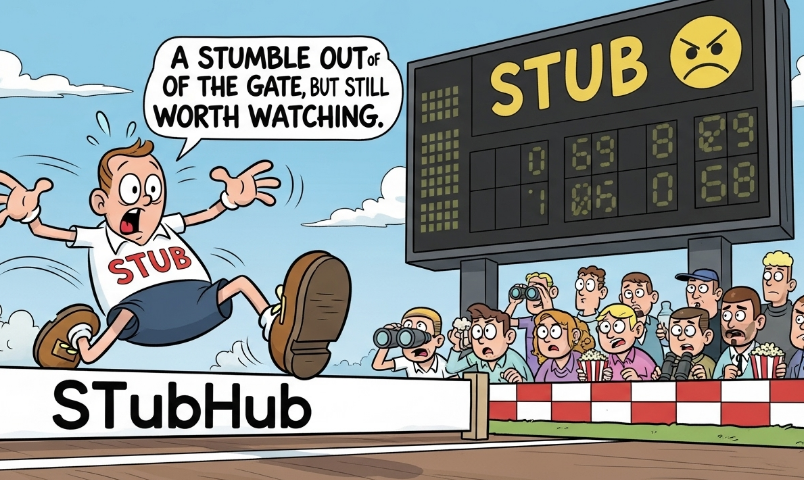
  • StubHub (STUB): A Stumble Out of the Gate, But Still Worth Watching

    StubHub (STUB): A Stumble Out of the Gate, But Still Worth Watching

    Hey there, savvy investor! Ready to dive into a company that literally profits from FOMO? Let’s talk StubHub.

    The Reality Check IPO That Humbled Wall Street

    Picture this: You’re a hot tech company with billion-dollar revenue, global reach, and a story about the booming experience economy. You price your IPO, ring the opening bell, and… tumble 6.4% on day one. Welcome to StubHub’s less-than-triumphant public debut.

    StubHub Holdings (STUB) made its grand entrance on the NYSE on Wednesday (September 18, 2025), raising $800 million after pricing its stock at $23.50 per share. But here’s where things get interesting – the market gave it a decidedly lukewarm welcome. The stock fell 6.4% from its IPO price on its first day of trading, valuing the company at $8.1 billion. Ouch! Apparently, Wall Street wasn’t quite as excited about secondary ticket sales as we thought they’d be.

    The Numbers Don’t Lie (And They’re Pretty Impressive)

    Let’s get down to brass tacks, because this isn’t just about helping people catch Taylor Swift concerts. The financials tell a compelling growth story:

    Revenue Growth That Would Make a Concert Promoter Jealous (Until Recently)

    StubHub’s revenue has been on a steady upward trajectory, rising from $1 billion in 2022 to $1.3 billion in 2023 to $1.7 billion in 2024. That’s a 29% growth rate in 2024 alone – the kind of numbers that make CFOs do jazz hands.

    But here’s where the music slows down: revenue growth cooled to just 3% in the first half of 2025 compared to the same period last year, hitting $827 million. That puts the company on pace for significantly slower revenue growth after that impressive 29% jump in 2024. This growth deceleration likely explains why Wall Street gave the stock such a chilly reception on day one.

    The Global Reach Advantage

    More than 1 million unique sellers are using StubHub’s platform, with buyers from more than 200 countries and territories purchasing over 40 million tickets in 2024. The platform supports 33 languages and 48 currencies, positioning itself as one of the largest worldwide markets for live event ticket resale.

    The company’s interesting backstory adds another layer: founded in 2000 by current CEO Eric Baker, StubHub was sold to eBay in 2007 (Baker left before the sale). He then founded competitor Viagogo in 2006, and in a plot twist worthy of a Hollywood screenplay, eBay sold StubHub to Viagogo in 2020 for $4.05 billion – essentially returning the company to its original founder. Baker then changed the combined company’s name back to StubHub Holdings. Talk about coming full circle!

    Translation: While your local scalper can only serve your neighborhood, StubHub is serving the entire planet.

    Value Propositions That Actually Make Sense

    1. The Experience Economy Tailwind

    StubHub estimated a total addressable market of $726 billion and noted a change in customer behavior over many decades toward giving experiences top priority above tangible things.

    Think about it – when was the last time you got genuinely excited about buying a new TV versus scoring tickets to see your favorite band? Exactly. We’re living in the Instagram era where experiences trump possessions, and StubHub is perfectly positioned to capitalize on this shift.

    2. The Network Effect Moat

    Here’s where it gets interesting from a business model perspective. StubHub operates a classic two-sided marketplace where:

    • More sellers attract more buyers (better selection)
    • More buyers attract more sellers (larger audience)
    • The cycle perpetuates and strengthens over time

    It’s the same playbook that made eBay and Amazon unstoppable in their respective markets.

    3. Recession-Resistant Revenue Streams

    While people might cut back on buying new clothes or gadgets during tough times, they’re surprisingly reluctant to give up experiences entirely. Live events provide emotional value that’s harder to substitute – you can’t exactly stream the energy of being at a live concert in your living room (though we all tried during 2020).

    4. Regulatory Clarity Creating Competitive Advantages

    The Federal Trade Commission initiated new rules around hidden “junk fees” and deceptive ticket prices on online marketplaces. While this might seem like a headwind, established players like StubHub are better positioned to adapt to regulatory changes than smaller competitors who lack the resources and infrastructure.

    The Risks (Because We’re Not Financial Advisors)

    Let’s be honest about the challenges:

    Recent Performance Concerns and That Cold Wall Street Reception

    The company’s recent performance tells a story of a business hitting some speed bumps. That 3% revenue growth in the first half of 2025 represents a dramatic slowdown from 2024’s 29% growth rate, and it clearly spooked investors on IPO day.

    Wall Street’s lackluster 6.4% first-day drop suggests the market is concerned about whether StubHub can reignite its growth engine. When you’re pricing an IPO in a market where the average Day 1 return has been 26% this year, falling on your first day is… not ideal.

    Regulatory Headwinds

    The secondary market faces a patchwork of U.S. laws: 15 states ban or restrict reselling above face value, while others mandate licenses or cap markups. The 2016 BOTS Act targets bot-driven bulk buying, but enforcement is ramping up.

    Bottom line: StubHub operates in a space where the rules are still being written, and not all of them will be friendly.

    Market Volatility

    This was StubHub’s second IPO delay, after market conditions forced them to pause plans earlier. The company is clearly sensitive to market timing, which suggests some underlying business volatility.

    The Investment Thesis: Why This Could Be Your Winning Ticket

    Valuation Perspective

    If StubHub grows 25% next year, that would imply approximately $2.2 billion in revenue and a 3.5x to 4.5x next-twelve-months revenue multiple. These multiples would place StubHub above Uber and CarGurus but below DoorDash.

    For a company in a growing market with strong network effects, that’s not unreasonable pricing – especially compared to other marketplace businesses.

    The Timing Factor (And Why It Might Actually Be Good News)

    Here’s a contrarian take: maybe that 6.4% first-day drop is actually good news for long-term investors. In a year where IPOs have averaged a 26% Day 1 pop, StubHub’s lackluster debut suggests the stock wasn’t wildly overpriced. You’re not buying into peak hype – you’re buying into realistic expectations.

    StubHub plans to use the $800 million raised to pay down debt and for general corporate purposes, which shows prudent capital allocation rather than flashy growth spending.

    Millennials and Gen Z prioritize experiences over material goods, and they’re entering their peak earning years. This demographic shift should provide sustained demand for StubHub’s services over the next decade.

    The Bottom Line: A Ticket Worth Considering, But Not First-Class

    StubHub represents a solid play on several converging trends – the experience economy, digital marketplace dominance, and global entertainment expansion. But let’s be honest: this isn’t the slam-dunk growth story we initially thought it might be.

    The company has proven it can build and maintain a large-scale business, operates in a market with real competitive advantages, and serves a global customer base. However, you’re buying into a company that just disappointed Wall Street on day one, is experiencing significant growth deceleration, and operates in an increasingly regulated space.

    The Final Curtain Call

    StubHub’s story isn’t over – it’s just beginning with a more sobering first chapter than anyone expected. The fundamentals of the business remain intact: people still want experiences, live events aren’t disappearing, and secondary markets serve a real purpose.

    But this isn’t your typical IPO rocket ship. It’s more like buying a reliable touring bus – it’ll get you where you’re going, but don’t expect to travel in luxury or break any speed records.

    The market has spoken, and it’s saying “show me more consistent growth before I get excited.” That might actually make this a more interesting long-term play for patient investors who believe in the experience economy thesis but want to buy without the hype premium.

    Just remember: sometimes the best tickets are the ones that don’t sell out immediately. They might not have the best view, but they’re a lot easier on your wallet.


    Disclaimer: This case study is for informational purposes only and should not be considered investment advice. Past performance does not guarantee future results. Please consult with a qualified financial advisor before making investment decisions. Also, the author may or may not be bitter about missing that one concert in college.
  • The Fed Finally Blinked – Here’s What It Means for Your Wallet

    The Fed Finally Blinked – Here’s What It Means for Your Wallet

    Your Money Just Got a Little Cheaper (Finally!)

    Remember when borrowing money felt like selling your soul to a loan shark? Well, things just got a tiny bit better. The Federal Reserve finally decided to throw us regular folks a bone yesterday, cutting interest rates for the first time since December. It’s like your financially conservative uncle finally agreeing to split the dinner check.

    What Actually Happened (In Human Terms)

    The Fed’s policy committee voted to drop their key interest rate by 0.25% to a range of 4% to 4.25%. Think of this as the “mother rate” – it’s the rate that influences pretty much every other borrowing cost in your life, from your credit card to that car loan you’ve been putting off.

    Here’s the kicker: they’re hinting at two more cuts before the year ends, potentially bringing rates down to 3.5% to 3.75%. That’s like getting three small Christmas presents instead of one big lump of coal.

    Why Should You Care?

    Because your money is about to work a little harder for you:

    Your Credit Card Bills: That revolving balance you’ve been nursing? It’s about to get slightly less painful. Every quarter-point drop typically translates to real savings on variable-rate debt.

    Car Shopping: Been eyeing that new ride? Auto loan rates should start creeping down, making that monthly payment more digestible.

    Home Buying: If you’re still brave enough to shop in this housing market, mortgage rates might finally give you some breathing room. (Though let’s be honest, you’ll still need to sell a kidney for a decent house.)

    The Fed’s Soap Opera Drama

    Here’s where it gets juicy. The vote wasn’t unanimous – it was 11 to 1, with the lone dissenter being newly appointed Stephen Miran, who wanted a bigger cut (0.5%). Imagine being the person at the Fed meeting saying, “You know what? Let’s be even more generous!”

    Meanwhile, President Trump has been breathing down their necks, demanding they slash rates by three full percentage points. He’s also been playing musical chairs with Fed officials, trying to fire Governor Lisa Cook (the courts said “not so fast” on that one).

    The Real Talk: What’s Behind This?

    The Fed is walking a tightrope while juggling flaming torches. They’re worried about two things:

    1. Unemployment: Trump’s trade wars are making businesses nervous, and nervous businesses don’t hire people
    2. Inflation: Still running hotter than the Fed’s 2% target, like that one friend who always overdresses for casual events

    Fed Chair Jay Powell basically admitted this balancing act is “challenging” – which in Fed-speak translates to “we’re making educated guesses and hoping for the best.”

    How Wall Street Reacted (Spoiler: Mixed Feelings)

    The stock market had the financial equivalent of a shrug:

    • Dow Jones: Up 0.6% (the old-school stocks liked it)
    • Nasdaq: Down 0.3% (tech stocks were apparently expecting more)
    • S&P 500: Down 0.1% (playing it safe in the middle)

    Gold prices actually dropped 0.8%, which is weird but typical – sometimes good news for the economy is bad news for “safe haven” investments. It’s like how your responsible friend gets boring when life gets easier.

    Your Action Plan

    If you have variable-rate debt: Start doing a little happy dance, but don’t go crazy. Small wins add up.

    If you’re saving money: Sorry, but your savings account interest is probably going to shrink a bit. Time to look at other options.

    If you’re buying a house or car: This might be the beginning of slightly better news, but don’t expect miracles. Shop around and negotiate.

    If you’re investing: Keep your eyes peeled for more rate cuts. Lower rates typically mean companies can borrow more cheaply, which can be good for stock prices.

    The Bottom Line

    This rate cut is like getting a small discount at a store where everything’s still pretty expensive – it helps, but you’re not exactly ready to go on a spending spree. The Fed is trying to thread the needle between preventing a recession and keeping inflation from going completely bonkers.

    The real question is whether they’ll follow through with those two additional cuts they’re hinting at. In Fed world, “likely” means “maybe,” and “maybe” means “we’ll see how badly everything breaks in the meantime.”

    So enjoy this small victory lap, but keep your financial wits about you. After all, in the grand casino of the American economy, the house always has interesting ways of keeping things… challenging.

    Stay tuned for more financial plot twists. This is probably just the opening act.

  • Fed Rate Cuts Decoded: .25 vs .50 vs .75

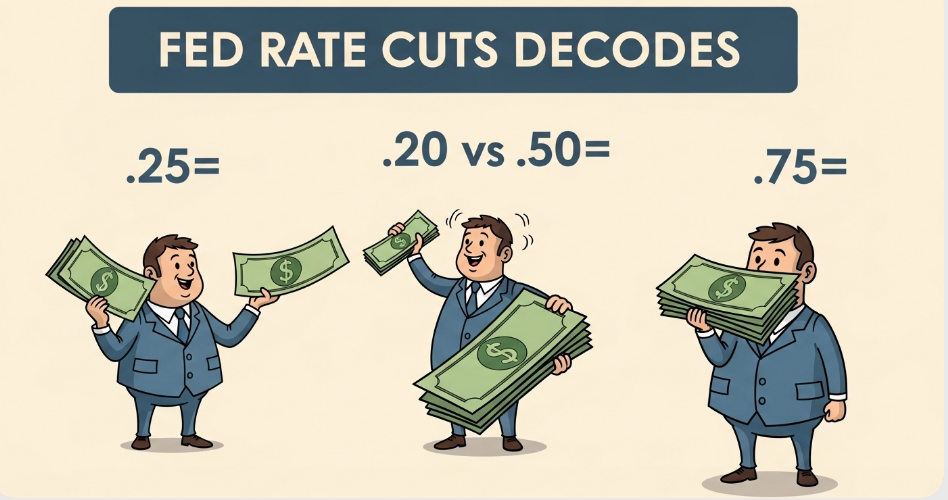
    Fed Rate Cuts Decoded: .25 vs .50 vs .75

    Published September 16, 2025

    So the Federal Reserve is about to cut interest rates, and everyone’s acting like they’re picking the perfect wine for dinner. But here’s the thing: whether they cut by 0.25%, 0.50%, or go nuclear with 0.75% isn’t just about numbers on a spreadsheet. It’s about real money in your pocket, and the difference between these cuts is like choosing between a gentle tap, a firm push, or a full-body tackle to get the economy moving.

    Let’s break down what each option actually means for your financial life, because spoiler alert: the size of the cut tells a story about both where we’ve been and where we’re headed.

    The 0.25% Cut: The Fed’s Equivalent of “Let’s Take This Slow”

    A quarter-point cut is the Fed’s way of saying “we’re being thoughtful here.” It’s like adjusting your thermostat by one degree – subtle, measured, and designed not to shock anyone. This is the Fed’s bread and butter move, the vanilla ice cream of monetary policy.

    What Actually Happens to Your Money

    When the Fed cuts by 25 basis points, mortgage rates typically drop by about 0.15% to 0.25%. Sounds tiny, right? But let’s put some real numbers on this. If you’ve got a $400,000 mortgage at 7% interest, that quarter-point Fed cut might drop your rate to 6.8%. Your monthly payment goes from about $2,661 to $2,620 – a savings of roughly $40 per month, or about $480 per year.

    For credit cards, the math is similarly modest. That $5,000 balance you’ve been carrying at 21% APR? A 25-point Fed cut might bring it down to 20.75%, saving you about $12 annually. It’s not nothing, but it’s also not going to change your vacation plans.

    The Psychology Behind the Quarter-Point

    Here’s what’s really interesting: a 25-point cut signals confidence and control. The Fed is saying, “We’ve got this handled, just making some small adjustments.” Markets usually respond positively but calmly. It’s like getting a gentle nod from your boss – reassuring, but not cause for celebration.

    Recent history backs this up. When the Fed made gradual 25-point cuts in late 2019, markets stayed relatively stable, and the economy continued its slow-and-steady growth path. Nobody panicked, nobody got overly excited, and life went on with slightly cheaper borrowing costs.

    The 0.50% Cut: The Fed’s “We Mean Business” Move

    Now we’re talking. A 50 basis point cut is like the Fed clearing its throat loudly before making an announcement. It gets everyone’s attention and signals that something bigger is happening in the economy.

    The Real-World Impact Gets Serious

    Remember September 2024? The Fed surprised everyone with a 50-point cut, and mortgage rates plummeted to their lowest level in two years. Before the cut, rates were hovering around 7.2%. After the announcement, they dropped to around 6.1% in many markets. That same $400,000 mortgage we talked about earlier? Your monthly payment could drop from $2,661 to about $2,450 – that’s over $200 per month, or $2,500 per year back in your pocket.

    Credit card holders see bigger relief too. A 50-point cut on that $5,000 balance could save you around $25 annually, and more importantly, it makes it easier to qualify for lower-rate balance transfers or personal loans.

    But Here’s the Catch

    A 50-point cut also makes everyone wonder: “What does the Fed know that we don’t?” It’s like your normally reserved friend suddenly buying drinks for the whole bar – generous, but what’s the occasion? Markets can get jittery because aggressive cuts often signal the Fed is worried about something.

    The psychological impact is huge. Businesses start thinking, “If the Fed is cutting this aggressively, maybe we should hold off on that expansion.” Investors might think, “Time to get defensive.” It’s effective medicine, but it comes with side effects.

    The Market Response Tells the Story

    When the Fed made that 50-point cut in September 2024, stock markets initially rallied because cheaper money is good for business. But then came the second-guessing. Bond markets started pricing in economic weakness. The dollar weakened as international investors wondered if the U.S. economy was in more trouble than they thought.

    The 0.75% Cut: The Economic Fire Extinguisher

    A 75 basis point cut is the Fed’s way of saying, “This is not a drill.” It’s the monetary policy equivalent of breaking glass in case of emergency. We haven’t seen moves this big since the 2008 financial crisis and the 2020 pandemic – which should tell you something about when they get deployed.

    When Nuclear Options Become Necessary

    The last time we saw cuts this aggressive was March 2020, when the Fed went from 1.75% to essentially zero in a matter of weeks. Mortgage rates didn’t just fall – they cratered from over 3% to historic lows around 2.65%. Suddenly, people were refinancing left and right, and anyone with decent credit could buy a house with what felt like Monopoly money.

    For our $400,000 mortgage example, a 75-point Fed cut in the right market conditions could push your rate from 7% down to 6.25% or lower. We’re talking about monthly payments dropping from $2,661 to around $2,463 – but more importantly, it signals that borrowing money just got significantly easier across the board.

    The Double-Edged Sword Effect

    Here’s where things get complicated. A 75-point cut is incredibly powerful, but it also screams “EMERGENCY!” to everyone listening. It’s like a doctor prescribing the strongest antibiotics available – it’ll probably work, but what were they so worried about?

    During the 2020 cuts, while mortgage rates hit historic lows, the stock market initially crashed before recovering. People got spooked before they got excited. The economy eventually responded well, but those first few weeks were a roller coaster that made Six Flags look tame.

    The Unintended Consequences

    Big cuts can also create weird market distortions. In 2020-2021, ultra-low rates led to a housing bubble, a stock market boom, and eventually contributed to the inflation we’re still dealing with. It’s like giving a sugar rush to the economy – great short-term energy, but the crash can be brutal.

    What Size Cut Actually Means for Your Strategy

    If They Cut 25 Points: This is steady-as-she-goes territory. If you’re thinking about refinancing, it might be worth exploring, but don’t expect dramatic changes. If you’re carrying high-interest debt, now might be a good time to look for better rates, but the improvement will be modest.

    If They Cut 50 Points: Time to pay attention. Refinancing becomes much more attractive, and major purchases that require financing start looking better. But also keep an eye on what this says about the economy’s health. It might be smart to build up your emergency fund just in case.

    If They Cut 75 Points: This is both opportunity and warning rolled into one. Borrowing costs are about to get very attractive, but something has spooked the Fed enough to take dramatic action. Great time to lock in low rates if you need them, but maybe not the time to make risky financial bets.

    The Historical Reality Check

    Over the last three complete rate-cutting cycles, aggressive cuts of 225-250 basis points led to Treasury yields falling by 129, 170, and 261 basis points respectively. What this tells us is that the market’s reaction amplifies whatever the Fed does. A small cut gets a small reaction. A big cut gets a big reaction, sometimes bigger than the Fed intended.

    The relationship between Fed rates and what you actually pay isn’t always straightforward either. During much of 2023 and 2024, the spread between Fed rates and mortgage rates grew to 3 percentage points because lenders got nervous and essentially charged extra for uncertainty. Sometimes a Fed cut helps immediately, sometimes it takes months to work its way through the system.

    The Bottom Line: Size Really Does Matter

    The difference between a 25, 50, or 75 basis point cut isn’t just mathematical – it’s psychological, strategic, and economic all rolled together. A quarter-point cut is a gentle course correction. A half-point cut is a clear signal that policy is changing direction. A 75-point cut is the Fed hitting the emergency button.

    For your personal finances, smaller cuts mean modest improvements in borrowing costs and a signal that the economy is on steady ground. Larger cuts mean bigger opportunities for savings, but also bigger questions about what’s coming next. The smart money pays attention not just to the size of the cut, but to what story the Fed is trying to tell about where we’re all headed.

    Whether they go with 25, 50, or 75 basis points this week, remember: the Fed is essentially placing a bet on the future of the American economy. The size of that bet tells you how confident they are about winning.

  • Fed’s Big Decision Day: What May Happen at the FOMC

    Fed’s Big Decision Day: What May Happen at the FOMC

    Published September 16, 2025

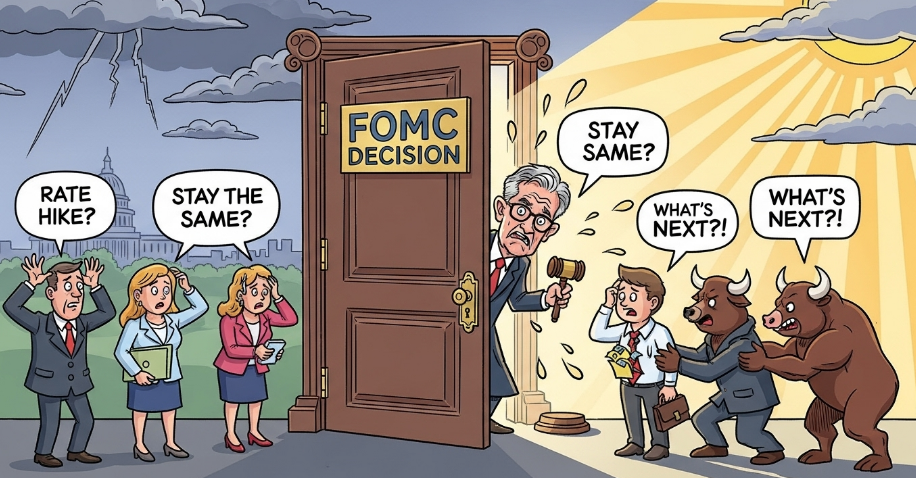
    Picture this: A bunch of very serious economists in expensive suits are about to gather in a room and make decisions that could affect everything from your mortgage payment to whether that startup you’ve been eyeing can actually get funding. Welcome to Federal Reserve meeting season, folks.

    What’s Actually Happening?

    Starting today, the Federal Reserve kicks off its two-day monetary policy powwow. Think of it as the economic equivalent of a Marvel movie – lots of buildup, everyone has opinions, and the ending will definitely impact the sequel (aka your financial future).

    The big question everyone’s asking: Will they cut interest rates?

    Most Wall Street crystal ball gazers are betting yes, which would be the Fed’s first rate cut since December. But here’s where it gets spicy – the Fed committee appears more divided than a family deciding on a Netflix show.

    Why You Should Actually Care

    Lower interest rates aren’t just numbers on a screen. They’re the difference between your mortgage rate being “ouch” versus “manageable,” your credit card debt feeling like quicksand versus just regular sand, small businesses being able to expand or just survive, and your job market staying robust or getting a bit wobbly.

    But here’s the catch (there’s always a catch): Cut rates too aggressively, and inflation might come roaring back like that friend who “just needs to crash on your couch for a week.”

    The Great Rate Cut Debate: 25 or 50?

    The August jobs report was about as exciting as watching paint dry in slow motion, which has markets expecting a rate cut. But how big?

    The Fed has two main options here. They could go conservative with a 0.25% cut that would lower the benchmark rate to 4% to 4.25%. This follows their usual playbook and is boring but probably smart. Or they could surprise everyone with an aggressive 0.5% cut that drops rates to 3.75% to 4%. This would shock markets and possibly some Fed members, but currently has about the same odds as finding a parking spot in Manhattan.

    Most economists are betting on the smaller cut, calling it “all but a given.” Translation: It’s happening unless aliens land on the White House lawn.

    Plot Twist: The Wild Card Players

    Here’s where things get interesting. The Senate just confirmed Trump’s newest Fed appointee, Stephen Miran, literally yesterday. Guy’s probably still figuring out where the coffee machine is, and now he gets to help decide the economic fate of 330 million Americans. Talk about jumping into the deep end.

    Meanwhile, there’s ongoing drama with Fed Governor Lisa Cook, whom Trump tried to fire but got blocked by federal courts. It’s like a political soap opera, but with more PowerPoint presentations.

    The Dissent Watch

    Buckle up, because this meeting could see more disagreement than a group chat about dinner plans. Two Trump appointees – Christopher Waller and Michelle Bowman – have been pushing for bigger rate cuts and might dissent again.

    If three governors dissent, it would be the most divided Fed meeting since 1988. That’s back when people still used fax machines and thought the internet was just a fad.

    What the “Dots” Will Tell Us

    The Fed releases something called a “dot plot” (yes, really) showing where officials think rates should go. Think of it as their economic crystal ball, except it’s made by committee and changes every few months.

    The dots will reveal whether the Fed plans more cuts in October and December, plus their 2026 outlook. Markets are currently expecting about 150 basis points in cuts through next year – that’s Wall Street speak for “a lot.”

    But don’t hold your breath for the Fed to validate those expectations. They’re more likely to keep their cards close to their vest than a poker player with a royal flush.

    The Bottom Line for You

    This meeting matters because the Fed’s decisions ripple through everything. For homebuyers, mortgage rates could get friendlier. For savers, your savings account might earn even less (sorry). For investors, stock markets will probably do something dramatic. And for borrowers, credit could get cheaper across the board.

    Fed Chair Jerome Powell will face the press at 2:30 PM ET on Wednesday, where he’ll try to explain whatever complex economic chess game the committee just played. Analysts are already calling it a potentially “challenging press conference” – economist speak for “this could get awkward.”

    The Real Value Here

    While everyone else is obsessing over the exact number of basis points, the smart money is watching the bigger picture: How will the Fed balance supporting the job market without letting inflation get out of control, especially with potential tariffs on the horizon?

    Your move? Keep an eye on how this affects your personal finances, but don’t panic-buy anything or make major financial decisions based on one Fed meeting. The economy is like a massive cargo ship – it doesn’t turn on a dime, even when very important people in suits really want it to.

    Stay tuned for Wednesday’s decision. It’ll be more entertaining than most reality TV, and definitely more consequential for your bank account.

  • Oracle’s TikTok Gambit: Why This Deal Could Be Pure Gold

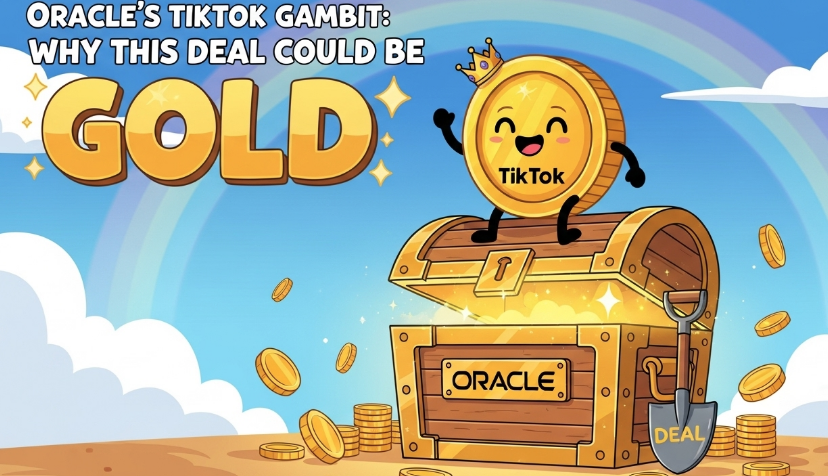
    Oracle’s TikTok Gambit: Why This Deal Could Be Pure Gold

    The Setup: When Database Meets Dance Videos

    Picture this: Oracle, the company that built its empire on boring-but-essential database software, is about to become TikTok’s sugar daddy. Under a framework deal emerging from U.S.-China negotiations, Oracle would join a consortium controlling roughly 80% of TikTok’s U.S. operations alongside Silver Lake and Andreessen Horowitz.

    Oracle’s stock jumped on Tuesday as investors caught wind of this unlikely romance between enterprise software and viral dance videos. But before you dismiss this as just another tech acquisition, let’s dig into why this deal could be Oracle’s smartest move since Larry Ellison bought his first Hawaiian island.

    The Money Play: Why Oracle Wants TikTok

    Value Proposition #1: The Cloud Infrastructure Goldmine

    Here’s where it gets interesting. Oracle just projected its cloud infrastructure revenue will explode from $10.3 billion in fiscal 2025 to $144 billion by 2030 – a growth trajectory so aggressive that analysts are reportedly “in shock” and “slack-jawed.”

    TikTok isn’t just an app; it’s a data-processing monster that serves over 170 million Americans. Every scroll, every like, every “Ohio” comment creates computational demand. For Oracle, acquiring TikTok is like buying the world’s hungriest customer and making them eat at your restaurant exclusively.

    Value Proposition #2: AI Training Ground Supreme

    Oracle’s cloud consumption revenue already surged 57% last quarter, driven largely by AI companies like OpenAI. Now imagine having TikTok’s recommendation algorithm – one of the most sophisticated AI systems on the planet – running on your infrastructure 24/7. It’s like getting a master class in AI while getting paid for it.

    Value Proposition #3: The Ultimate Moat

    Oracle’s traditional enterprise customers might find databases about as exciting as watching paint dry. But TikTok? That’s 170 million potential customers who already trust Oracle’s infrastructure with their most precious commodity: endless entertainment. It’s brand awareness money can’t buy.

    The Bigger Picture: Oracle’s AI Empire Play

    This TikTok deal isn’t happening in a vacuum. Oracle’s performance obligations (contracted future revenue) jumped 359% to $455 billion, largely thanks to massive commitments from AI companies. The stock recently posted its best day since 1992, adding $244 billion in market value as investors realized Oracle isn’t just surviving the AI revolution – it’s powering it.

    Larry Ellison, Oracle’s co-founder who briefly became the world’s richest person during the recent stock surge, has been playing chess while others played checkers. While everyone focused on who would build the sexiest AI models, Oracle quietly became the landlord renting out the computing power to run them all.

    The Risks: What Could Go Wrong?

    Political Football Syndrome: TikTok deals have a history of falling apart faster than a house of cards in a hurricane. Remember Microsoft’s failed attempt? Oracle could end up holding an expensive bag of nothing if U.S.-China relations turn sour again.

    Integration Nightmares: Merging a hip social media platform with enterprise software culture is like trying to get your grandmother to understand why people film themselves eating tide pods. Cultural mismatches could derail the whole operation.

    Regulatory Scrutiny: Even if the deal goes through, Oracle will be operating under intense government oversight. The proposed structure includes “an American-dominated board with one member designated by the U.S. government.” Nothing says “entrepreneurial freedom” like having Uncle Sam as your board member.

    The Bottom Line: A Calculated Gamble

    Oracle’s TikTok play represents a fascinating bet: that owning the infrastructure behind America’s most addictive app is worth the political headaches and integration challenges. Given Oracle’s recent AI-driven growth explosion and TikTok’s massive computational needs, it’s not as crazy as it sounds.

    For investors, Oracle offers a unique value proposition in the AI age: it’s the boring utility company that everyone exciting depends on. Whether they’re training chatbots, serving viral videos, or processing database queries, they all need somewhere to run their code. Oracle is betting that “somewhere” should be their cloud.

    The TikTok deal, if it happens, would be the cherry on top of an already impressive AI infrastructure empire. Just don’t expect Larry Ellison to start posting dance videos anytime soon – though given his track record of bold moves, never say never.

    Oracle shares are up more than 80% year-to-date, trading near all-time highs as the market continues pricing in the company’s AI infrastructure ambitions. The TikTok deal, expected to close within 30-45 days if finalized, would mark Oracle’s biggest bet yet on the intersection of social media and cloud computing.

  • The biggest market catalyst of 2025 is about to hit, and most people are completely unprepared. Don’t Get Thrown Off the Train! The Fed Rate Cut That Could Change Everything

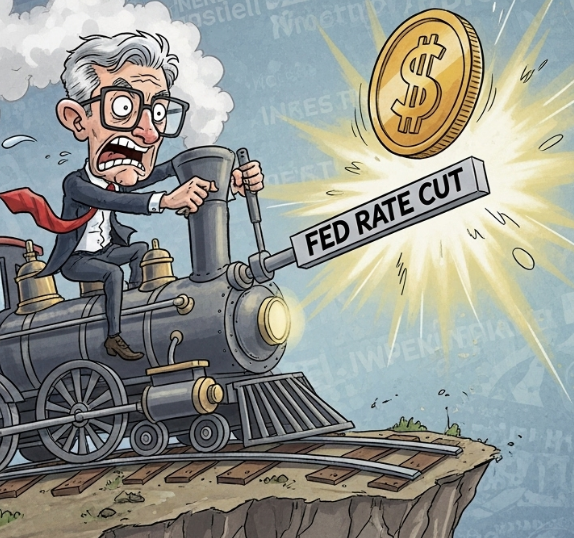
    The biggest market catalyst of 2025 is about to hit, and most people are completely unprepared. Don’t Get Thrown Off the Train! The Fed Rate Cut That Could Change Everything

    You’ve been watching the market whipsaw for weeks now, haven’t you? One day everything’s green, the next it’s a sea of red. But here’s what I want you to understand: this isn’t random chaos. This is the market positioning itself for something massive that’s about to happen.

    The Federal Reserve is about to make a decision that could reshape your entire investment strategy. And while everyone else is getting dizzy from the daily ups and downs, I’m going to show you how to position yourself to profit from what’s coming next.

    Weekend Warriors and Market Drama: Why Volatility is Your Friend

    Let me paint you a picture of what just happened. Over the weekend, we saw a perfect example of how markets behave before major announcements. Prices surged, then immediately crashed back down—a classic pattern that veteran traders know by heart.

    But here’s what most people miss: this isn’t a sign of weakness. It’s a sign of anticipation.

    Think about it like this—imagine you’re at a concert and the crowd keeps getting restless, jumping up and sitting down, before the main act comes on stage. That restlessness? That’s not boredom. That’s excitement building up with nowhere to go.

    Your opportunity lies in understanding this pattern while others panic.

    The question everyone’s asking is whether markets will move before the Fed announcement or after. But that’s the wrong question. The right question is: are you positioned to benefit either way?

    Market Sentiment: Reading Between the Lines of Fear and Greed

    Here’s something fascinating that most people don’t pay attention to—while prices dropped, funding rates didn’t collapse. What does this tell you?

    Big money didn’t run. Only retail investors panicked.

    I’ve been tracking institutional flows, and the data is crystal clear: while small investors are selling, large capital is quietly accumulating. Exchange outflows are increasing, which means smart money is moving assets off exchanges and into cold storage for the long term.

    This is textbook accumulation behavior—the calm before the storm.

    When you see this pattern, it’s usually followed by significant price movements in the direction the smart money is betting. And right now, they’re betting on a major move upward.

    The Fed’s Money Printer: How Rate Cuts Create Investment Opportunities

    Let me explain something about Federal Reserve policy that will change how you think about investing.

    When the Fed cuts rates, they’re not just adjusting a number. They’re opening the floodgates of global liquidity. Here’s the chain reaction that follows: Interest rates fall, making traditional savings accounts and bonds less attractive, which forces investors to search for higher yields in riskier assets. This creates a massive flow of money into stocks, real estate, and other growth investments, driving asset prices higher as demand surges.

    This isn’t speculation—it’s documented historical pattern that’s played out dozens of times over the past decades.

    But here’s the kicker: the market doesn’t wait for the rate cut to be fully implemented. It moves on expectations and confirmation. That’s why timing your positions correctly can be the difference between significant gains and watching from the sidelines.

    The Institutional Money Movement You Need to Watch

    Something big is happening behind the scenes that most retail investors aren’t seeing. Major financial institutions have been positioning themselves for months, not days.

    The applications for cryptocurrency ETFs, the corporate treasury allocations, the infrastructure investments—these aren’t reactive moves. They’re strategic positioning for what these institutions know is coming.

    When institutional money moves this deliberately, it’s usually because they see something the general public doesn’t yet understand.

    The combination of Fed policy changes and institutional adoption creates what we call a “confluence event”—multiple positive factors converging at the same time. These events historically produce the largest and most sustainable price movements.

    Your Strategic Framework: Support, Resistance, and Smart Positioning

    Let me give you a practical framework for navigating what’s coming. For support levels, watch the strong support at current levels around major psychological numbers. If we break below key support, it signals temporary weakness, while maximum pullback levels would create exceptional buying opportunities. On the resistance side, first resistance sits at previous session highs, and breaking above recent highs confirms upward momentum, with major resistance at previous all-time high levels.

    There’s one critical price level that acts as a watershed—above it, everything looks bullish, but below it, you need to be more cautious.

    For position management, aggressive traders should dollar-cost average into positions during pullbacks, set tight stop-losses to protect capital, and target logical resistance levels for profit-taking. Conservative investors might wait for breakouts to confirm direction, add to positions on any weakness after confirmation, and maintain strict risk management protocols throughout.

    Risk Management Reality Check: Never put more than you can afford to lose into any single position. Before major announcements, volatility increases dramatically. Keep your position sizes manageable and always have cash reserves for opportunities.

    The Big Picture: Why This Matters for Your Financial Future

    Making money in markets isn’t about predicting every twist and turn. It’s about understanding the major trends and positioning yourself accordingly.

    This Fed decision represents the biggest certainty we have about monetary policy direction. When central banks shift their stance, it creates ripple effects that last for months or years, not days.

    The key insight: While everyone else gets caught up in short-term price movements, successful investors focus on the underlying forces that drive long-term trends.

    Think of it this way—the tide is about to turn, and all boats rise with the tide. Your job isn’t to predict exactly when each wave will hit. Your job is to make sure you’re in the right boat when the tide changes.

    Your Action Plan: Turning Policy Into Profit

    Here’s what you need to do right now: Stop watching minute-by-minute price movements and start focusing on the bigger picture. Identify your risk tolerance and position size accordingly, then have a plan for multiple scenarios. Ask yourself what you’ll do if markets surge immediately, and what if they dip first? Keep cash reserves ready for adding to positions during any weakness, and set realistic profit targets that you’ll actually stick to when the time comes.

    The flow of money always follows predictable patterns. When monetary policy shifts, capital seeks the highest returns available. Your success depends on being positioned before that flow accelerates.

    Remember: in investing, being early looks exactly the same as being wrong—until suddenly it doesn’t.

    The train is about to leave the station. The only question is whether you’ll be on it or watching it go by.

    The bottom line: Major monetary policy shifts create the biggest wealth-building opportunities of any market cycle. This is your moment to position for what could be a multi-month or multi-year trend.

    Don’t let short-term noise distract you from long-term opportunity.

  • Your Money’s Wild Ride Through 35 Years of Fed Drama

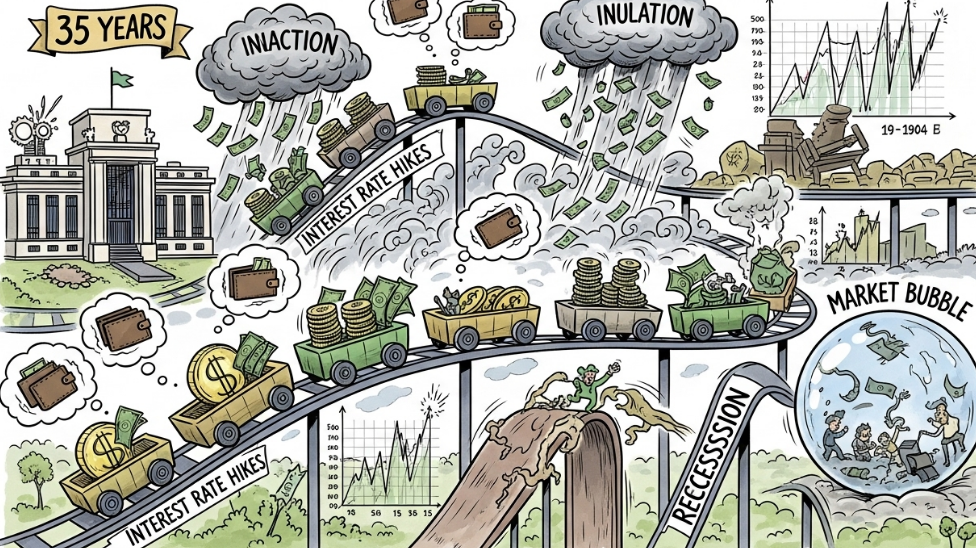
    Your Money’s Wild Ride Through 35 Years of Fed Drama

    Buckle up. I’m about to take you on a tour through financial history that will change how you see every Fed decision.

    Picture this: You’re sitting in your living room in 1990, wondering if you should invest that bonus check or hide it under your mattress. Fast-forward 35 years, and you’ve witnessed the Federal Reserve battle everything from dot-com disasters to housing crashes, from terrorist attacks to global pandemics. Each time, your wealth hung in the balance—and most people had no idea what was coming next.

    Here’s the story of how the Fed’s interest rate roller coaster has shaped American fortunes since 1990, and more importantly, what it means for your financial future.

    The Fed’s Playbook: Your Crash Course in Central Banking

    Before we dive into the drama, let’s get one thing straight: the Federal Reserve has exactly two jobs that matter to your money. Keep prices stable (around 2% inflation) and maximize employment without letting the economy overheat. Think of them as economic firefighters with a very specific toolkit—and their main weapon is the federal funds rate.

    When prices rise too slowly? They cut rates to kickstart spending. When inflation runs hot? They hike rates to cool things down. Simple in theory, terrifying in practice—especially when your portfolio is on the line.

    Here’s your competitive advantage: Understanding this pattern means you can position your money before the crowd figures out what’s happening.

    The 2020s: When Everything Changed Overnight

    The Inflation Battle (2022-2025): Your Portfolio’s Stress Test

    Remember March 2022? You probably thought inflation was “transitory”—just like Fed Chair Jerome Powell did. Spoiler alert: it wasn’t. When the Fed finally admitted inflation wasn’t going away quietly, they unleashed one of the most aggressive rate hiking campaigns in modern history.

    Between March 2022 and July 2023, they jacked rates up by more than five percentage points. That’s like going from a gentle breeze to a financial hurricane in 16 months. Your growth stocks got obliterated, your bonds tanked, and suddenly that boring savings account didn’t look so bad.

    The Value Play: If you recognized the shift from easy money to inflation-fighting mode, you could have rotated from growth to value stocks, from long-term bonds to short-term treasuries, and from cash-burning companies to profitable dividend payers. The smart money made this move—did you?

    The COVID Panic (March 2020): When Fear Created Fortunes

    March 2020 was when the Fed threw its entire playbook out the window. Two emergency rate cuts totaling 150 basis points in two weeks—from 1.75% straight to zero faster than you could say “lockdown.”

    The unemployment rate exploded from 3.5% to 14.7% in two months. Twenty million Americans lost their jobs in April alone. If you panicked and sold everything, you missed one of the greatest wealth creation opportunities in modern history.

    The Lesson: Emergency cuts often signal the beginning of major market recoveries, not the end. Those who bought when everyone else was selling made fortunes over the next two years.

    The 2010s: The Decade of Extremes

    The “Mid-Cycle Adjustment” (2019): When the Fed Blinked

    In 2019, the U.S. and China were locked in a trade war that had markets spooked. The Fed, worried about economic fallout, delivered three modest 25 basis point cuts they called a “mid-cycle adjustment.” Translation: we’re not in crisis mode, but we’re nervous.

    Your Portfolio Opportunity: These preventive cuts typically signal continued economic expansion with lower borrowing costs. If you increased your allocation to REITs, dividend stocks, and interest-sensitive sectors during this period, you likely outperformed the broader market.

    The Great Normalization (2015-2018): Patience Pays

    After keeping rates at zero for seven years following the financial crisis, the Fed finally started raising rates in December 2015. But they moved slower than molasses—taking a full year between the first and second hike.

    The Wealth-Building Strategy: This gradual normalization rewarded patient investors who understood the Fed’s cautious approach. Quality companies with strong balance sheets thrived in this environment, while speculative investments gradually lost their artificial support.

    The 2000s: When Bubbles Burst and Fortunes Vanished

    The Great Recession (2007-2008): Your Wealth’s Nightmare Scenario

    This is the story every investor dreads. The Fed started cutting rates in September 2007 as the housing bubble burst, eventually slashing them from 5.25% to effectively zero. But here’s the kicker—it didn’t work.

    Despite aggressive cuts totaling 525 basis points, the S&P 500 lost over 50% from peak to trough. Unemployment soared from 5% to 10%. Millions lost their homes, their jobs, and their retirement savings.

    The Brutal Truth: When recession-type rate cuts begin, your defensive positioning better be rock-solid. Cash, treasuries, and recession-resistant sectors became the only safe harbors in this storm.

    The Housing Bubble (2005-2006): When the Fed Tried to Pop a Bubble

    The Fed saw the housing bubble coming and tried to deflate it gradually with 17 rate hikes over two years, raising rates from 1% to 5.25%. Economist Robert Shiller was already warning about record-high price-to-rent ratios in 2005.

    The Missed Signal: Smart investors who recognized unsustainable asset valuations and reduced their real estate exposure before the peak saved themselves from massive losses. The Fed’s persistent hiking campaign was essentially a flashing warning sign.

    The Dot-Com Crash (2001): When Easy Money Creates Monsters

    After the Nasdaq lost 78% from peak to trough, the Fed cut rates 11 times in 2001, reducing them from 6.5% to 1.75%. The 9/11 attacks only accelerated their urgency.

    The Recovery Play: Those who understood that aggressive rate cuts during technology busts often create the foundation for the next expansion positioned themselves in undervalued, profitable companies while everyone else was still shell-shocked.

    The 1990s: The Golden Age of Wealth Creation

    The Dot-Com Boom (1999-2000): When the Fed Tried to Tame Euphoria

    The Nasdaq rose 400% between 1995 and 2000. The Fed, watching this bubble inflate, raised rates six times to cool speculation. When they delivered a 50 basis point hike in May 2000, markets initially rallied—investors were just relieved it wasn’t more aggressive.

    The Timing Lesson: Recognizing when the Fed shifts from supporting growth to fighting speculation can save your portfolio from catastrophic losses. The rate hiking cycle was your signal to reduce risk, not increase it.

    The Soft Landing Master Class (1994-1995): How It’s Really Done

    This is the Fed’s greatest success story. They nearly doubled rates from 3% to 6% in just one year, managing to cool an overheating economy without triggering recession. GDP growth moderated from 4% to sustainable levels while inflation stayed contained.

    The Strategy That Worked: Investors who recognized this as economic fine-tuning rather than crisis management maintained their equity allocations and were rewarded with continued expansion throughout the rest of the 1990s.

    Your Action Plan: Turning History Into Profit

    Every Fed cycle tells you a story about where money is flowing and why. Here’s how to read the signals:

    When Rates Are Rising:

    • Look for quality companies with pricing power
    • Favor value over growth, especially in early hiking cycles
    • Consider financial sector beneficiaries
    • Reduce duration risk in bond portfolios

    When Cuts Begin:

    • Distinguish between recession cuts and normalization cuts
    • Emergency cuts often create buying opportunities after initial volatility
    • Rate-sensitive sectors typically outperform
    • Credit spreads usually tighten if recession is avoided

    The Pattern Recognition Edge: The Fed’s behavior hasn’t fundamentally changed in 35 years. They cut when growth slows, hike when inflation threatens, and panic when markets crash. Your ability to recognize which scenario you’re in determines whether you build wealth or watch it evaporate.

    The Bottom Line: Your Financial Future Depends on Fed Fluency

    Over the past 35 years, the Federal Reserve has created and destroyed more wealth than any other institution in human history. Every rate decision ripples through your 401(k), your mortgage rate, your job prospects, and your cost of living.

    The investors who prospered weren’t necessarily smarter—they just understood the game being played. They recognized that Fed policy isn’t just about interest rates; it’s about the flow of money through the entire economic system.

    Your next financial decision should account for where we are in the Fed’s cycle, where we’re likely headed, and how that affects your specific investments. Because whether you realize it or not, Jerome Powell and his colleagues are about to make choices that will shape your financial future for years to come.

    The question isn’t whether Fed policy will impact your wealth—it’s whether you’ll be positioned to benefit from it or become another casualty of economic cycles you didn’t see coming.

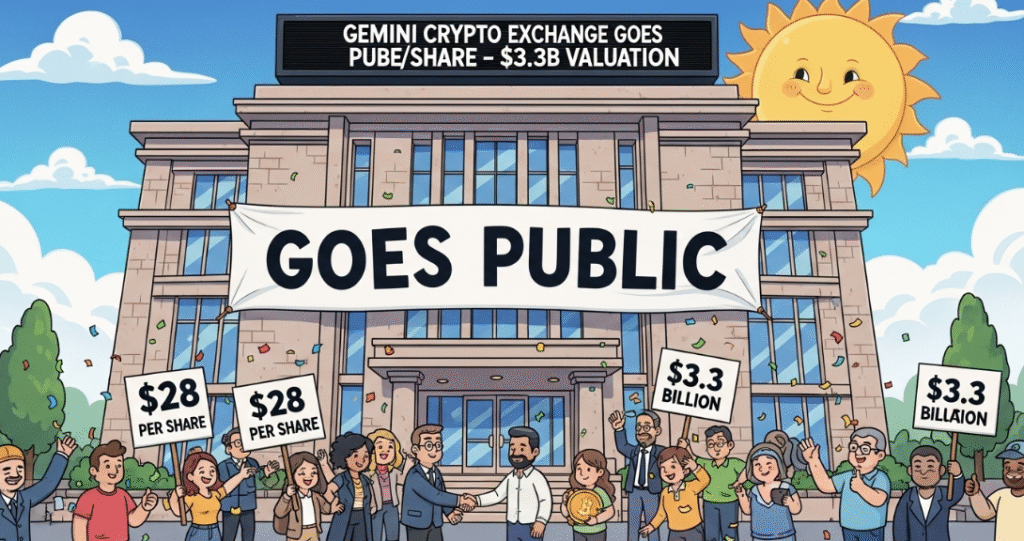
  • Gemini Crypto Exchange Goes Public at $28 Per Share, Reaching $3.3 Billion Valuation

    Gemini Crypto Exchange Goes Public at $28 Per Share, Reaching $3.3 Billion Valuation

    NOT FINANCIAL ADVISE

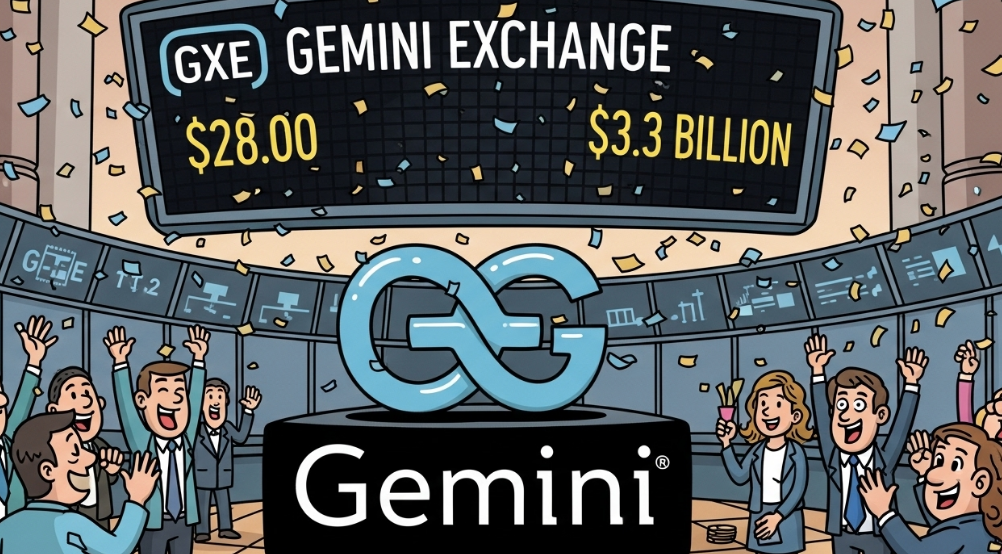
    So remember those Harvard twins who claimed Mark Zuckerberg basically lifted their Facebook idea? Well, Cameron and Tyler Winklevoss just had the last laugh, taking their cryptocurrency exchange Gemini public at $28 per share and landing a cool $3.3 billion valuation.

    From Facebook Drama to Crypto Kings

    If you followed the early Facebook saga, you’ll recall the Winklevoss brothers made headlines as the Harvard classmates who sued Zuckerberg over what they said was their stolen social network concept. After reportedly walking away with around $65 million from that legal settlement, the twins didn’t exactly fade into obscurity. Instead, they dove headfirst into cryptocurrency, founding Gemini back in 2014 when most people still thought Bitcoin was some kind of internet magic trick.

    The IPO That Actually Worked

    Gemini’s public debut Thursday evening turned out better than expected, with shares pricing above the anticipated $24 to $26 range. The demand was so strong that the company actually had to reduce the number of shares sold from 16.67 million to 15.2 million just to stay within their $425 million offering cap. Talk about a good problem to have. This pricing also represented a serious glow-up from their initial proposed range of $17 to $19 per share earlier in the week.

    The big Wall Street names handled the underwriting, with Goldman Sachs, Citigroup, and Morgan Stanley leading the charge. You’ll be able to find Gemini trading on Nasdaq under the ticker “GEMI,” and if you’re not an institutional investor, don’t worry. They’re reserving up to 30% of shares for regular folks through platforms like Robinhood, SoFi, and Webull.

    What Gemini Actually Does

    Here’s where things get interesting. Gemini isn’t just another crypto trading app trying to get you to buy Dogecoin at 3 AM. The platform positions itself as the grown-up in the room, operating as a regulated cryptocurrency exchange that serves both big institutional clients and everyday traders. They’re holding over $21 billion in assets as of July, which is nothing to sneeze at.

    The company’s main selling point revolves around being the responsible choice in a Wild West industry. They operate as a New York Trust company, which means they deal with more regulatory oversight than your average crypto startup. For institutional investors who want to dabble in digital assets without feeling like they’re gambling at a sketchy casino, Gemini offers custody and trading services with a suit-and-tie approach.

    But they haven’t forgotten about regular consumers either. The platform offers crypto-backed credit cards and maintains user-friendly trading interfaces that won’t make your head spin. Their recent partnership with Ripple for a new credit card generated over 30,000 sign-ups in August alone, more than doubling their previous monthly record.

    The Reality Check

    Now, before you start thinking this is all champagne and moon rockets, let’s talk numbers. Gemini posted a $159 million net loss in 2024, and things actually got worse in the first half of 2025 with losses ballooning to $283 million. So while the user growth looks impressive, turning that into actual profit remains the million-dollar question, or in this case, the multi-million-dollar challenge.

    The timing is also worth noting. The crypto IPO party has been going strong with companies like Circle Internet and Bullish having successful debuts, but there’s been some cooling off in major cryptocurrencies like Bitcoin and Ethereum lately. Whether Gemini can keep the momentum going remains to be seen.

    The Institutional Vote of Confidence

    One bright spot came this week when Nasdaq decided to put its money where its mouth is, making a $50 million strategic investment in Gemini. This isn’t just about the cash though. Nasdaq wants to offer its clients access to Gemini’s custody services and use the exchange as a distribution partner for its trade management system. When the people who run the stock market decide to partner with your crypto company, that’s probably a good sign.

    The Winklevoss brothers have certainly come a long way from their Facebook courtroom drama. Whether their bet on becoming the institutional face of cryptocurrency pays off long-term will depend on their ability to turn all that user growth and regulatory credibility into actual profits. But for now, they’re sitting pretty with a multi-billion-dollar public company, which isn’t bad for a couple of guys who started out rowing crew at Harvard.

  • Tomorrow’s Gemini IPO Just Became the Most Important Crypto Event You’re Not Ready For

    Tomorrow’s Gemini IPO Just Became the Most Important Crypto Event You’re Not Ready For

    Look, you’ve probably heard of the Winklevoss twins as those guys who sued Mark Zuckerberg over Facebook and somehow ended up becoming crypto billionaires. But while you were dismissing them as lucky litigants, Cameron and Tyler just pulled off something that should make every Wall Street analyst sit up and take notice. Their crypto exchange Gemini goes public tomorrow on Nasdaq at $28 per share, valuing the company at $3.3 billion, and honestly? This IPO might be the most important crypto milestone since Bitcoin hit $100,000.

    The Numbers That Just Rewrote the Crypto Playbook

    Gemini priced their IPO at $28 per share, which is significantly above their expected range of $24 to $26. But here’s the kicker: they originally started marketing shares between $17 and $19, which means demand was so strong they had to raise the price twice. When institutional investors are fighting to pay 47% more than the initial range, that’s not just enthusiasm, that’s validation.

    The company raised $425 million by selling 15.2 million shares instead of the originally planned 16.67 million because they hit their funding cap due to overwhelming demand. This is exactly the opposite of what usually happens with risky IPOs. Companies typically have to sell more shares at lower prices to hit their targets, not fewer shares at higher prices.

    Nasdaq just made a $50 million strategic investment in Gemini ahead of the IPO, which tells you everything you need to know about institutional confidence. When the exchange that’s going to list your stock also writes you a $50 million check, you’ve clearly built something that sophisticated financial institutions consider essential infrastructure.

    What Gemini Actually Does (Beyond What You Think)

    You probably think Gemini is just another crypto exchange, but that’s like saying Tesla just makes cars. Sure, trading is part of their business, but they’ve positioned themselves as the institutional-grade infrastructure that bridges traditional finance and digital assets in ways their competitors haven’t matched.

    Gemini holds more than $21 billion of assets on its platform as of July 2025, but more importantly, they’ve built the kind of compliance and security infrastructure that makes institutional investors comfortable. While other exchanges were getting hacked or facing regulatory scrutiny, Gemini was building the boring but essential systems that pension funds and endowments actually need.

    They’ve also expanded into crypto-backed credit cards, including a new partnership with Ripple that garnered more than 30,000 sign-ups in August alone, more than doubling their monthly record. This isn’t just diversification; it’s building the consumer-facing infrastructure that makes crypto useful for everyday transactions.

    The Strategic Partnerships That Change Everything

    The Nasdaq investment isn’t just about money; it’s about distribution and legitimacy. Nasdaq wants to offer its clients access to Gemini’s custodial services while using Gemini as a distribution partner for its Calypso trade management system. When the world’s second-largest stock exchange becomes your business partner, you’re not just another startup going public.

    Goldman Sachs, Citigroup, and Morgan Stanley are leading the underwriting, which means Wall Street’s most prestigious investment banks are betting their reputations on Gemini’s success. These firms don’t take on risky crypto deals unless they’re convinced there’s serious institutional demand.

    Up to 30% of shares are being reserved for retail investors through Robinhood, SoFi, and other platforms, democratizing access in ways that traditional IPOs rarely attempt. This shows Gemini understands that their success depends on both institutional and retail adoption.

    Why This IPO Is Different From Every Other Crypto Listing

    Circle and Bullish had successful crypto IPOs earlier, but Gemini’s offering comes at a uniquely important moment. The regulatory environment has shifted dramatically in their favor, Bitcoin is approaching new highs, and institutional adoption is accelerating faster than anyone expected.

    Unlike speculative crypto companies that went public during the 2021 boom, Gemini is going public with real institutional backing, strategic partnerships with traditional finance leaders, and infrastructure that actually works at scale. This isn’t about riding hype; it’s about capitalizing on fundamental shifts in how institutions approach digital assets.

    The timing couldn’t be better for the Winklevoss twins, who’ve positioned themselves as the institutional face of crypto. Their political connections, regulatory compliance focus, and partnership strategy have paid off in ways that purely technical crypto companies haven’t achieved.

    The Losses That Actually Make Sense

    Here’s where you need to understand what Gemini’s financials really mean. Yes, they posted a $159 million net loss in 2024 and $283 million in the first half of 2025. But if you’re building infrastructure for a rapidly growing market, those losses aren’t necessarily problems; they’re investments in capturing future market share.

    Amazon lost money for years while building the infrastructure that eventually made them dominant. Tesla burned cash while scaling manufacturing. Netflix hemorrhaged money while investing in content. Gemini’s losses reflect aggressive investment in compliance, technology, and market expansion during a period when crypto adoption is accelerating.

    The question isn’t whether Gemini is profitable today; it’s whether they’re building the infrastructure that will make them indispensable tomorrow. Based on institutional demand for their IPO, sophisticated investors believe the answer is yes.

    What This Means for Your Understanding of Crypto

    Even if you’ve never owned cryptocurrency and never plan to, Gemini’s IPO represents something bigger than one company going public. You’re watching the institutionalization of digital assets happen in real time, led by a company that’s built the compliance and security infrastructure institutions actually need.

    When Nasdaq makes strategic investments, when Goldman Sachs leads underwriting, when pension funds start looking at crypto custody services, that’s not speculation anymore. That’s infrastructure becoming essential to how modern finance works.

    Gemini’s success validates the idea that crypto companies can become legitimate public companies with sustainable business models, real institutional partnerships, and growth prospects that justify significant valuations.

    The Market Timing That’s Almost Too Perfect

    Gemini’s IPO comes as Bitcoin approaches new highs, regulatory clarity improves, and institutional adoption accelerates. The crypto winter is over, traditional finance is embracing digital assets, and companies like Gemini have built the infrastructure to capitalize on this shift.

    The fact that they had to raise their price range twice due to demand shows that institutional investors are hungry for exposure to well-run crypto infrastructure companies. This isn’t retail FOMO; it’s sophisticated capital allocation by investors who understand where the market is heading.

    Tomorrow’s trading will give us the first real market test of whether public investors share this institutional enthusiasm for crypto infrastructure at these valuations.

    Why You Should Pay Attention (Even If You’re Crypto-Skeptical)

    Look, you don’t have to believe that Bitcoin will replace the dollar or that crypto will revolutionize everything to appreciate what’s happening with Gemini’s IPO. They’ve built institutional-grade infrastructure that makes digital assets accessible to the kind of conservative investors who would never touch speculative crypto trading.

    Their success proves that the crypto industry has matured beyond speculation into real financial services that solve actual problems for institutional clients. When traditional Wall Street firms are fighting to underwrite crypto IPOs and exchanges are making strategic investments, you’re witnessing legitimacy at the highest levels.

    The lesson for you, whether you’re investing, building a business, or just trying to understand how financial markets are evolving, is this: the companies that build infrastructure for emerging technologies often become more valuable than the technologies themselves.

    Tomorrow’s Test of Crypto’s Institutional Future

    Gemini’s IPO represents more than just the Winklevoss twins taking their company public. It’s a test of whether public markets are ready to value crypto infrastructure companies at traditional finance multiples, and whether institutional adoption of digital assets has reached a tipping point.

    If Gemini’s stock performs well, expect a wave of crypto companies to follow with their own IPOs. If it struggles, it might signal that public markets aren’t quite ready for crypto infrastructure at these valuations, regardless of institutional backing.

    Either way, tomorrow’s trading will tell us a lot about where crypto stands in its evolution from speculative asset to institutional infrastructure. And based on the demand they’ve already seen, the Winklevoss twins might be about to prove that their biggest win wasn’t the Facebook lawsuit settlement, but building the crypto infrastructure that makes digital assets work for everyone else.

    So even if you never plan to buy Gemini stock or use their services, you should pay attention to how tomorrow goes. Because whether you realize it or not, the success or failure of institutional crypto infrastructure affects everyone who participates in modern financial markets.

  • Why Cantor Fitzgerald Just Made the Most Audacious Wall Street Play You’ve Never Heard Of

    Why Cantor Fitzgerald Just Made the Most Audacious Wall Street Play You’ve Never Heard Of

    You probably know Cantor Fitzgerald as that tragic Wall Street firm that lost 658 employees on 9/11 and somehow rebuilt itself from the ashes. But while you were focused on their remarkable recovery story, CEO Howard Lutnick has been quietly orchestrating what might be the boldest institutional crypto play in history. And honestly? The scale of what they’re building should make you reconsider everything you thought you knew about traditional finance embracing digital assets.

    The Numbers That Should Make Wall Street Nervous

    Cantor Fitzgerald just launched their Bitcoin Financing Business with $2 billion in initial capital, but here’s the part that should get your attention: this is just phase one. The program expects to grow into the tens of billions of dollars, making it one of the largest institutional crypto lending operations ever created by a traditional Wall Street firm.

    They’re also in talks with Tether, the company behind the $140 billion USDT stablecoin, to potentially back this lending program. When you consider that Cantor already acts as custodian for the billions of dollars in US Treasuries that support Tether’s stablecoin, you’re looking at a partnership that could reshape how institutional crypto lending works.

    But that’s not all. They just launched the Cantor Fitzgerald Gold Protected Bitcoin Fund, an innovative structured investment product that combines Bitcoin’s growth potential with gold-based downside protection. This isn’t speculative crypto trading; this is institutional-grade financial engineering that makes digital assets accessible to risk-averse investors.

    What Cantor Actually Does (Beyond Your Expectations)

    You probably think of Cantor Fitzgerald as just another investment bank, but they’ve positioned themselves as the bridge between traditional Wall Street and the digital asset revolution. While other firms were cautiously dipping their toes in crypto waters, Cantor dove in headfirst and built infrastructure that makes them indispensable to the ecosystem.

    They’re not just offering Bitcoin lending; they’re creating the financial plumbing that allows institutional investors to use Bitcoin as collateral for traditional financing. When a hedge fund or corporation can borrow against their Bitcoin holdings to fund other investments without selling their crypto, that’s not just convenient, that’s revolutionary for capital efficiency.

    Their Gold Protected Bitcoin Fund represents something even more sophisticated: a way for conservative investors to gain Bitcoin exposure while limiting downside risk through gold-backed protection. It’s the kind of structured product that makes crypto accessible to pension funds and endowments that couldn’t otherwise justify the risk.

    The Leadership That Actually Gets It

    Here’s where Cantor’s story gets really interesting: Howard Lutnick isn’t just another Wall Street CEO reluctantly acknowledging crypto. He’s become one of the most vocal advocates for Bitcoin adoption among traditional finance leaders. At Bitcoin 2024, he didn’t just announce their lending program; he gave his “full-throated support for the cryptocurrency community.”

    Lutnick’s approach isn’t about riding a trend; it’s about recognizing a fundamental shift in how value is stored and transferred. When he says “We are going to welcome bitcoin into the financing family of the global financial markets,” he’s not making a marketing statement. He’s describing a strategic vision that treats Bitcoin as a legitimate asset class worthy of sophisticated financial services.

    The fact that Lutnick was recently nominated as Trump’s Commerce Secretary adds another layer of significance to Cantor’s crypto strategy. You’re looking at a company whose CEO might soon be setting national economic policy while simultaneously building one of Wall Street’s largest crypto lending operations.

    The Tether Partnership That Changes Everything

    Cantor’s relationship with Tether might be the most important partnership in crypto that nobody talks about. Tether currently uses Cantor’s custody business to hold the billions of dollars of US Treasuries that back USDT, the world’s most widely used stablecoin. Now they’re exploring ways to support Cantor’s Bitcoin lending program.

    Think about what this means: the company that issues the dominant stablecoin is potentially backing the largest institutional Bitcoin lending program operated by a traditional Wall Street firm. This isn’t just business expansion; it’s infrastructure that could make institutional crypto lending as commonplace as traditional securities lending.

    When traditional finance and crypto infrastructure integrate at this level, you’re not just watching industry evolution. You’re watching the creation of new financial markets that bridge digital and traditional assets in ways that create entirely new opportunities for capital formation and risk management.

    The Innovation That Actually Matters

    Cantor’s Gold Protected Bitcoin Fund isn’t just another crypto investment product; it’s financial engineering that solves a real problem. Conservative institutional investors want Bitcoin exposure but can’t justify the volatility to their risk committees. By combining Bitcoin’s upside with gold-based downside protection, Cantor created a product that makes crypto accessible to investors who would otherwise never touch digital assets.

    Their Bitcoin financing business operates on similar principles: providing leverage to institutional Bitcoin holders while managing risk through sophisticated collateral management. When MicroStrategy or other corporate Bitcoin holders can borrow against their holdings without selling, that creates new capital efficiency that didn’t exist before.

    These aren’t speculative crypto plays; they’re institutional-grade financial services that happen to involve digital assets. The distinction matters because it signals that crypto is being treated as a legitimate asset class worthy of the same sophisticated financial services available to traditional assets.

    Why This Should Change Your Perspective on Crypto

    Even if you’ve been skeptical about Bitcoin’s long-term prospects, Cantor’s massive commitment should make you reconsider. When a 30-year-old Wall Street firm with $165 billion in assets under management decides to build a multi-billion-dollar Bitcoin lending business, that’s not speculation. That’s institutional validation at the highest level.

    Cantor’s approach proves that crypto adoption doesn’t require replacing traditional finance; it requires integrating digital assets into existing financial infrastructure. Their Gold Protected Bitcoin Fund makes crypto accessible to conservative investors, while their lending business makes Bitcoin more useful as institutional collateral.

    What you’re witnessing is the institutionalization of crypto happening in real time, led by one of Wall Street’s most established firms. This isn’t about retail investors buying Bitcoin on apps; this is about pension funds, endowments, and corporations incorporating digital assets into their treasury management and investment strategies.

    The Market Opportunity That’s Just Beginning

    Cantor’s expansion into crypto comes at a time when institutional demand for digital asset services is exploding. The approval of Bitcoin ETFs, growing corporate adoption, and regulatory clarity under the new administration have created conditions where traditional finance firms can finally build the crypto services their clients are demanding.

    Their acquisition of UBS’s O’Connor alternatives investment platform further expands their asset management capabilities, positioning them to offer sophisticated crypto strategies alongside traditional alternative investments. When you can offer clients equity strategies, fixed income, alternatives, and digital assets from one platform, that’s not just convenient, that’s a competitive advantage.

    The combination of their Bitcoin lending business, structured crypto products, and expanded asset management capabilities positions Cantor to capture revenue across the entire crypto adoption cycle as institutions increasingly incorporate digital assets into their portfolios.

    What This Means for Your Financial Future

    Even if you never plan to own Bitcoin or use crypto services directly, Cantor’s strategy affects you in ways you might not realize. When traditional Wall Street firms build sophisticated crypto infrastructure, it creates new investment opportunities, more efficient capital markets, and better risk management tools that benefit all investors.

    Their Gold Protected Bitcoin Fund represents the kind of innovation that makes new asset classes accessible to traditional portfolios. When pension funds and endowments can gain crypto exposure with downside protection, that diversification ultimately benefits everyone who depends on those institutional investors for retirement security.

    The integration of crypto and traditional finance that Cantor is pioneering isn’t just about digital assets; it’s about creating more efficient, accessible, and innovative financial markets that serve everyone better.

    Why You Should Pay Attention (Even If You’re Not a Crypto Believer)

    Look, you don’t have to believe that Bitcoin will replace the dollar or that crypto will revolutionize everything to appreciate what Cantor Fitzgerald is building. They’ve created institutional-grade infrastructure that treats digital assets as legitimate financial instruments worthy of sophisticated risk management and capital efficiency tools.

    Their success proves that crypto adoption doesn’t require abandoning traditional finance principles; it requires applying those principles to new asset classes. When one of Wall Street’s most established firms commits billions to crypto infrastructure, you’re witnessing institutional validation that transcends speculation and enters the realm of serious financial services.

    The lesson for you, whether you’re investing, building a business, or just trying to understand how financial markets are evolving, is this: the most successful innovations often come from established players applying proven strategies to emerging opportunities. Cantor isn’t trying to replace Wall Street; they’re showing Wall Street how to embrace the future.

    The Future That’s Already Being Built

    Cantor Fitzgerald’s crypto strategy represents more than just business diversification. They’re building the infrastructure that makes digital assets as accessible and useful as traditional securities. When Bitcoin lending, structured crypto products, and sophisticated risk management tools become as commonplace as stock trading, that’s not just industry evolution, that’s the creation of new financial markets.

    So even if you never use Cantor’s crypto services or invest in digital assets, you should appreciate what they’ve accomplished. They’ve turned one of Wall Street’s most established firms into a bridge between traditional and digital finance, creating services that make crypto accessible to institutions while maintaining the risk management standards that sophisticated investors require.

    And based on their $2 billion initial commitment and plans for tens of billions more, this bridge between old and new finance is just getting started.