Blog

  • Untitled post 204

    Cutting Rates Won’t Save You From Inflation (A Case Study in Economic Wishful Thinking)

    Here’s the uncomfortable truth that every central banker secretly knows but won’t admit at cocktail parties: cutting interest rates to fight inflation is like trying to put out a fire with gasoline. It might feel like you’re doing something dramatic and decisive, but you’re actually making the problem worse. This isn’t just economic theory, it’s historical fact backed by decades of real-world disasters.

    Value Proposition: Learn why the conventional wisdom about rate cuts is backwards, how to position your investments when central banks inevitably make this mistake, and which countries prove that monetary policy can’t defy economic gravity.

    The Great American Inflation Comedy Show: 1970s Edition

    Let me take you back to the 1970s, when America’s central bankers thought they could have their cake and eat it too. The Federal Reserve spent most of the decade playing monetary policy whack-a-mole, cutting rates whenever unemployment ticked up and then acting surprised when inflation exploded higher.

    Value Proposition: Understand how the “stop-go” monetary policy of the 1970s created the blueprint for modern central bank failures.

    The numbers tell the story better than any economics textbook. In 1965, inflation was running at a manageable 1.6%. By 1974, it hit 11%. By 1979, it reached 13.5%. The Fed’s response? A series of half-hearted rate increases followed by immediate retreats whenever the economy showed signs of weakness. It was like watching someone try to lose weight by alternating between crash diets and binge eating.

    Paul Volcker finally ended this monetary madness in 1979 by doing something radical: actually fighting inflation instead of pretending it would go away on its own. He jacked rates up to 20% and kept them there until inflation screamed for mercy. The result? A brutal recession, but inflation finally collapsed from double digits to the low single digits where it stayed for decades.

    Investment Implication: When central banks finally get serious about fighting inflation, they create massive opportunities in sectors that benefit from high real interest rates. Financial services, mature value companies, and commodity plays all outperformed during Volcker’s tightening cycle.

    Japan’s Lost Decades: When Rate Cuts Become Economic Quicksand

    If you want to see what happens when a country becomes addicted to low interest rates, Japan wrote the definitive manual between 1990 and 2020. After their asset bubble burst in 1990, Japanese policymakers made a classic mistake: they assumed lower interest rates would magically restore economic growth.

    Value Proposition: Learn how Japan’s three-decade experiment with ultra-low rates proves that monetary policy can’t fix structural economic problems.

    The Bank of Japan cut rates from 6% in 1990 to effectively zero by 1999. Did this cure Japan’s economic malaise? Not exactly. Instead of spurring growth, ultra-low rates created a deflationary spiral where consumers delayed purchases expecting lower prices tomorrow, businesses hoarded cash instead of investing, and the entire economy got stuck in neutral.

    Here’s the really painful part: Japan’s nominal GDP in 2020 was roughly the same as it was in 1995, despite three decades of the most accommodative monetary policy in modern history. Real wages fell 11% over this period. The debt-to-GDP ratio exploded from reasonable levels to over 200% as the government tried to compensate for monetary policy’s failures with fiscal stimulus.

    Investment Insight: Japan’s experience shows that when rate cuts stop working, governments resort to increasingly desperate measures. Currency debasement, asset purchases, and negative interest rate policies become the new normal, creating opportunities in hard assets and international diversification strategies.

    Zimbabwe’s Hyperinflation Horror Show: When Money Printing Goes Full Weimar

    For the ultimate case study in why monetary policy can’t solve everything, let’s visit Zimbabwe circa 2000-2008. The government faced a classic policy dilemma: falling tax revenues from agricultural collapse and rising spending needs. Their solution? Print money and keep interest rates artificially low to “stimulate” the economy.

    Value Proposition: Understand how Zimbabwe’s collapse demonstrates the extreme endpoint of accommodative monetary policy when underlying economic fundamentals deteriorate.

    The Reserve Bank of Zimbabwe kept real interest rates negative throughout the early 2000s while printing money to finance government operations. By 2007, inflation hit hyperinflation territory, eventually reaching an estimated 79.6 billion percent monthly in November 2008. A loaf of bread cost 10 billion Zimbabwe dollars, and ATMs couldn’t handle transactions because their software couldn’t process numbers with that many zeros.

    The tragic irony? Throughout this period, policymakers kept insisting that lower borrowing costs would revive economic activity. Instead, negative real interest rates encouraged currency speculation, capital flight, and economic collapse. People stopped using Zimbabwe dollars entirely, conducting business in US dollars and South African rand despite government prohibitions.

    Trading Opportunity: Zimbabwe’s experience shows how currency collapses create massive dislocations in asset values. Real estate, stocks, and commodities priced in collapsing currencies often become incredibly cheap for investors with access to hard currency.

    Turkey’s Modern Monetary Experiment: Erdogan vs Economic Reality

    For a contemporary example of rate cuts making inflation worse, Turkey under President Erdogan provides a masterclass in how political pressure can override economic sense. Despite inflation running well above target, Erdogan has repeatedly forced the Turkish central bank to cut rates, insisting that high interest rates cause inflation rather than cure it.

    Value Proposition: See how political interference in monetary policy creates predictable investment opportunities for those willing to bet against wishful thinking.

    Turkish inflation hit 85% in October 2022 while the central bank was cutting rates from 19% to 9%. The Turkish lira collapsed against the dollar, making imports more expensive and feeding back into higher domestic inflation. The government’s response? More rate cuts and increasingly desperate capital controls to prevent currency flight.

    The mechanism is brutally simple: when you cut rates while inflation is rising, real interest rates turn negative. This encourages borrowing to buy real assets, creating asset bubbles. It discourages saving in the domestic currency, causing capital flight. The currency weakens, import prices rise, and inflation accelerates. Rinse and repeat until something breaks.

    Investment Strategy: Turkey’s experience shows how currency crises create opportunities in neighboring countries’ assets, multinational companies with local subsidiaries that can benefit from competitive devaluations, and hard currency bonds issued by the collapsing country.

    The Weimar Republic: History’s Most Famous Monetary Policy Disaster

    No discussion of monetary policy failures would be complete without visiting 1920s Germany, where the government’s response to war reparations and economic collapse was to print money and keep borrowing costs low. German policymakers genuinely believed that monetary accommodation would restore economic activity and solve their fiscal problems.

    Value Proposition: Understand how the Weimar hyperinflation provides the template for how democracies destroy their currencies when facing impossible fiscal arithmetic.

    The German government kept real interest rates negative throughout the early 1920s while printing marks to pay workers, fund government operations, and meet reparations demands. By 1923, prices were doubling every few days. A US dollar was worth 4.2 trillion marks at the peak. Workers were paid twice daily because money lost value so quickly between morning and evening.

    The inflation only ended when Germany introduced a new currency backed by real assets and abandoned the policy of monetary accommodation. The economic lesson was clear: you can’t print your way to prosperity, and cutting rates during inflationary periods only makes the problem worse.

    Historical Investment Lesson: During hyperinflation, German investors who held foreign currency, real estate, or equity stakes in productive businesses preserved wealth. Those who held cash or bonds denominated in marks were wiped out completely.

    Hungary 1946: When Rate Cuts Become Economic Suicide

    For the most extreme example of accommodative monetary policy gone wrong, Hungary in 1946 experienced the worst hyperinflation in recorded history. The government kept interest rates artificially low while printing money to fund reconstruction after World War II.

    Value Proposition: Learn how Hungary’s experience shows that there are no exceptions to the laws of monetary economics, regardless of special circumstances or political justifications.

    Hungarian inflation in July 1946 reached 41.9 quadrillion percent, with prices doubling every 15 hours. The government issued a 100 quintillion pengő banknote, the highest denomination currency ever printed. By the end, people were literally using cash as wallpaper because it was cheaper than buying actual wallpaper.

    Throughout this period, government economists insisted that low interest rates were necessary to stimulate economic recovery. Instead, negative real rates encouraged speculation, currency substitution, and complete economic breakdown. The crisis only ended when Hungary abandoned its currency and monetary accommodation policies entirely.

    The Economic Logic: Why Rate Cuts Fuel Inflation

    Understanding why rate cuts worsen inflation requires grasping basic economic incentives. When central banks cut rates while inflation is rising, they create negative real interest rates. This means borrowers are effectively being paid to take on debt, while savers are being punished for holding cash.

    Value Proposition: Master the relationship between real interest rates and inflationary incentives to predict central bank policy failures before they happen.

    Negative real rates encourage borrowing to buy real assets, driving up prices. They discourage saving in the domestic currency, causing capital flight and currency weakness. Import prices rise due to currency depreciation, feeding back into domestic inflation. Meanwhile, the signal that rates are being cut during inflation tells markets that the central bank isn’t serious about price stability.

    The perverse incentive structure becomes self-reinforcing. As inflation rises and rates stay low, real rates become more negative, encouraging more speculative behavior and currency flight. The central bank faces political pressure to keep cutting rates to “support growth,” making the problem worse.

    Investment Strategies for Central Bank Policy Mistakes

    When central banks make the mistake of cutting rates during inflationary periods, they create predictable trading opportunities for investors who understand the dynamics.

    Value Proposition: Position your portfolio to profit from central bank policy errors rather than become a victim of them.

    Currency strategies become obvious: short the domestic currency against hard currencies or commodity-backed alternatives. Real assets like real estate, commodities, and inflation-protected securities outperform. International diversification becomes critical as domestic purchasing power erodes.

    Equity strategies favor companies with pricing power, hard asset exposure, or foreign currency earnings. Financial services companies eventually benefit when reality forces interest rates higher. Export-oriented businesses gain competitiveness from currency weakness, though they may struggle initially with higher input costs.

    Bond strategies require extreme caution. Domestic government bonds become toxic as inflation erodes real returns. Corporate bonds fare slightly better if they offer inflation protection or floating rates. Foreign currency bonds provide both yield and currency appreciation potential.

    The Political Economy of Monetary Accommodation

    Understanding why central banks make these obvious mistakes requires appreciating the political pressures they face. Rate cuts provide immediate economic relief and political benefits, while the inflationary consequences take months or years to fully manifest.

    Value Proposition: Predict central bank policy errors by understanding the political incentives that drive obviously bad economic decisions.

    Politicians love rate cuts because they boost asset prices, reduce borrowing costs, and create the illusion of economic stimulus. The inflation that follows can be blamed on external factors, supply chains, or greedy businesses. By the time the full consequences become undeniable, the politicians who made the decisions may be out of office.

    Central bankers face enormous pressure to accommodate fiscal policy mistakes rather than force governments to make difficult choices. It’s politically easier to cut rates and hope inflation goes away than to trigger a recession by tightening monetary policy. This creates a bias toward accommodation even when economic logic demands restraint.

    Modern Applications: Fed Policy in the 2020s

    The Federal Reserve’s recent experience provides a contemporary example of these dynamics playing out in real time. After cutting rates to zero during the pandemic and promising to keep them there, the Fed was slow to acknowledge that inflation wasn’t “transitory.”

    Value Proposition: Apply historical lessons to current Fed policy to position for the inevitable policy corrections that market pricing hasn’t fully discounted.

    The Fed’s initial response to rising inflation in 2021 was to insist that rate cuts and quantitative easing weren’t causing price pressures. When inflation reached 9.1% in June 2022, they finally started raising rates, but only after losing significant credibility. The pattern matches historical examples where central banks deny problems until they become undeniable.

    Current market expectations for aggressive Fed easing in 2025-2026 may repeat historical mistakes if inflation proves more persistent than policymakers expect. Understanding this dynamic creates opportunities for investors positioned correctly for monetary policy errors.

    The Bottom Line: Economic Gravity Always Wins

    Every historical example reaches the same conclusion: you cannot cut interest rates to fight inflation any more than you can jump off a building to fight gravity. The laws of economics aren’t suggestions, they’re as fundamental as physical laws.

    Value Proposition: Develop the intellectual framework to avoid being swept up in popular monetary policy narratives that contradict basic economic principles.

    Central banks that try to accommodate fiscal irresponsibility and structural economic problems through rate cuts invariably make inflation worse. The process may take months or years, but the outcome is always the same: eventually, reality reasserts itself, and policymakers are forced to abandon accommodation.

    The investment implications are clear: when central banks cut rates during inflationary periods, position for currency weakness, asset price inflation, and eventual policy reversals. History provides the playbook for how these episodes unfold, and the ending is always the same.

    Understanding this dynamic isn’t just academic knowledge, it’s practical wisdom that can preserve and grow wealth during periods when monetary policy loses touch with economic reality. The central bankers may not learn from history, but smart investors can profit from their predictable mistakes.
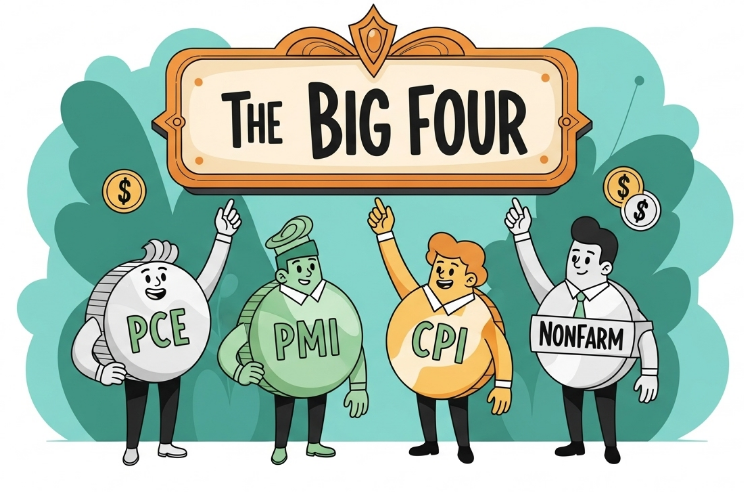

  • PCE vs PMI vs CPI vs NonFarm. The Big Four Economic Reports: Which One Actually Moves Your Money (And Which Ones Are Just Noise)

    PCE vs PMI vs CPI vs NonFarm. The Big Four Economic Reports: Which One Actually Moves Your Money (And Which Ones Are Just Noise)

    Here’s the deal: You’ve got four economic releases that supposedly move markets, but most investors treat them like they’re all created equal. Spoiler alert: they’re not. One of them can make or break your portfolio in 30 seconds, another one gives you a crystal ball into the future, and the other two? Well, let’s just say they’re more useful for cocktail party conversation than actual money-making.

    The Economic Data Food Chain (AKA Your Monthly Money-Moving Schedule)

    Think of these four releases like your monthly relationship drama, but with your portfolio. Each one plays a different role, and if you don’t know who’s who, you’re going to get hurt.

    Non-Farm Payrolls: The Drama Queen This is your monthly market earthquake that shows up the first Friday and makes everything about itself. When it’s good, everyone’s happy. When it’s bad, your portfolio throws a tantrum that lasts for days. Employment drives everything from your neighbor’s spending habits to whether Jerome Powell sleeps well at night.

    PMI: The Fortune Teller Released first in the monthly cycle, PMI is like that friend who always knows the gossip before everyone else. Business managers spill the tea about what’s really happening in their companies before it shows up anywhere else. When PMI says manufacturing is picking up, you better believe those industrial stocks are about to move.

    CPI: The Attention Seeker CPI loves the spotlight and makes sure everyone knows when inflation is rising. Great for headlines, terrible for actual investment decisions because it’s not even what the Fed uses. It’s like dating someone who looks perfect on Instagram but can’t hold a real conversation.

    PCE: The Puppet Master Quiet, understated, but actually runs the show. The Fed worships this number, which means it controls interest rates, which means it controls your entire financial future. PCE doesn’t need to be loud because it has all the real power.

    Why Non-Farm Payrolls Is Your Portfolio’s Best Friend (Or Worst Enemy)

    Value Proposition: Get 72 hours advance notice of the biggest market moves each month.

    Non-Farm Payrolls is like that one friend who can make or break your entire weekend plans. When the employment report drops the first Friday of each month, it can move the S&P 500 3% in either direction faster than you can say “unemployment rate.”

    Here’s your money-making edge: the details matter more than the headline. Everyone focuses on the unemployment rate, but smart money watches average hourly earnings for wage inflation signals and labor force participation for structural employment trends. When hourly earnings spike above 4% annually, start buying financials because rate hikes are coming. When participation drops below 63%, start buying defensive stocks because recession fears will dominate.

    The real insider move? PMI employment data comes out days before Non-Farm Payrolls, giving you a preview of the preview. If PMI employment tanks but everyone expects a strong jobs report, you’ve got yourself a beautiful contrarian setup.

    PMI: Your Economic Crystal Ball (That Actually Works)

    Value Proposition: Know which sectors will outperform before earnings season even starts.

    PMI is like having a direct line to purchasing managers at major corporations who control billions in spending decisions. When they say new orders are picking up, that’s future revenue growth that hasn’t hit corporate earnings yet. When they say inventory is too high, that’s future production cuts that will show up in employment data months later.

    The sector breakdown is pure gold. Services PMI above 52 while manufacturing PMI stays below 50? Time to rotate from industrial stocks into tech and consumer services. It’s that simple, and it works because these purchasing managers are literally the people making the decisions that drive corporate profits.

    Manufacturing PMI employment components give you a sneak peek at Friday’s jobs report. If manufacturing employment in PMI shows contraction while services employment holds steady, you know exactly which sectors will drive the payroll numbers before anyone else figures it out.

    CPI: The Master of Misdirection (Don’t Fall For It)

    Value Proposition: Learn to fade the headlines while everyone else panics.

    CPI is the economic equivalent of reality TV, all drama and no substance. It generates the biggest headlines about inflation, but here’s the dirty secret: the Fed doesn’t even use it for policy decisions. They use PCE, which consistently runs about 0.3% lower due to how housing costs are calculated.

    Your trading edge comes from understanding this gap. When CPI comes in hot and Treasury yields spike immediately, experienced investors often fade that move because they know PCE data later might tell a completely different story. It’s like knowing the movie trailer is better than the actual film.

    CPI does have one useful purpose: short-term volatility trades. When CPI shows energy prices spiking, energy stocks often rally on the headline regardless of actual supply and demand. When CPI shows shelter costs cooling, real estate stocks get relief even if the housing market fundamentals haven’t changed. Just don’t mistake this for actual fundamental analysis.

    PCE: The Quiet Power Behind Your Portfolio’s Fate

    Value Proposition: Position for Fed policy changes before they happen.

    PCE is like that soft-spoken person in the meeting who everyone actually listens to when they finally speak. The Fed has explicitly told you they target 2% PCE inflation, which means every tenth of a percent above or below that target directly affects your borrowing costs, stock valuations, and bond returns.

    When core PCE runs at 2.9% versus the Fed’s 2% target, that’s not just a statistical miss, that’s a 45% policy failure that forces them to keep rates higher for longer. Your growth stocks suffer, your bonds lose value, and your variable-rate debt gets more expensive. When core PCE drops toward 2%, rate cuts accelerate and everything reverses.

    The composition matters for long-term sector allocation. When services inflation in PCE runs hot while goods inflation stays cool, companies in services sectors can raise prices and protect margins. Manufacturing companies get squeezed. This dynamic can persist for years, not months.

    Your Monthly Economic Data Trading Calendar

    Week 1: PMI Release Position for sector rotation based on manufacturing versus services strength. Use employment components to set up for jobs report positioning.

    First Friday: Non-Farm Payrolls Make broad market allocation decisions. Strong jobs support cyclicals and financials. Weak jobs favor defensives and rate-sensitive growth stocks.

    Mid-Month: CPI Release Trade the volatility, don’t invest on the fundamentals. Use headline reactions for entry and exit points on existing positions.

    Month-End: PCE Release Strategic portfolio rebalancing time. Adjust duration risk, growth versus value allocation, and international exposure based on Fed policy implications.

    The Fed’s Secret Priority List (Ranked By What Actually Moves Policy)

    The Federal Reserve has basically told you their cheat sheet, but most investors still don’t get it.

    Priority 1: PCE for inflation targeting This is their north star. When PCE misses, they adjust policy. Period.

    Priority 2: Non-Farm Payrolls for employment mandate Half their job description is maximum employment. When jobs data moves, they move.

    Priority 3: PMI for forward-looking context They read PMI surveys in their speeches but don’t base policy on them. It’s like getting gossip from a reliable source.

    Priority 4: CPI for public relations They acknowledge CPI exists because everyone talks about it, but they’ve spent years training markets to focus on PCE instead.

    Your Options Strategy Cheat Sheet

    Non-Farm Payrolls: Monthly options on SPY or QQQ. The moves are big, immediate, and sustained.

    PMI: Weekly options on sector ETFs. Sharp moves that often reverse within 24 hours.

    CPI: Contrarian plays with weekly options. Fade the initial reaction because PCE will probably contradict it.

    PCE: Duration trades with monthly options on TLT or growth versus value rotation plays. These moves stick because they affect fundamental Fed policy.

    The Bottom Line: Stop Treating All Data Like It’s Equal

    Here’s what separates winning investors from perpetual headline chasers: they understand each economic release serves a different purpose and use them accordingly.

    PMI for early sector positioning. Non-Farm Payrolls for broad market direction. CPI for volatility trading and headline fading. PCE for strategic Fed policy positioning.

    The real money isn’t made by picking the “most important” indicator. It’s made by understanding how they work together to give you a complete picture that most investors never assemble. Use PMI to identify opportunities, Non-Farm Payrolls to time broad market moves, CPI to manage headline risk, and PCE to position for Fed policy changes.

    Master this system, and you’ll be making money from economic data while everyone else is still arguing about which number matters most. Spoiler alert: they all matter, just for different reasons and different time horizons.

  • Pfizer’s $7.3 Billion Weight-Loss Bet: Metsera Shares Surge

    Pfizer’s $7.3 Billion Weight-Loss Bet: Metsera Shares Surge

    Here’s the bottom line: Pfizer just placed a massive bet on your future weight-loss options, and it could completely change how you think about obesity treatment.

    Let me tell you what just happened – and why it matters to you personally.

    Pfizer Just Made the Biggest Move in Weight Loss Since Ozempic

    On Monday, September 22, 2025, Pfizer announced they’re buying Metsera for up to $7.3 billion – that’s $47.50 per share in cash, plus potentially another $22.50 per share if certain milestones are hit. This isn’t just another corporate acquisition. This is Pfizer admitting they desperately want back into the weight-loss game after their previous attempts crashed and burned.

    Here’s what you need to understand: This deal could give you access to weight-loss treatments that are more convenient, more effective, and potentially cheaper than what’s available today.

    Why This Matters More Than You Think

    Right now, you’re probably familiar with Ozempic or Wegovy – those weekly injections that have dominated headlines. But here’s the problem: Eli Lilly has been crushing Novo Nordisk in the weight-loss market, capturing 57% market share by the second quarter of 2025, while the global obesity drug market is projected to reach $150 billion by the early 2030s.

    What does this mean for you? More competition equals better options and potentially lower prices. And Pfizer’s new acquisition brings some game-changing possibilities to the table.

    What Metsera Brings to Your Medicine Cabinet

    Here’s where it gets exciting for you as a potential patient:

    Monthly Injections Instead of Weekly

    Metsera’s lead drug candidate, MET-097i, is designed as a potential once-monthly injectable, meaning you’d only need to take it 12 times per year instead of 52 times. Think about it – that’s one injection per month versus one injection every week. Less hassle, fewer doctor visits, and more convenience in your life.

    Potentially Superior Weight Loss

    MET-097i showed an average weight loss of 11.3% in patients during mid-stage trials. While that might not sound revolutionary compared to existing treatments, remember this is just the beginning. Metsera is also developing MET-233i, an amylin agonist that executives believe has “best-in-class potential.”

    Pills on the Horizon

    Here’s what could be a real game-changer for you: Metsera has oral GLP-1 and amylin drug candidates in preclinical development. Imagine taking a daily pill instead of giving yourself injections. No needles, no refrigeration requirements, no injection site reactions.

    Why Pfizer Failed Before (And Why This Time Could Be Different)

    Let’s be honest about Pfizer’s track record. The company had scrapped the development of danuglipron in April after a trial patient experienced potential drug-induced liver injury. It had also discontinued the development of a twice-daily version in late 2023 due to various side effects.

    But here’s why this acquisition is different: Instead of trying to develop everything from scratch, Pfizer is buying proven science. Metsera’s drugs use proprietary technology that gives molecules a longer half-life to support longer dosing intervals. This isn’t Pfizer gambling on unproven concepts – they’re buying a company that’s already demonstrated results.

    What This Could Mean for Your Wallet

    Here’s the financial reality you need to understand: The current GLP-1 weight-loss drug market is projected to grow at 18.54% annually and reach $48.84 billion by 2030. With that kind of growth, and new entrants expected to cause annual pricing declines to accelerate toward 10%-15% as competitors work to gain insurance coverage, you could see more affordable options in the coming years.

    The value proposition for you: More companies competing means insurers have more leverage to negotiate better prices, and manufacturers have incentives to offer competitive pricing to gain market share.

    Timeline: When You Might Actually Access These Treatments

    Don’t expect to walk into your doctor’s office next month asking for Metsera’s drugs. Preliminary results for weekly and monthly dosing are expected in 2026, according to a Pfizer investor presentation. The deal is expected to close in the fourth quarter of 2025.

    Realistic timeline for you:

    • 2026: Phase 2 results published
    • 2027-2028: Phase 3 trials likely begin
    • 2029-2030: Potential FDA approval (if everything goes well)

    The Bigger Picture: Your Weight-Loss Options Are About to Explode

    This Pfizer deal is just the beginning. Analysts expect 16 new obesity drugs could launch by 2029, with roughly $70 billion of the GLP-1 market coming from these challengers by 2031. We’re not just talking about Pfizer – potential launches from new challengers could start in 2026 with Boehringer Ingelberg and Zealand’s survodutide, with several launches in 2027 (Amgen, Altimmune), 2028 (Pfizer, Roche, Viking, and Structure), and 2029 (Roche, Viking, AstraZeneca, and Zealand).

    What this means for you: In the next 5-7 years, you’ll likely have access to weight-loss treatments that are more effective, more convenient, and more affordable than anything available today.

    Should You Wait or Act Now?

    Here’s my advice: Don’t put your health on hold waiting for future treatments. The current options like Wegovy and Zepbound are already highly effective for many people. But if you’re struggling with cost, side effects, or access issues with current treatments, knowing that better options are coming can give you hope and help you make informed decisions with your healthcare provider.

    The bottom line: Pfizer’s $7.3 billion bet on Metsera signals that the pharmaceutical industry believes the weight-loss market is about to get much more competitive and innovative. For you, that means better treatments are coming – and that’s something worth getting excited about.


    Want to stay informed about breakthrough weight-loss treatments? The landscape is changing rapidly, and new developments could directly impact your treatment options and costs.

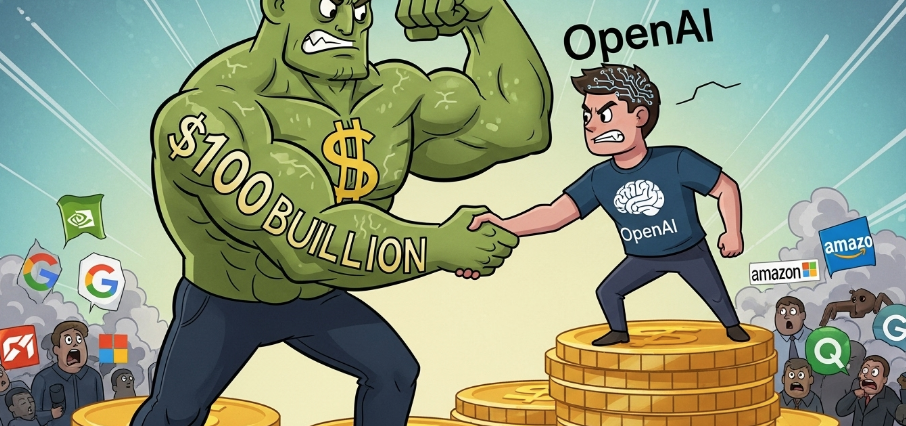
  • The Mega-Deal-Nvidia and OpenAI’s $100 Billion Power Play

    The Mega-Deal-Nvidia and OpenAI’s $100 Billion Power Play

    Remember when your biggest tech decision was choosing between iPhone or Android? Well, buckle up, because we’re about to talk money that makes your monthly phone bill look like pocket change.

    The Deal That’s Got Silicon Valley Buzzing

    So you’re scrolling through your news feed (probably procrastinating, we’ve all been there), and you see that Nvidia just dropped $100 billion on a partnership with OpenAI. That’s not a typo – that’s more zeros than most of us will see in our bank accounts, ever.

    But here’s why you should care, even if you can barely spell “gigawatt.”

    What’s Actually Happening Here?

    Here’s the deal: Nvidia is essentially bankrolling OpenAI (the folks behind ChatGPT – you know, that AI that’s probably written half your emails by now) to build data centers with enough power to light up New York City. We’re talking 10 gigawatts of pure computing muscle.

    Translation for normal humans: They’re building the ultimate AI factories, and you’re going to benefit whether you realize it or not.

    The Value Proposition: What’s In It for You?

    Faster, Smarter AI Tools

    Remember waiting 30 seconds for ChatGPT to respond during peak hours? Those days are numbered. This massive infrastructure investment means the AI tools you’re already using will become lightning-fast and significantly more capable.

    More Reliable AI Access

    No more “ChatGPT is at capacity” messages when you desperately need help with that presentation that’s due in an hour. This deal is essentially insurance against AI traffic jams.

    Innovation You Haven’t Even Imagined Yet

    OpenAI’s CEO Sam Altman hinted at “compute-intensive” products launching soon. Think of this investment as the foundation for AI capabilities that will make today’s tools look like flip phones compared to smartphones.

    Why This Matters More Than You Think

    700 million people use ChatGPT weekly. That’s nearly 1 in 10 humans on Earth. If you’re not one of them yet, you probably will be soon – and this deal ensures the experience won’t be frustrating.

    But it’s bigger than chatbots. As Altman puts it, “Compute infrastructure will be the basis for the economy of the future.” In plain English: this isn’t just about better AI toys; it’s about building the digital backbone of tomorrow’s economy.

    The Domino Effect You’ll Actually Notice

    At Work: AI tools that can handle more complex tasks without breaking a sweat. Think less “Can you help me write an email?” and more “Can you analyze this market data and create a comprehensive strategy?”

    In Education: More sophisticated AI tutoring that adapts to your learning style in real-time, making personalized education accessible to everyone.

    In Daily Life: Smarter virtual assistants that actually understand context and can handle multi-step requests without making you want to throw your phone.

    The Competition Is Heating Up (And That’s Good News)

    This isn’t happening in a vacuum. Microsoft is spending $30 billion on data centers this quarter alone. Meta is building massive facilities in Louisiana. It’s like a digital arms race, except the weapons are designed to make your life easier.

    Competition breeds innovation, and innovation means better products for you at competitive prices.

    The Reality Check

    Sure, there are concerns about an AI bubble (because apparently we humans are incapable of investing in new technology without going completely overboard). But here’s the thing: even if some companies overspend, the infrastructure they’re building will outlast the hype.

    It’s like the dot-com boom – yes, Pets.com crashed and burned, but we still got Amazon, Google, and the entire foundation of the modern internet.

    What This Means for Your Future

    Short-term: Expect significant improvements in AI tools you’re already using within the next few months.

    Medium-term: Prepare for AI capabilities that seem almost magical compared to what’s available today.

    Long-term: We’re building the foundation for an economy where AI assistance isn’t a luxury – it’s as basic as having internet access.

    The Bottom Line

    This $100 billion isn’t just two tech giants playing with monopoly money. It’s an investment in infrastructure that will power the tools you’ll use to work smarter, learn faster, and solve problems you didn’t even know you had.

    Whether you’re a tech enthusiast or someone who still calls every gaming console “a Nintendo,” this deal will impact your digital life. The question isn’t whether AI will change how you work and live – it’s how quickly you’ll adapt to the improvements coming your way.

    And hey, at least you won’t have to foot the bill for this particular upgrade.

  • PMI Alert: This Friday’s Manufacturing Data Trigger May Trigger Markets

    PMI Alert: This Friday’s Manufacturing Data Trigger May Trigger Markets

    Here’s the situation: We’re just days away from critical PMI releases this week. These aren’t just numbers, they’re early warning signals that could reshape your portfolio before everyone else catches on. If you’re not positioned for what’s coming, you’re already behind.

    What August’s Split Personality Revealed And Why You Should Care

    Let me break down what happened in August that has smart money repositioning right now. Manufacturing PMI came in at 48.7%, that’s six straight months of contraction, but here’s the kicker: it actually improved from July’s 48.0%. Meanwhile, Services PMI hit 52.0%, showing solid expansion and jumping nearly 2 points from July’s barely-above-water 50.1%.

    What this split tells you: The economy is literally divided. Manufacturing is getting hammered by trade tensions and inventory adjustments, while services are thriving on domestic demand. If you’re overweight in industrial stocks without understanding this dynamic, you’re exposed.

    The real eye-opener? New Orders in manufacturing finally turned positive at 51.4% after six months of decline. That’s a 4.3-point jump that signals businesses might be done cutting back. But here’s where it gets interesting for your money, this could be the last gasp of tariff-driven front-loading or the real beginning of a recovery.

    Your Portfolio’s Hidden PMI Exposure

    Most investors don’t realize how PMI data directly impacts their returns. Here’s your reality check.

    Manufacturing PMI below 50 means your industrial ETFs, materials stocks, and cyclical plays get punished. Think Caterpillar, 3M, and most manufacturing-heavy mutual funds.

    Services PMI above 52 means your consumer discretionary holdings, financial services stocks, and domestic-focused companies rally. This includes everything from restaurants to regional banks.

    The gap between them matters too. When services outperform manufacturing by 3+ points like we’re seeing now, you get sector rotation that can move 10-15% of your portfolio in weeks.

    Current opportunity: August’s data shows manufacturing might be bottoming while services remain strong. If Friday confirms this pattern, you’re looking at a potential value rotation that could reward patient investors who positioned early.

    Friday’s Three Scenarios: Where Your Money Should Go

    Scenario One is Manufacturing Bounces Back with about 35% probability. Friday’s PMI hits 50+ for the first time since March and industrial stocks explode higher with 5-8% single-day moves possible. Materials and energy sectors outperform while value stocks crush growth in the rotation. Your play here is loading up on beaten-down industrials before the data. Consider XLI or individual names like Honeywell and Boeing suppliers.

    Scenario Two is Services Stay Strong Manufacturing Stays Weak with about 50% probability. Manufacturing remains below 50 while Services stay above 52. You get continued sector divergence creating trading opportunities. Consumer discretionary and financials keep leading while tech and services maintain premium valuations. Your play is sticking with domestic-focused services plays. Consider XLF and consumer names with strong U.S. exposure.

    Scenario Three is Both Sectors Weaken with about 15% probability. Manufacturing drops further and Services slip below 52. Risk-off mode triggers flight to quality, bond yields drop, growth stocks benefit short-term, and recession fears resurface. Your play becomes defensive positioning in utilities, consumer staples, and high-quality bonds. This is the scenario where cash becomes king.

    The Tariff Trade: Reading Between the PMI Lines

    Here’s what most analysts are missing: PMI data now reflects trade policy more than traditional economic cycles. August’s manufacturing “improvement” to 48.7% might actually be the last hurrah of companies front-loading inventory before tariff impacts fully hit.

    Your edge: This Friday’s data will be critical to watch. If manufacturing PMI drops below 47%, you’re looking at a genuine policy-induced recession in that sector. If it holds above 48.5%, businesses are adapting better than expected.

    Smart positioning means companies with domestic supply chains are your winners. Businesses dependent on complex international sourcing are your losers. The PMI’s sub-components on supplier deliveries and inventory will tell you everything about supply chain stress.

    Services PMI: Your Inflation Early Warning System

    While everyone watches the Fed for inflation signals, Services PMI gives you advance notice. August’s 52.0% reading with accelerating business activity at 55% means domestic demand is running hot. That’s inflationary pressure building in real-time.

    What this means for your portfolio: Rising services inflation benefits companies with pricing power but hurts margin-squeezed businesses. Strong domestic demand rewards U.S.-focused companies but penalizes export-dependent firms. Service sector strength supports real estate, consumer services, and domestic banks.

    Friday catalyst: If Services PMI hits 53+ while input prices rise, watch the price sub-index, you’re looking at renewed inflation pressure that could pause Fed rate cuts. That scenario favors value over growth and shorter-duration bonds over longer ones.

    The Employment Component Everyone Ignores

    PMI employment data arrives 4 days before the jobs report, giving you a trading edge most investors never use. August manufacturing employment hit 45.2% showing contraction while services employment was 50.2% barely expanding.

    Portfolio impact: Strong employment components in both sectors equals cyclical stock rally. Weak employment across both equals defensive positioning time.

    Sector Rotation Plays for This Week’s PMI

    Before the data, position now. If you believe in a contrarian manufacturing bet and think there’s a PMI bounce, buy beaten-down industrials. For a continuation services play, if you think the trend continues, add to domestic-focused service names. To hedge your bets, pair long services with short manufacturing ETFs.

    After the data, react quickly. Manufacturing surprise upside means industrial stocks could gap up 3-5% immediately. Services disappointment triggers the first sign of services weakness and defensive rotation. Both sectors strong means risk-on mode benefits cyclicals and value names.

    Your Options Strategy for PMI Volatility

    PMI releases create predictable volatility patterns you can profit from.

    Pre-release positioning: Buy straddles on industrial ETFs if you expect big moves but aren’t sure of direction. XLI options are typically liquid and responsive to PMI surprises.

    Post-release momentum: PMI surprises often create 2-3 day momentum moves in affected sectors. Use this for quick profits on directional bets.

    Earnings correlation: Companies reporting after PMI releases often see their reactions amplified by the data. Use this for individual stock plays.

    The China Connection You Can’t Ignore

    This week’s PMI data arrives amid China’s latest stimulus measures. If U.S. manufacturing PMI improves while Chinese demand picks up, you’re looking at a double catalyst for global industrial stocks.

    Your international play: Consider emerging market industrial exposure if both U.S. and Chinese PMI data improve simultaneously. FXI and EWZ could benefit from coordinated global manufacturing recovery.

    Timing Your Moves: The PMI Calendar Advantage

    Monday through Thursday is when you position for Friday’s PMI releases. Friday at 10 AM ET brings both Manufacturing and Services PMI releases creating immediate sector rotation opportunity. Friday afternoon is for digesting implications for next week’s positioning.

    Pro tip: The 30 minutes after the release often see the biggest moves. Have your orders ready and be prepared to act fast.

    The Bottom Line: PMI as Your Economic GPS

    Most investors treat PMI data as backward-looking noise. Smart money uses it as forward-looking intelligence. These surveys capture business sentiment before it shows up in earnings, employment data, or GDP numbers.

    Your competitive advantage: This Friday’s PMI releases will tell you whether the manufacturing recession is ending or deepening, whether services strength is sustainable or starting to crack, whether the economic split between sectors is widening or healing, and whether tariff impacts are manageable or economy-threatening.

    The big picture: We’re at an inflection point where PMI data matters more than usual. With the Fed cutting rates, trade policies reshaping supply chains, and election uncertainty building, business managers’ real-time assessments, which PMI captures, are your best guide to what’s actually happening in the economy.

    Your action plan: Don’t just read the headlines when PMI data hits this Friday. Use the sector-by-sector breakdown, employment components, and price indicators to position your portfolio ahead of the crowd. These releases could be the catalyst that breaks this economy and your portfolio in either direction.

    Remember: In markets, it’s not about predicting the future perfectly. It’s about positioning for multiple scenarios and having the agility to adapt when new information arrives. PMI data gives you that information before most investors even know to look for it.

  • A Critical September Test Ahead with PCE DATA on FRIDAY

    A Critical September Test Ahead with PCE DATA on FRIDAY

    Bottom Line Up Front: With the Federal Reserve having just cut rates by 25 basis points despite inflation concerns, the September 26 PCE release will be pivotal in determining whether the Fed continues its cautious easing cycle or pauses amid persistent price pressures above the 2% target.

    July’s Mixed Signals: Progress Stalled on Inflation Front

    The most recent PCE data from July painted a concerning picture for Federal Reserve policymakers. Core PCE inflation rose to 2.9% year-over-year, up from 2.8% in June and marking the highest level since February 2025. This 0.1 percentage point increase represented a reversal of the disinflationary trend the Fed had hoped to maintain.

    The monthly core PCE reading of 0.3% also came in line with expectations but showed persistent underlying price pressures. Meanwhile, headline PCE inflation held steady at 2.6% annually, with energy prices providing some relief by declining 2.7% year-over-year.

    The composition of July’s inflation data revealed troubling dynamics. Services prices jumped 3.6% annually compared to just a 0.5% increase in goods prices, highlighting the stickiness of services inflation that has proven challenging for the Fed to address. This divergence underscores how inflation has become increasingly concentrated in the services sector, where labor costs play a larger role.

    Market Implications of July’s Data

    July’s PCE report had immediate consequences for monetary policy expectations. The data supported market expectations for Federal Reserve rate cuts, with analysts noting that while inflation wasn’t declining as rapidly as hoped, labor market weakness was becoming a more pressing concern for policymakers.

    Ellen Zentner, chief economic strategist at Morgan Stanley Wealth Management, captured the Fed’s dilemma perfectly: “The Fed opened the door to rate cuts, but the size of that opening is going to depend on whether labor-market weakness continues to look like a bigger risk than rising inflation.”

    The report also highlighted the impact of President Trump’s trade policies. The administration had imposed a baseline 10% tariff on all imports and levied additional reciprocal tariffs on multiple trading partners, with these measures beginning to work their way through the U.S. economy and contributing to price pressures.

    The Fed’s September Response: A Delicate Balance

    Fast-forward to September 17, and the Federal Reserve delivered its first rate cut since December 2024, lowering the federal funds rate by 25 basis points to a range of 4.00%-4.25%. The decision came despite concerns about inflation still running above target, with the Fed citing intensified worries about the U.S. labor market as the primary driver.

    The vote was 11-to-1, with newly installed Governor Stephen Miran dissenting in favor of a larger 50 basis point cut. This marked less dissent than Wall Street had anticipated, as Governors Michelle Bowman and Christopher Waller, who were watched for possible additional dissents, both supported the quarter-point reduction.

    The Fed’s updated economic projections revealed the challenging path ahead. Officials now expect PCE inflation to end 2025 at 3.0%, well above the central bank’s 2% target, before declining to 2.6% in 2026 and reaching 2.1% in 2027. This represents a more pessimistic inflation outlook than previous projections.

    What to Expect from September’s PCE Release

    The September 26 PCE data release will be crucial for several reasons. First, it will provide the first comprehensive inflation reading since the Fed’s rate cut, offering insights into whether price pressures are moderating or remaining stubbornly elevated.

    Key metrics to watch:

    • Core PCE inflation (year-over-year): Any reading above 2.9% would signal that inflation is not only failing to decline but potentially accelerating, which could force the Fed to reconsider its easing path.
    • Monthly core PCE: A reading above 0.3% would indicate that underlying price pressures remain intense and could derail the Fed’s plans for additional rate cuts.
    • Services vs. goods inflation: The composition will be critical, as persistent services inflation would suggest that labor market tightness continues to drive price pressures despite recent employment weakness.

    Potential Policy Implications

    The September PCE data could significantly influence the Fed’s remaining two meetings of 2025 in October and December. The Fed’s dot plot currently suggests two more quarter-point cuts this year, but there’s substantial disagreement among officials, with nine participants expecting only one more cut and one (likely Miran) advocating for much more aggressive easing.

    If inflation moderates: A core PCE reading at or below 2.8% annually could provide the Fed cover to proceed with its planned easing cycle, potentially delivering cuts at both remaining meetings.

    If inflation remains elevated: Core PCE at 3.0% or higher could force the Fed to pause, especially if services inflation remains problematic. This would represent a hawkish shift and could surprise markets expecting continued easing.

    If inflation accelerates: Any significant uptick in core inflation could halt the easing cycle entirely and potentially trigger discussions about rate increases, though this scenario seems unlikely given labor market concerns.

    Broader Economic Context

    The September PCE data arrives amid a complex economic backdrop. The unemployment rate hit 4.3% in August, the highest since October 2021, while job creation has been stagnant and recent revisions showed the economy created nearly a million fewer jobs than initially reported over the 12-month period prior to March 2025.

    At the same time, tariff policies continue to create upward pressure on prices, with Fed Chair Jerome Powell noting that the pass-through of tariffs has been “smaller and slower” than expected earlier this year but still contributing to inflation expectations.

    Market Positioning and Expectations

    Financial markets are closely watching for signs of the Fed’s future policy direction. Current projections see the fed funds rate falling to the mid-3% range by 2026, which would materially impact money market fund yields and other interest-sensitive investments.

    The uncertainty around the inflation trajectory has created significant dispersion in Fed officials’ projections, making the upcoming PCE data even more critical for market pricing of future rate cuts.

    Conclusion: A Pivotal Moment for Monetary Policy

    The September 26 PCE release represents more than just another monthly data point—it’s a critical test of whether the Federal Reserve’s new easing cycle can proceed as planned or whether persistent inflation will force policymakers to recalibrate their approach.

    With the Fed having already committed to an easing path despite inflation running well above target, the data will reveal whether this strategy is vindicated by moderating price pressures or challenged by continued inflationary momentum. For investors, businesses, and consumers alike, the implications extend far beyond monetary policy to the broader trajectory of economic growth, borrowing costs, and financial market performance.

    The stakes couldn’t be higher as the Fed attempts to navigate the delicate balance between supporting a weakening labor market and maintaining credibility in its fight against inflation. September’s PCE data will provide crucial evidence about which of these dual mandate objectives should take precedence in the months ahead.

  • The Dollar’s Breakdown and What It Means for American Stocks

    The Dollar’s Breakdown and What It Means for American Stocks

    You’re watching history unfold in real time. The U.S. Dollar Index has fallen 10.7% in the first half of 2025, marking its worst performance for this period in over 50 years. This isn’t just another market fluctuation. It’s a fundamental shift that’s creating a massive divergence within American equity markets—and the winners might surprise you.

    Think of the dollar as the invisible hand that shapes every American company’s profitability. When that hand weakens, it doesn’t affect all stocks equally. Some companies see their earnings explode higher while others get crushed by rising costs. Right now, we’re watching this separation accelerate in real time.

    The dollar index has fallen 10.8 percent in the first half of 2025, driven by multiple converging factors that aren’t going away anytime soon. President Trump’s stop-start tariff war, and his attacks that have led to worries over the independence of the Federal Reserve, have undermined the appeal of the dollar as a safe bet. Meanwhile, economists are worried about Trump’s “big, beautiful” tax bill, currently under debate in the US Congress, which is expected to add trillions of dollars to the US debt pile over the coming decade.

    Why This Dollar Decline Is Different for Stocks

    This isn’t your typical currency weakness. The gap between U.S. 10-year bond yields and those of major partners is at its widest since 1994. Foreign investors are quietly backing away from dollar assets. A recent Bank of America survey shows global fund managers at their lowest USD allocation since 2005.

    For American equities, this creates a tale of two markets. Multinational corporations with significant overseas revenue are seeing those foreign earnings translate into more dollars when they report quarterly results. Meanwhile, domestic-focused companies are getting squeezed by higher import costs and reduced purchasing power.

    The S&P 500’s performance masks this underlying story. While the index has posted gains, the real action is happening beneath the surface as investors rotate from domestic plays into international exposure stocks.

    The Hidden Winners in Your Portfolio

    A weakening dollar creates immediate tailwinds for a specific class of American companies that most investors overlook. These are the multinational giants that generate substantial revenue outside the United States. When the dollar weakens, their foreign earnings get a mathematical boost when converted back to dollars.

    Technology companies with global reach are prime beneficiaries. Think Microsoft with its worldwide cloud infrastructure, Apple with its international iPhone sales, or Google with its global advertising revenue. Every euro, yen, or pound they earn translates into more dollars on their income statements.

    The same dynamic benefits American manufacturing exporters. Companies like Boeing, Caterpillar, and General Electric see their products become more competitive internationally as dollar weakness makes American goods cheaper for foreign buyers. Export volumes typically surge during sustained dollar declines.

    Consumer goods giants with international brands also benefit. Coca-Cola, McDonald’s, and Procter & Gamble all see their overseas earnings amplified by currency translation effects. These companies often see margin expansion during dollar weakness as their global revenue streams compound the benefits.

    The Losers Nobody Wants to Talk About

    While multinational companies celebrate, purely domestic American businesses face mounting pressure. Retailers that depend on imported goods see their cost structures deteriorate rapidly. Target, Walmart, and other retailers with significant import dependencies watch their margins compress as foreign suppliers demand more dollars for the same products.

    Domestic-focused restaurants and service companies also struggle. Dollar weakness drives up commodity and energy costs, creating inflation pressures that squeeze companies unable to offset costs with international revenue. Regional banks face particular pressure as their loan portfolios become concentrated in domestic real estate and local businesses affected by rising import costs.

    Small-cap stocks, which tend to be more domestically focused than large-caps, often underperform during sustained dollar weakness. The Russell 2000 typically lags the S&P 500 during these periods as international exposure becomes a competitive advantage.

    The Fed’s Impossible Position

    The Federal Reserve is caught between fighting inflation and supporting a weakening economy. Markets are now pricing in an 85% probability of a September rate cut, which would further pressure the dollar. Every rate cut makes American assets less attractive to foreign investors while potentially accelerating dollar weakness.

    This creates a feedback loop for equities. Rate cuts typically boost stock valuations through lower discount rates, but dollar weakness can offset these gains for domestic companies while amplifying them for international revenue generators. The result is increasing divergence within American equity markets.

    Technology stocks with global reach often benefit from both dynamics—lower rates boost their growth valuations while dollar weakness amplifies their international earnings. This explains why tech megacaps continue outperforming despite broader market uncertainty.

    Your Stock Selection Strategy

    The value proposition here isn’t about avoiding American equities—it’s about choosing the right American equities. Companies with significant international exposure are essentially providing you with built-in currency hedging while maintaining dollar-denominated ownership.

    Look for companies that report substantial foreign revenue percentages. Many S&P 500 companies generate 40-60% of their revenue internationally. These firms benefit from dollar weakness while still giving you exposure to American innovation and management.

    Energy companies present a particularly interesting case. As the dollar weakens, oil and gas prices often rise in dollar terms, benefiting American energy producers. Companies like ExxonMobil and Chevron not only benefit from higher commodity prices but also see their international operations become more profitable.

    Healthcare and pharmaceutical companies with global drug sales also benefit. Pfizer, Johnson & Johnson, and Merck all have significant international revenue streams that get amplified during dollar weakness periods.

    The Bigger Picture for American Markets

    This isn’t just about individual stock picking. You’re witnessing a fundamental shift in how American companies compete globally. Dollar weakness makes American labor, manufacturing, and services more competitive internationally while making foreign goods more expensive domestically.

    This creates long-term structural advantages for American companies that can capitalize on export opportunities while disadvantaging those dependent on imports. The winners in this environment are companies that can leverage America’s technological and innovative advantages while benefiting from improved cost competitiveness.

    Manufacturing companies with domestic production facilities become more attractive as “reshoring” accelerates. Dollar weakness makes domestic production more cost-competitive relative to foreign alternatives, potentially driving a manufacturing renaissance in certain sectors.

    The war in Ukraine accelerated de-dollarisation, as central banks worldwide witnessed Russia’s dollar reserves being effectively wiped out overnight. This trend, combined with America’s fiscal challenges, suggests dollar weakness may persist longer than typical cycles.

    Positioning Your American Equity Portfolio

    The smart approach isn’t abandoning American stocks—it’s tilting toward the right American stocks. Focus on multinational corporations with diversified revenue streams, strong international brands, and the ability to benefit from both dollar weakness and America’s competitive advantages.

    Avoid or underweight purely domestic plays, import-dependent retailers, and companies with significant foreign cost structures but domestic revenue concentration. The currency translation effects will work against these businesses throughout this cycle.

    Consider American companies with significant international operations as your hedge against further dollar weakness. These stocks provide upside exposure to currency movements while maintaining your investment in American innovation and market leadership.

    The dollar’s 50-year dominance is ending, but American equity markets will adapt and evolve. The question isn’t whether to own American stocks, but which American stocks will thrive in this new monetary reality. Choose companies that benefit from dollar weakness rather than those that suffer from it, and you’ll position yourself ahead of the adjustment that’s already underway.

  • Oracle’s Meta Masterstroke: This $20B AI Deal Could Print Money

    Oracle’s Meta Masterstroke: This $20B AI Deal Could Print Money

    Just when you thought Oracle (ORCL) couldn’t get any hotter, Larry Ellison’s enterprise juggernaut dropped another bombshell that sent shares soaring 4% in Friday trading. Oracle is reportedly in talks with Meta Platforms for a massive $20 billion AI cloud computing deal, and if this goes through, it could be the move that cements Oracle as the undisputed king of AI infrastructure.

    This isn’t just another cloud contract—it’s a strategic masterstroke that could reshape the entire AI ecosystem. While everyone’s been obsessing over ChatGPT and AI chatbots, Oracle has been quietly building the digital backbone that makes it all possible. And now, with Meta desperately needing massive computing power for their AI ambitions, Oracle is perfectly positioned to cash in.

    The Deal That Changes Everything

    Under the proposed multiyear agreement, Oracle would provide Meta with computing power for training and deploying artificial intelligence models. But here’s the kicker—the total commitment amount may increase and other deal terms could still change before a final agreement, suggesting this $20 billion figure might just be the starting point.

    Think about it: Meta burns through billions developing AI features for Facebook, Instagram, and WhatsApp. They need massive computational firepower to train their models and run inference at scale. Instead of building everything in-house (which takes forever and costs a fortune), they’re turning to Oracle’s proven infrastructure.

    This deal makes perfect sense when you consider the context. Just last week, Oracle reported a huge increase in bookings that vaulted its stock price to an all-time high. The company has been on an absolute tear, and this Meta partnership could be the catalyst that sends shares into the stratosphere.

    Oracle’s AI Infrastructure Empire

    What makes this deal so compelling isn’t just the dollar amount—it’s what it represents. Oracle isn’t just selling cloud storage; they’re providing the specialized infrastructure that powers the AI revolution. AI infrastructure demand from OpenAI, Meta and other customers has buoyed Oracle’s stock, which is up more than 80% this year.

    The timing couldn’t be better. The reports come two months after Oracle inked an agreement to build 4.5 gigawatts’ worth of data center capacity for OpenAI, a deal that sources suggest will be worth $300 billion over five years. Oracle is essentially becoming the AWS of AI—except they’re laser-focused on the specific needs of artificial intelligence workloads.

    Here’s what investors need to understand: Oracle’s cloud infrastructure business isn’t just growing—it’s exploding. The company has built specialized hardware and software stacks optimized for AI training and inference. While Amazon and Microsoft offer general-purpose cloud services, Oracle has created something purpose-built for the AI era.

    Why Meta Needs Oracle (And Why Oracle Wins Big)

    Meta has more than 20 data centers around the world that they own and operate themselves, so why would they partner with Oracle? Speed and specialization. You can partner with Oracle much faster than you can develop your own or build your own data centers.

    Meta is in an AI arms race with Google, Microsoft, and every other tech giant. They can’t afford to wait years to build custom infrastructure when Oracle can provide specialized AI computing power immediately. This is about competitive advantage—Meta gets cutting-edge AI capabilities without the massive capital expenditure and time investment.

    For Oracle, this relationship creates something even more valuable than revenue: it establishes them as the go-to infrastructure provider for the world’s biggest AI companies. Oracle has previously disclosed cloud business with Meta and other companies that train AI models, including Elon Musk’s xAI.

    The Broader Picture: Oracle’s Strategic Positioning

    This Meta deal isn’t happening in a vacuum. Oracle unveiled four multi-billion-dollar contracts last week, amid an industry-wide shift, led by companies such as OpenAI and xAI, to aggressively spend to secure the massive computing capacity needed to stay ahead in the AI race.

    The company has also been smart about partnerships. Oracle has struck deals with Amazon, Alphabet and Microsoft to let their cloud customers run Oracle Cloud Infrastructure alongside native services. The revenue from these partnerships rose more than sixteen-fold in the first quarter.

    This is brilliant strategy. Instead of fighting AWS and Azure head-to-head in general cloud services, Oracle is positioning itself as the specialized AI infrastructure layer that works with everyone. They’re becoming infrastructure Switzerland—neutral, essential, and incredibly profitable.

    The Investment Thesis: Why ORCL Could Soar

    Here’s why this Meta deal could be a game-changer for Oracle shareholders:

    Recurring Revenue Stream: This isn’t a one-time purchase. AI workloads require constant computing power, creating predictable, recurring revenue for years to come.

    Competitive Moat: Oracle’s specialized AI infrastructure creates switching costs. Once Meta’s AI models are optimized for Oracle’s platform, migrating would be expensive and time-consuming.

    Validation: Landing Meta as a major customer validates Oracle’s AI strategy and could attract other enterprise customers looking for proven AI infrastructure.

    Margin Expansion: AI infrastructure commands premium pricing compared to general cloud services. This deal could significantly boost Oracle’s profit margins.

    The Risks: What Could Go Wrong

    No investment thesis is complete without acknowledging the risks. Investors have voiced concern over how much of Oracle’s booked cloud deals are attributable to a single customer, OpenAI. Customer concentration is always a risk—if OpenAI or Meta significantly reduced their spending, it could hurt Oracle’s growth.

    Competition is also intensifying. Amazon, Microsoft, and Google aren’t sitting still—they’re all investing heavily in AI infrastructure. Oracle needs to keep innovating to maintain its edge.

    There’s also execution risk. Building and maintaining the infrastructure for these massive AI workloads is technically challenging. Any service disruptions or performance issues could damage Oracle’s reputation and cost them customers.

    The Bottom Line: A Calculated Bet on AI Infrastructure

    Oracle’s potential $20 billion deal with Meta represents more than just a large contract—it’s validation of the company’s strategic pivot to AI infrastructure. While other cloud providers chase market share in commoditized services, Oracle has carved out a specialized niche in the highest-growth segment of cloud computing.

    The stock has already run up significantly this year, but the AI infrastructure market is still in its early innings. If Oracle can execute on these massive contracts and continue winning marquee customers like Meta and OpenAI, shares could have much more room to run.

    For investors looking for exposure to the AI boom without the volatility of pure-play AI stocks, Oracle offers a compelling middle ground. They’re providing the essential infrastructure that makes AI possible, creating a more stable way to bet on artificial intelligence’s continued growth.

    This Meta deal could be the catalyst that transforms Oracle from a legacy database company into the backbone of the AI economy. And if that happens, $20 billion might just be the beginning.

    Disclosure: This analysis is for informational purposes only and should not be considered personalized investment advice. Consider your risk tolerance and investment objectives before making any investment decisions.

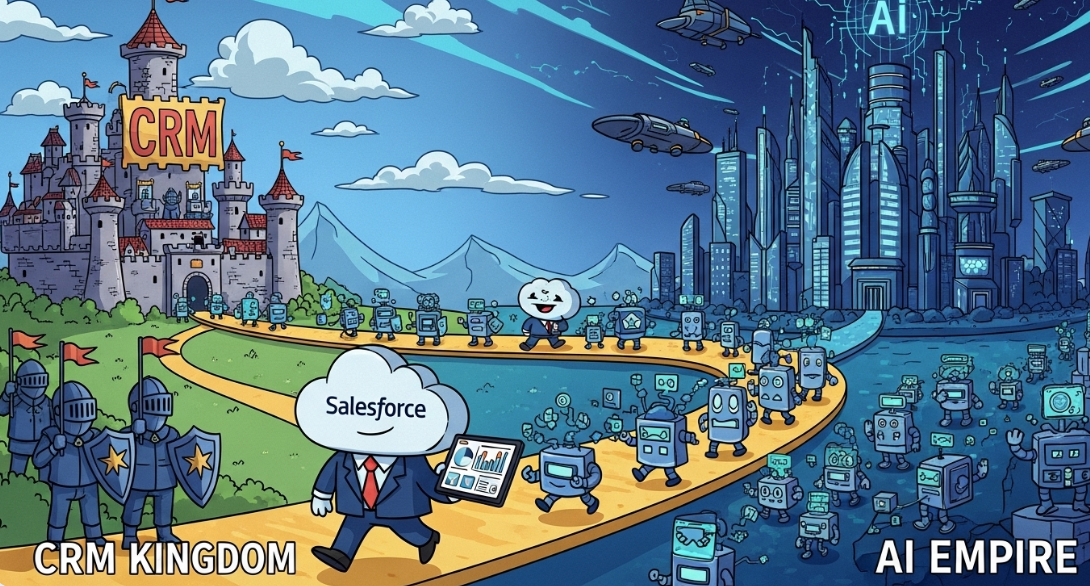
  • Salesforce.com (CRM): From CRM Kingdom to AI Empire (With Digital Agents)

    Salesforce.com (CRM): From CRM Kingdom to AI Empire (With Digital Agents)

    Stock Symbol: CRM | Current Price: ~$244 (September 2025) | Target Price: $330+ | Timeframe: 12-18 months

    NOT FINANCIAL ADVICE

    Salesforce has officially evolved from “that CRM company everyone uses” to “that AI company that happens to dominate customer relationships while building armies of digital agents.” With Q2 2025 revenue hitting $10.24 billion and the revolutionary launch of Agentforce 3.0, Salesforce is proving that Marc Benioff’s vision of the “agentic enterprise” isn’t just corporate buzzword bingo—it’s actually becoming reality. The company delivered $2.91 adjusted EPS (beating $2.78 estimates) while simultaneously deploying over 8,000 customers to their digital labor platform, because apparently helping companies manage relationships wasn’t complicated enough—now they’re automating entire workforces. It’s like watching someone turn a Rolodex into a sentient army of customer service representatives, except the Rolodex is worth $232 billion and the representatives never sleep.

    The Agentforce Revolution: From Software to Digital Labor

    Salesforce’s Agentforce platform has officially launched Version 3.0, marking the transition from “we have AI features” to “we are the AI workforce infrastructure.” The company is targeting nothing less than empowering one billion agents by the end of 2025, which is either incredibly ambitious or incredibly Benioff, depending on your tolerance for San Francisco-sized dreams.

    Since its initial launch in October 2024, Agentforce has helped customers deliver undeniable value, including reducing Engine’s average customer case handle time by 15%, autonomously resolving 70% of 1-800Accountant’s administrative chat engagements during critical tax weeks in 2025, and increasing Grupo Globo’s subscriber retention by 22%. These aren’t pilot program statistics—these are actual business transformations happening right now, proving that AI agents can handle real work better than the humans they’re replacing.

    The platform features enhanced reasoning through the Atlas Reasoning Engine, which processes information like humans think and plan, except without coffee breaks or existential crises. Agentforce can take action across every channel and be integrated into any system, making it easy to add agentic automation across your entire business. It’s like having a digital workforce that never calls in sick, never asks for raises, and actually gets smarter over time instead of more cynical.

    Financial Performance: The Subscription Machine Keeps Printing

    Salesforce’s Q2 2025 results tell the story of a company that knows how to generate recurring revenue, with total revenue of $10.24 billion and adjusted earnings of $2.91 per share, beating estimates on both metrics. Subscription and support revenue hit $9.7 billion, up 11% year-over-year, proving that businesses remain addicted to Salesforce’s CRM ecosystem even while they’re simultaneously trying to replace their employees with AI agents.

    Current remaining performance obligation reached $29.4 billion, up 11% year-over-year, which in subscription business terms translates to “we already have billions in future revenue locked in,” the kind of predictable cash flow that makes CFOs weep with joy. The company maintains gross margins around 77%, demonstrating pricing power that would make luxury handbag manufacturers jealous.

    Data Cloud revenue grew 120% year-over-year, because apparently Salesforce decided that just managing customer relationships wasn’t enough—they needed to become the foundational data layer for the entire AI economy. It’s like evolving from running a phone book company to owning the entire telecommunications infrastructure, except instead of phone numbers, it’s customer intelligence for autonomous agents.

    The AI Transformation: Beyond Copilots to True Autonomy

    While competitors build copilots that require human prompting, Agentforce operates autonomously, retrieving data on demand, building action plans, and executing without human intervention. This isn’t incremental improvement—this is categorical transformation from reactive tools to proactive digital workers that handle complex, multi-step business processes.

    Agentforce 2dx enables proactive AI agents to work behind the scenes without constant human oversight, anticipating business needs and dynamically taking action. The platform integrates autonomous agents into existing data systems and business logic, creating what Salesforce calls “ambient agents” that operate invisibly in the background of business operations.

    The competitive advantage isn’t just technological—it’s architectural. Data Cloud unifies and harmonizes all customer data and metadata across systems in real time, enabling Agentforce to operate with complete context and precision. While competitors scramble to build AI features on top of fragmented systems, Salesforce built a unified platform where agents can access everything they need to make intelligent decisions.

    Market Position: The CRM Monopoly Goes Agentic

    Salesforce dominates the CRM market with approximately 30% market share in a highly fragmented space that continues growing double digits annually. But the Agentforce platform transforms Salesforce from a software vendor into an infrastructure provider for the agentic economy, expanding their addressable market from CRM software to digital labor across every business function.

    The company has announced significant investments, including $6 billion in UK business through 2030 and the launch of Missionforce to power U.S. national security with AI. These aren’t just revenue expansion moves—they’re infrastructure investments that position Salesforce as essential digital backbone for governments and enterprises globally.

    The integration of Slack creates an enterprise collaboration platform where human workers and AI agents collaborate seamlessly, making Salesforce not just a system of record but the actual workplace where business gets done. It’s like owning both the office building and the workforce, except the workforce is infinitely scalable and constantly improving.

    Execution Risk: Promise vs. Platform Reality

    Salesforce’s biggest risk remains execution against aggressive AI adoption timelines while maintaining their core CRM dominance. The company’s stock has been the worst performer in large-cap tech this year, down 23% through the recent earnings report, as investors demand proof that AI investments translate to accelerated growth rather than just higher R&D expenses.

    Competition intensifies not just from traditional CRM providers but from AI-native companies building agent platforms from scratch. Salesforce must prove that retrofitting their existing platform with autonomous capabilities creates better outcomes than purpose-built AI systems, while simultaneously educating enterprise customers about the transformational potential of agentic AI.

    The enterprise sales cycle creates natural delays between platform capabilities and revenue recognition, as large organizations require extensive pilots and change management to adopt autonomous agent workflows. Success depends on Salesforce’s ability to demonstrate clear ROI from agent deployment while providing sufficient control and transparency for risk-averse enterprise buyers.

    The Platform Play: Data, Apps, and Digital Labor

    Agentforce is deeply integrated with Salesforce Customer 360, leveraging the full power of applications like sales, service, marketing, and commerce while providing complete customer views for seamless hand-offs between agents and humans. This integration creates switching costs and network effects that compound as organizations deploy more agents across different business functions.

    The MuleSoft integration enables Agentforce to connect with any external system, while the Tableau analytics platform provides insights into agent performance and business outcomes. The company estimates 4 trillion flows built annually and 5.6 billion hours saved through automation, demonstrating that customers already trust Salesforce with mission-critical business logic.

    Salesforce Ventures’ $500 million Generative AI Fund, including a $200 million investment in Hugging Face, positions the company at the center of the open-source AI ecosystem while creating strategic partnerships that accelerate innovation and market adoption.

    Investment Reality Check: The AI Infrastructure Bet

    Based on Salesforce’s transformation from CRM vendor to digital labor platform, expanding market opportunity through Agentforce adoption, and sustainable competitive advantages in data integration and enterprise relationships, the company presents a compelling if volatile investment opportunity with a 12-18 month price target of $330+ per share.

    Key catalysts include Agentforce customer adoption metrics, expansion beyond current enterprise base into mid-market segments, integration partnerships that extend platform capabilities, and demonstration of measurable ROI from agent deployments. Wall Street analysts maintain a consensus median one-year price target of $342.18, representing 36.78% potential upside, reflecting confidence in the agentic transformation thesis.

    The risk-reward profile favors investors who understand that Salesforce isn’t just adding AI features—they’re building the infrastructure for autonomous business operations. The company has successfully navigated multiple technology transitions while maintaining market leadership, suggesting execution capabilities necessary for the agentic transformation.

    For investors seeking exposure to the autonomous business revolution through a company with proven platform capabilities, established enterprise relationships, and recurring revenue predictability, Salesforce represents the ultimate enterprise AI infrastructure play. They’ve transformed from managing customer relationships to automating customer interactions, and apparently that’s just the opening act for replacing entire business operations with intelligent agents.

    Disclaimer: This analysis contains references to digital labor revolutions and should not be considered personalized investment advice. Past performance does not guarantee future results, though Salesforce’s track record suggests they’re remarkably good at turning enterprise software categories into subscription gold mines. Consult with a qualified financial advisor who hopefully understands both artificial intelligence and Marc Benioff’s relationship with ambitious platform visions.

    Last Updated: September 2025
    Next Review: December 2025

  • Intel’s $5 Billion Band-Aid: Why Nvidia’s Investment Won’t Fix the Real Problem

    Intel’s $5 Billion Band-Aid: Why Nvidia’s Investment Won’t Fix the Real Problem

    Picture this: your friend just got a shiny new sports car, but the engine is still making that concerning knocking sound. That’s essentially what happened when Nvidia dropped $5 billion on Intel stock this week. Sure, Intel’s shares shot up 30% faster than a caffeinated day trader, but the core issue remains untouched.

    The Deal That Had Everyone Talking

    Nvidia’s investment gives them a 4% stake in Intel, and the partnership sounds pretty sweet on paper. Intel will use Nvidia’s CPUs in AI data center servers, while Nvidia gets to sprinkle some of their AI magic into Intel’s PC semiconductors. It’s like a tech industry friendship bracelet exchange, but with billions of dollars involved.

    But here’s where things get interesting (and by interesting, we mean potentially problematic for your portfolio).

    The Elephant in the Clean Room

    The deal conspicuously avoided mentioning Intel’s manufacturing business – you know, that little side project called Intel Foundry Services that’s been hemorrhaging money like a leaky piggy bank. This is the division that was supposed to be Intel’s comeback story but instead became more of a cautionary tale.

    Back in 2021, Intel decided to open its chip manufacturing doors to outside customers. The idea was brilliant in theory: “Hey, we make great chips for ourselves, why not make them for others too?” It was like a master chef deciding to cater parties – what could go wrong?

    Well, apparently a lot. The foundry business went from losing $7 billion in 2023 to a whopping $13 billion in 2024. That’s not a typo – we’re talking about enough money to buy a small country (or at least a really nice one).

    Why This Matters to You

    If you’re wondering why you should care about Intel’s manufacturing woes, here’s the deal: this isn’t just about one company’s struggles. Intel is practically the only game in town for advanced US chip manufacturing, which means they’re crucial for everything from your smartphone to national defense.

    Most of the world’s cutting-edge chips come from Taiwan’s TSMC, which is great until you remember that Taiwan sits in a rather precarious geopolitical position. Having a strong US-based alternative isn’t just good business – it’s strategic insurance.

    The Real Value Play

    So what does this mean for savvy investors like you? While everyone’s getting excited about the Nvidia partnership (and don’t get us wrong, it’s not nothing), the real opportunity lies in understanding Intel’s longer-term potential.

    The manufacturing business might be bleeding cash now, but it could be positioned as a critical asset if geopolitical tensions continue to simmer. Plus, with the US government already holding a 10% stake, there’s clearly official interest in keeping Intel’s foundries humming.

    The Bottom Line

    Nvidia’s investment is like putting a designer Band-Aid on a deep cut – it looks good and might help with healing, but it doesn’t address the underlying issue. Intel’s foundry business will likely continue burning through cash until at least 2027, according to analysts.

    However, for investors with patience and a tolerance for volatility, this could represent an opportunity. Sometimes the best investments are the ones that look messy in the short term but have compelling long-term narratives.

    The key question isn’t whether Intel will fix its manufacturing problems overnight (spoiler: it won’t), but whether the company can leverage partnerships like this one to eventually turn the corner. And with national security implications in play, Intel might have more staying power than its balance sheet would suggest.

    Remember: investing in turnaround stories requires strong conviction and stronger stomach lining. Do your homework, understand the risks, and never bet more than you can afford to lose on any single stock – even one backed by Nvidia’s deep pockets.