Category: Tech & Innovation

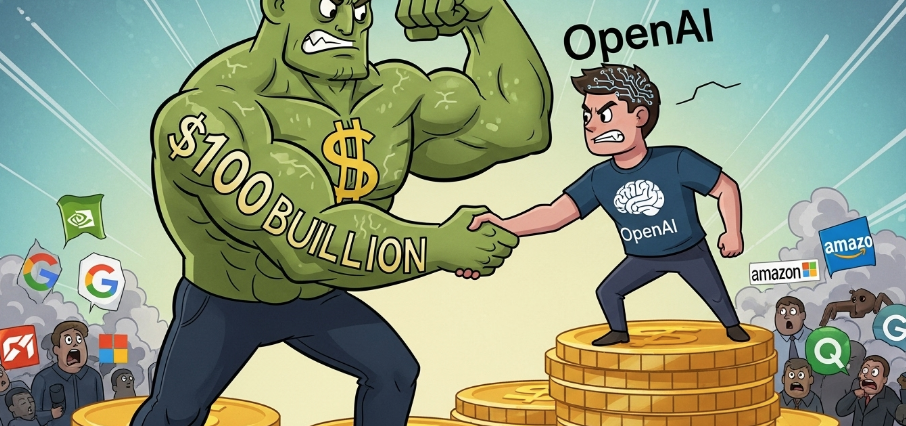
  • The Mega-Deal-Nvidia and OpenAI’s $100 Billion Power Play

    The Mega-Deal-Nvidia and OpenAI’s $100 Billion Power Play

    Remember when your biggest tech decision was choosing between iPhone or Android? Well, buckle up, because we’re about to talk money that makes your monthly phone bill look like pocket change.

    The Deal That’s Got Silicon Valley Buzzing

    So you’re scrolling through your news feed (probably procrastinating, we’ve all been there), and you see that Nvidia just dropped $100 billion on a partnership with OpenAI. That’s not a typo – that’s more zeros than most of us will see in our bank accounts, ever.

    But here’s why you should care, even if you can barely spell “gigawatt.”

    What’s Actually Happening Here?

    Here’s the deal: Nvidia is essentially bankrolling OpenAI (the folks behind ChatGPT – you know, that AI that’s probably written half your emails by now) to build data centers with enough power to light up New York City. We’re talking 10 gigawatts of pure computing muscle.

    Translation for normal humans: They’re building the ultimate AI factories, and you’re going to benefit whether you realize it or not.

    The Value Proposition: What’s In It for You?

    Faster, Smarter AI Tools

    Remember waiting 30 seconds for ChatGPT to respond during peak hours? Those days are numbered. This massive infrastructure investment means the AI tools you’re already using will become lightning-fast and significantly more capable.

    More Reliable AI Access

    No more “ChatGPT is at capacity” messages when you desperately need help with that presentation that’s due in an hour. This deal is essentially insurance against AI traffic jams.

    Innovation You Haven’t Even Imagined Yet

    OpenAI’s CEO Sam Altman hinted at “compute-intensive” products launching soon. Think of this investment as the foundation for AI capabilities that will make today’s tools look like flip phones compared to smartphones.

    Why This Matters More Than You Think

    700 million people use ChatGPT weekly. That’s nearly 1 in 10 humans on Earth. If you’re not one of them yet, you probably will be soon – and this deal ensures the experience won’t be frustrating.

    But it’s bigger than chatbots. As Altman puts it, “Compute infrastructure will be the basis for the economy of the future.” In plain English: this isn’t just about better AI toys; it’s about building the digital backbone of tomorrow’s economy.

    The Domino Effect You’ll Actually Notice

    At Work: AI tools that can handle more complex tasks without breaking a sweat. Think less “Can you help me write an email?” and more “Can you analyze this market data and create a comprehensive strategy?”

    In Education: More sophisticated AI tutoring that adapts to your learning style in real-time, making personalized education accessible to everyone.

    In Daily Life: Smarter virtual assistants that actually understand context and can handle multi-step requests without making you want to throw your phone.

    The Competition Is Heating Up (And That’s Good News)

    This isn’t happening in a vacuum. Microsoft is spending $30 billion on data centers this quarter alone. Meta is building massive facilities in Louisiana. It’s like a digital arms race, except the weapons are designed to make your life easier.

    Competition breeds innovation, and innovation means better products for you at competitive prices.

    The Reality Check

    Sure, there are concerns about an AI bubble (because apparently we humans are incapable of investing in new technology without going completely overboard). But here’s the thing: even if some companies overspend, the infrastructure they’re building will outlast the hype.

    It’s like the dot-com boom – yes, Pets.com crashed and burned, but we still got Amazon, Google, and the entire foundation of the modern internet.

    What This Means for Your Future

    Short-term: Expect significant improvements in AI tools you’re already using within the next few months.

    Medium-term: Prepare for AI capabilities that seem almost magical compared to what’s available today.

    Long-term: We’re building the foundation for an economy where AI assistance isn’t a luxury – it’s as basic as having internet access.

    The Bottom Line

    This $100 billion isn’t just two tech giants playing with monopoly money. It’s an investment in infrastructure that will power the tools you’ll use to work smarter, learn faster, and solve problems you didn’t even know you had.

    Whether you’re a tech enthusiast or someone who still calls every gaming console “a Nintendo,” this deal will impact your digital life. The question isn’t whether AI will change how you work and live – it’s how quickly you’ll adapt to the improvements coming your way.

    And hey, at least you won’t have to foot the bill for this particular upgrade.

  • Oracle’s Meta Masterstroke: This $20B AI Deal Could Print Money

    Oracle’s Meta Masterstroke: This $20B AI Deal Could Print Money

    Just when you thought Oracle (ORCL) couldn’t get any hotter, Larry Ellison’s enterprise juggernaut dropped another bombshell that sent shares soaring 4% in Friday trading. Oracle is reportedly in talks with Meta Platforms for a massive $20 billion AI cloud computing deal, and if this goes through, it could be the move that cements Oracle as the undisputed king of AI infrastructure.

    This isn’t just another cloud contract—it’s a strategic masterstroke that could reshape the entire AI ecosystem. While everyone’s been obsessing over ChatGPT and AI chatbots, Oracle has been quietly building the digital backbone that makes it all possible. And now, with Meta desperately needing massive computing power for their AI ambitions, Oracle is perfectly positioned to cash in.

    The Deal That Changes Everything

    Under the proposed multiyear agreement, Oracle would provide Meta with computing power for training and deploying artificial intelligence models. But here’s the kicker—the total commitment amount may increase and other deal terms could still change before a final agreement, suggesting this $20 billion figure might just be the starting point.

    Think about it: Meta burns through billions developing AI features for Facebook, Instagram, and WhatsApp. They need massive computational firepower to train their models and run inference at scale. Instead of building everything in-house (which takes forever and costs a fortune), they’re turning to Oracle’s proven infrastructure.

    This deal makes perfect sense when you consider the context. Just last week, Oracle reported a huge increase in bookings that vaulted its stock price to an all-time high. The company has been on an absolute tear, and this Meta partnership could be the catalyst that sends shares into the stratosphere.

    Oracle’s AI Infrastructure Empire

    What makes this deal so compelling isn’t just the dollar amount—it’s what it represents. Oracle isn’t just selling cloud storage; they’re providing the specialized infrastructure that powers the AI revolution. AI infrastructure demand from OpenAI, Meta and other customers has buoyed Oracle’s stock, which is up more than 80% this year.

    The timing couldn’t be better. The reports come two months after Oracle inked an agreement to build 4.5 gigawatts’ worth of data center capacity for OpenAI, a deal that sources suggest will be worth $300 billion over five years. Oracle is essentially becoming the AWS of AI—except they’re laser-focused on the specific needs of artificial intelligence workloads.

    Here’s what investors need to understand: Oracle’s cloud infrastructure business isn’t just growing—it’s exploding. The company has built specialized hardware and software stacks optimized for AI training and inference. While Amazon and Microsoft offer general-purpose cloud services, Oracle has created something purpose-built for the AI era.

    Why Meta Needs Oracle (And Why Oracle Wins Big)

    Meta has more than 20 data centers around the world that they own and operate themselves, so why would they partner with Oracle? Speed and specialization. You can partner with Oracle much faster than you can develop your own or build your own data centers.

    Meta is in an AI arms race with Google, Microsoft, and every other tech giant. They can’t afford to wait years to build custom infrastructure when Oracle can provide specialized AI computing power immediately. This is about competitive advantage—Meta gets cutting-edge AI capabilities without the massive capital expenditure and time investment.

    For Oracle, this relationship creates something even more valuable than revenue: it establishes them as the go-to infrastructure provider for the world’s biggest AI companies. Oracle has previously disclosed cloud business with Meta and other companies that train AI models, including Elon Musk’s xAI.

    The Broader Picture: Oracle’s Strategic Positioning

    This Meta deal isn’t happening in a vacuum. Oracle unveiled four multi-billion-dollar contracts last week, amid an industry-wide shift, led by companies such as OpenAI and xAI, to aggressively spend to secure the massive computing capacity needed to stay ahead in the AI race.

    The company has also been smart about partnerships. Oracle has struck deals with Amazon, Alphabet and Microsoft to let their cloud customers run Oracle Cloud Infrastructure alongside native services. The revenue from these partnerships rose more than sixteen-fold in the first quarter.

    This is brilliant strategy. Instead of fighting AWS and Azure head-to-head in general cloud services, Oracle is positioning itself as the specialized AI infrastructure layer that works with everyone. They’re becoming infrastructure Switzerland—neutral, essential, and incredibly profitable.

    The Investment Thesis: Why ORCL Could Soar

    Here’s why this Meta deal could be a game-changer for Oracle shareholders:

    Recurring Revenue Stream: This isn’t a one-time purchase. AI workloads require constant computing power, creating predictable, recurring revenue for years to come.

    Competitive Moat: Oracle’s specialized AI infrastructure creates switching costs. Once Meta’s AI models are optimized for Oracle’s platform, migrating would be expensive and time-consuming.

    Validation: Landing Meta as a major customer validates Oracle’s AI strategy and could attract other enterprise customers looking for proven AI infrastructure.

    Margin Expansion: AI infrastructure commands premium pricing compared to general cloud services. This deal could significantly boost Oracle’s profit margins.

    The Risks: What Could Go Wrong

    No investment thesis is complete without acknowledging the risks. Investors have voiced concern over how much of Oracle’s booked cloud deals are attributable to a single customer, OpenAI. Customer concentration is always a risk—if OpenAI or Meta significantly reduced their spending, it could hurt Oracle’s growth.

    Competition is also intensifying. Amazon, Microsoft, and Google aren’t sitting still—they’re all investing heavily in AI infrastructure. Oracle needs to keep innovating to maintain its edge.

    There’s also execution risk. Building and maintaining the infrastructure for these massive AI workloads is technically challenging. Any service disruptions or performance issues could damage Oracle’s reputation and cost them customers.

    The Bottom Line: A Calculated Bet on AI Infrastructure

    Oracle’s potential $20 billion deal with Meta represents more than just a large contract—it’s validation of the company’s strategic pivot to AI infrastructure. While other cloud providers chase market share in commoditized services, Oracle has carved out a specialized niche in the highest-growth segment of cloud computing.

    The stock has already run up significantly this year, but the AI infrastructure market is still in its early innings. If Oracle can execute on these massive contracts and continue winning marquee customers like Meta and OpenAI, shares could have much more room to run.

    For investors looking for exposure to the AI boom without the volatility of pure-play AI stocks, Oracle offers a compelling middle ground. They’re providing the essential infrastructure that makes AI possible, creating a more stable way to bet on artificial intelligence’s continued growth.

    This Meta deal could be the catalyst that transforms Oracle from a legacy database company into the backbone of the AI economy. And if that happens, $20 billion might just be the beginning.

    Disclosure: This analysis is for informational purposes only and should not be considered personalized investment advice. Consider your risk tolerance and investment objectives before making any investment decisions.

  • Salesforce.com (CRM): From CRM Kingdom to AI Empire (With Digital Agents)

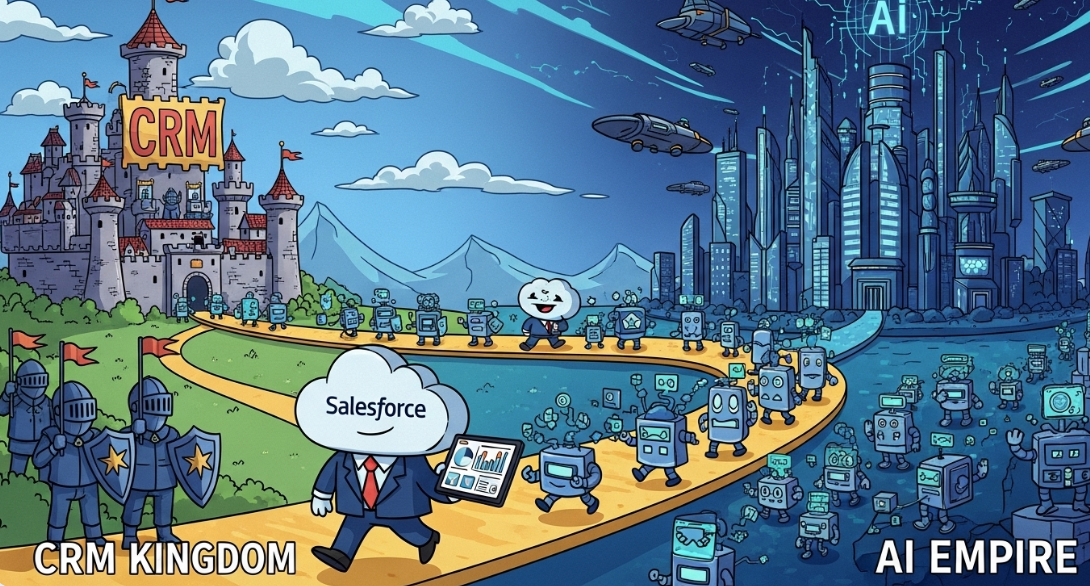
    Salesforce.com (CRM): From CRM Kingdom to AI Empire (With Digital Agents)

    Stock Symbol: CRM | Current Price: ~$244 (September 2025) | Target Price: $330+ | Timeframe: 12-18 months

    NOT FINANCIAL ADVICE

    Salesforce has officially evolved from “that CRM company everyone uses” to “that AI company that happens to dominate customer relationships while building armies of digital agents.” With Q2 2025 revenue hitting $10.24 billion and the revolutionary launch of Agentforce 3.0, Salesforce is proving that Marc Benioff’s vision of the “agentic enterprise” isn’t just corporate buzzword bingo—it’s actually becoming reality. The company delivered $2.91 adjusted EPS (beating $2.78 estimates) while simultaneously deploying over 8,000 customers to their digital labor platform, because apparently helping companies manage relationships wasn’t complicated enough—now they’re automating entire workforces. It’s like watching someone turn a Rolodex into a sentient army of customer service representatives, except the Rolodex is worth $232 billion and the representatives never sleep.

    The Agentforce Revolution: From Software to Digital Labor

    Salesforce’s Agentforce platform has officially launched Version 3.0, marking the transition from “we have AI features” to “we are the AI workforce infrastructure.” The company is targeting nothing less than empowering one billion agents by the end of 2025, which is either incredibly ambitious or incredibly Benioff, depending on your tolerance for San Francisco-sized dreams.

    Since its initial launch in October 2024, Agentforce has helped customers deliver undeniable value, including reducing Engine’s average customer case handle time by 15%, autonomously resolving 70% of 1-800Accountant’s administrative chat engagements during critical tax weeks in 2025, and increasing Grupo Globo’s subscriber retention by 22%. These aren’t pilot program statistics—these are actual business transformations happening right now, proving that AI agents can handle real work better than the humans they’re replacing.

    The platform features enhanced reasoning through the Atlas Reasoning Engine, which processes information like humans think and plan, except without coffee breaks or existential crises. Agentforce can take action across every channel and be integrated into any system, making it easy to add agentic automation across your entire business. It’s like having a digital workforce that never calls in sick, never asks for raises, and actually gets smarter over time instead of more cynical.

    Financial Performance: The Subscription Machine Keeps Printing

    Salesforce’s Q2 2025 results tell the story of a company that knows how to generate recurring revenue, with total revenue of $10.24 billion and adjusted earnings of $2.91 per share, beating estimates on both metrics. Subscription and support revenue hit $9.7 billion, up 11% year-over-year, proving that businesses remain addicted to Salesforce’s CRM ecosystem even while they’re simultaneously trying to replace their employees with AI agents.

    Current remaining performance obligation reached $29.4 billion, up 11% year-over-year, which in subscription business terms translates to “we already have billions in future revenue locked in,” the kind of predictable cash flow that makes CFOs weep with joy. The company maintains gross margins around 77%, demonstrating pricing power that would make luxury handbag manufacturers jealous.

    Data Cloud revenue grew 120% year-over-year, because apparently Salesforce decided that just managing customer relationships wasn’t enough—they needed to become the foundational data layer for the entire AI economy. It’s like evolving from running a phone book company to owning the entire telecommunications infrastructure, except instead of phone numbers, it’s customer intelligence for autonomous agents.

    The AI Transformation: Beyond Copilots to True Autonomy

    While competitors build copilots that require human prompting, Agentforce operates autonomously, retrieving data on demand, building action plans, and executing without human intervention. This isn’t incremental improvement—this is categorical transformation from reactive tools to proactive digital workers that handle complex, multi-step business processes.

    Agentforce 2dx enables proactive AI agents to work behind the scenes without constant human oversight, anticipating business needs and dynamically taking action. The platform integrates autonomous agents into existing data systems and business logic, creating what Salesforce calls “ambient agents” that operate invisibly in the background of business operations.

    The competitive advantage isn’t just technological—it’s architectural. Data Cloud unifies and harmonizes all customer data and metadata across systems in real time, enabling Agentforce to operate with complete context and precision. While competitors scramble to build AI features on top of fragmented systems, Salesforce built a unified platform where agents can access everything they need to make intelligent decisions.

    Market Position: The CRM Monopoly Goes Agentic

    Salesforce dominates the CRM market with approximately 30% market share in a highly fragmented space that continues growing double digits annually. But the Agentforce platform transforms Salesforce from a software vendor into an infrastructure provider for the agentic economy, expanding their addressable market from CRM software to digital labor across every business function.

    The company has announced significant investments, including $6 billion in UK business through 2030 and the launch of Missionforce to power U.S. national security with AI. These aren’t just revenue expansion moves—they’re infrastructure investments that position Salesforce as essential digital backbone for governments and enterprises globally.

    The integration of Slack creates an enterprise collaboration platform where human workers and AI agents collaborate seamlessly, making Salesforce not just a system of record but the actual workplace where business gets done. It’s like owning both the office building and the workforce, except the workforce is infinitely scalable and constantly improving.

    Execution Risk: Promise vs. Platform Reality

    Salesforce’s biggest risk remains execution against aggressive AI adoption timelines while maintaining their core CRM dominance. The company’s stock has been the worst performer in large-cap tech this year, down 23% through the recent earnings report, as investors demand proof that AI investments translate to accelerated growth rather than just higher R&D expenses.

    Competition intensifies not just from traditional CRM providers but from AI-native companies building agent platforms from scratch. Salesforce must prove that retrofitting their existing platform with autonomous capabilities creates better outcomes than purpose-built AI systems, while simultaneously educating enterprise customers about the transformational potential of agentic AI.

    The enterprise sales cycle creates natural delays between platform capabilities and revenue recognition, as large organizations require extensive pilots and change management to adopt autonomous agent workflows. Success depends on Salesforce’s ability to demonstrate clear ROI from agent deployment while providing sufficient control and transparency for risk-averse enterprise buyers.

    The Platform Play: Data, Apps, and Digital Labor

    Agentforce is deeply integrated with Salesforce Customer 360, leveraging the full power of applications like sales, service, marketing, and commerce while providing complete customer views for seamless hand-offs between agents and humans. This integration creates switching costs and network effects that compound as organizations deploy more agents across different business functions.

    The MuleSoft integration enables Agentforce to connect with any external system, while the Tableau analytics platform provides insights into agent performance and business outcomes. The company estimates 4 trillion flows built annually and 5.6 billion hours saved through automation, demonstrating that customers already trust Salesforce with mission-critical business logic.

    Salesforce Ventures’ $500 million Generative AI Fund, including a $200 million investment in Hugging Face, positions the company at the center of the open-source AI ecosystem while creating strategic partnerships that accelerate innovation and market adoption.

    Investment Reality Check: The AI Infrastructure Bet

    Based on Salesforce’s transformation from CRM vendor to digital labor platform, expanding market opportunity through Agentforce adoption, and sustainable competitive advantages in data integration and enterprise relationships, the company presents a compelling if volatile investment opportunity with a 12-18 month price target of $330+ per share.

    Key catalysts include Agentforce customer adoption metrics, expansion beyond current enterprise base into mid-market segments, integration partnerships that extend platform capabilities, and demonstration of measurable ROI from agent deployments. Wall Street analysts maintain a consensus median one-year price target of $342.18, representing 36.78% potential upside, reflecting confidence in the agentic transformation thesis.

    The risk-reward profile favors investors who understand that Salesforce isn’t just adding AI features—they’re building the infrastructure for autonomous business operations. The company has successfully navigated multiple technology transitions while maintaining market leadership, suggesting execution capabilities necessary for the agentic transformation.

    For investors seeking exposure to the autonomous business revolution through a company with proven platform capabilities, established enterprise relationships, and recurring revenue predictability, Salesforce represents the ultimate enterprise AI infrastructure play. They’ve transformed from managing customer relationships to automating customer interactions, and apparently that’s just the opening act for replacing entire business operations with intelligent agents.

    Disclaimer: This analysis contains references to digital labor revolutions and should not be considered personalized investment advice. Past performance does not guarantee future results, though Salesforce’s track record suggests they’re remarkably good at turning enterprise software categories into subscription gold mines. Consult with a qualified financial advisor who hopefully understands both artificial intelligence and Marc Benioff’s relationship with ambitious platform visions.

    Last Updated: September 2025
    Next Review: December 2025
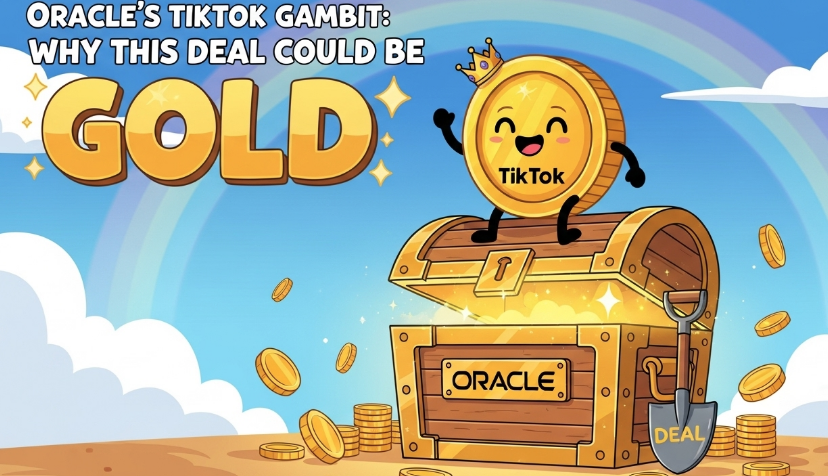
  • Oracle’s TikTok Gambit: Why This Deal Could Be Pure Gold

    Oracle’s TikTok Gambit: Why This Deal Could Be Pure Gold

    The Setup: When Database Meets Dance Videos

    Picture this: Oracle, the company that built its empire on boring-but-essential database software, is about to become TikTok’s sugar daddy. Under a framework deal emerging from U.S.-China negotiations, Oracle would join a consortium controlling roughly 80% of TikTok’s U.S. operations alongside Silver Lake and Andreessen Horowitz.

    Oracle’s stock jumped on Tuesday as investors caught wind of this unlikely romance between enterprise software and viral dance videos. But before you dismiss this as just another tech acquisition, let’s dig into why this deal could be Oracle’s smartest move since Larry Ellison bought his first Hawaiian island.

    The Money Play: Why Oracle Wants TikTok

    Value Proposition #1: The Cloud Infrastructure Goldmine

    Here’s where it gets interesting. Oracle just projected its cloud infrastructure revenue will explode from $10.3 billion in fiscal 2025 to $144 billion by 2030 – a growth trajectory so aggressive that analysts are reportedly “in shock” and “slack-jawed.”

    TikTok isn’t just an app; it’s a data-processing monster that serves over 170 million Americans. Every scroll, every like, every “Ohio” comment creates computational demand. For Oracle, acquiring TikTok is like buying the world’s hungriest customer and making them eat at your restaurant exclusively.

    Value Proposition #2: AI Training Ground Supreme

    Oracle’s cloud consumption revenue already surged 57% last quarter, driven largely by AI companies like OpenAI. Now imagine having TikTok’s recommendation algorithm – one of the most sophisticated AI systems on the planet – running on your infrastructure 24/7. It’s like getting a master class in AI while getting paid for it.

    Value Proposition #3: The Ultimate Moat

    Oracle’s traditional enterprise customers might find databases about as exciting as watching paint dry. But TikTok? That’s 170 million potential customers who already trust Oracle’s infrastructure with their most precious commodity: endless entertainment. It’s brand awareness money can’t buy.

    The Bigger Picture: Oracle’s AI Empire Play

    This TikTok deal isn’t happening in a vacuum. Oracle’s performance obligations (contracted future revenue) jumped 359% to $455 billion, largely thanks to massive commitments from AI companies. The stock recently posted its best day since 1992, adding $244 billion in market value as investors realized Oracle isn’t just surviving the AI revolution – it’s powering it.

    Larry Ellison, Oracle’s co-founder who briefly became the world’s richest person during the recent stock surge, has been playing chess while others played checkers. While everyone focused on who would build the sexiest AI models, Oracle quietly became the landlord renting out the computing power to run them all.

    The Risks: What Could Go Wrong?

    Political Football Syndrome: TikTok deals have a history of falling apart faster than a house of cards in a hurricane. Remember Microsoft’s failed attempt? Oracle could end up holding an expensive bag of nothing if U.S.-China relations turn sour again.

    Integration Nightmares: Merging a hip social media platform with enterprise software culture is like trying to get your grandmother to understand why people film themselves eating tide pods. Cultural mismatches could derail the whole operation.

    Regulatory Scrutiny: Even if the deal goes through, Oracle will be operating under intense government oversight. The proposed structure includes “an American-dominated board with one member designated by the U.S. government.” Nothing says “entrepreneurial freedom” like having Uncle Sam as your board member.

    The Bottom Line: A Calculated Gamble

    Oracle’s TikTok play represents a fascinating bet: that owning the infrastructure behind America’s most addictive app is worth the political headaches and integration challenges. Given Oracle’s recent AI-driven growth explosion and TikTok’s massive computational needs, it’s not as crazy as it sounds.

    For investors, Oracle offers a unique value proposition in the AI age: it’s the boring utility company that everyone exciting depends on. Whether they’re training chatbots, serving viral videos, or processing database queries, they all need somewhere to run their code. Oracle is betting that “somewhere” should be their cloud.

    The TikTok deal, if it happens, would be the cherry on top of an already impressive AI infrastructure empire. Just don’t expect Larry Ellison to start posting dance videos anytime soon – though given his track record of bold moves, never say never.

    Oracle shares are up more than 80% year-to-date, trading near all-time highs as the market continues pricing in the company’s AI infrastructure ambitions. The TikTok deal, expected to close within 30-45 days if finalized, would mark Oracle’s biggest bet yet on the intersection of social media and cloud computing.

  • Tesla Inc (TSLA): From Electric Cars to Electric Dreams (With Robots)

    Tesla Inc (TSLA): From Electric Cars to Electric Dreams (With Robots)

    Stock Symbol: TSLA | Current Price: ~$250 (September 2025) | Target Price: $350+ | Timeframe: 12-18 months

    NOT FINANCIAL ADVISE

    Tesla has officially graduated from “that electric car company” to “that AI company that also happens to make cars, robots, and energy storage systems while occasionally launching things into space.” With Q2 2025 revenue hitting $22.5 billion and the commercial rollout of robotaxi service in Austin, Tesla is proving that Elon Musk’s seemingly impossible promises might actually be… well, still impossible, but getting closer to reality. The company delivered 384,000 vehicles while simultaneously working on producing 100,000 humanoid robots per month within 16 months, because apparently making cars wasn’t complicated enough. It’s like watching someone juggle flaming torches while riding a unicycle on a tightrope, except the torches are autonomous vehicles and the tightrope is the future of transportation.

    The Robotaxi Reality: From Concept Car to Cash Cow

    Tesla’s robotaxi service has officially launched commercial operations in Austin, marking the transition from “Elon said it would happen” to “it’s actually happening.” The company is targeting to reach half the US population with robotaxi service by year-end, which is either incredibly ambitious or incredibly Elon, depending on your perspective.

    Musk announced plans to produce 2 million Cybercabs annually and launch driverless ride-hailing services in Tesla vehicles as early as 2025 in Texas and likely California. The company has developed a ride-hailing app that some employees in California have been testing, proving that Tesla can build software that doesn’t require a steering wheel, which is more progress than most people expected.

    The robotaxi business represents Tesla’s evolution from hardware manufacturer to service provider, creating recurring revenue streams that don’t depend on convincing people to buy $50,000+ vehicles. It’s like evolving from selling CD players to running Spotify, except instead of music, it’s transportation, and instead of monthly subscriptions, it’s per-ride revenue that compounds as the fleet grows.

    Financial Performance: The Roller Coaster Continues

    Tesla’s Q2 2025 results tell the story of a company in transition, with total revenue of $22.5 billion and earnings of $0.33 per share (non-GAAP $0.40). Automotive revenue increased 19% sequentially to $16.7 billion, while deliveries improved 14% year-over-year, proving that people still want to buy Tesla cars even when the CEO is promising to replace them with robots.

    The energy storage business achieved its highest gross profit ever while deploying 9.6 GWh of energy storage systems, because apparently Tesla decided that just revolutionizing transportation wasn’t enough – they also needed to fix the electrical grid. Sequential cost increases of $300 million due to tariffs created headwinds, but Tesla’s automotive gross margin improvements suggest the company is learning to navigate political reality while maintaining profitability.

    Regulatory credit revenue declined from $890 million in Q2 2024 to $439 million in Q2 2025, which sounds concerning until you realize Tesla is transitioning from selling permission to pollute to selling actual autonomous transportation services. It’s like a drug dealer going legitimate and opening a pharmacy – less immediate cash, but infinitely more scalable business model.

    Full Self-Driving: The $10,000 Bet That Might Actually Pay Off

    Tesla’s FSD (Full Self-Driving) adoption rates continue increasing, with the company planning customer build releases in Q3 2025 and FSD Unsupervised launching in select cities. After years of “next quarter” promises, FSD is finally approaching the “actually works most of the time” threshold, which in the autonomous vehicle world counts as a major breakthrough.

    The potential for FSD price increases reflects growing confidence in the technology’s capability and market acceptance. When your software can potentially generate thousands of dollars per month in robotaxi revenue, charging $10,000+ for the capability starts looking like a bargain rather than highway robbery.

    Tesla’s approach to FSD development emphasizes real-world data collection from millions of vehicles, creating competitive advantages that traditional automakers can’t easily replicate. While competitors build test fleets of hundreds of vehicles, Tesla collects autonomous driving data from over 5 million vehicles worldwide, turning every Tesla owner into an unpaid AI trainer.

    The Robot Revolution: Optimus Prime Time

    Tesla’s announcement of plans to produce 100,000 humanoid robots per month within 16 months represents either the most ambitious manufacturing target in history or Elon Musk’s most optimistic timeline estimate yet. The Optimus robot project transforms Tesla from automotive company to general-purpose AI robotics manufacturer, targeting applications across manufacturing, logistics, and service industries.

    The robotics opportunity dwarfs the automotive market, with potential applications in every industry that currently relies on human labor. If Tesla can successfully mass-produce capable humanoid robots, the addressable market expands from the millions of people who buy cars to the billions of jobs that robots could potentially perform.

    The integration of Tesla’s AI development, manufacturing expertise, and energy systems creates a comprehensive robotics platform that leverages all of the company’s core competencies. It’s like Tesla accidentally built all the components necessary for the robot revolution while trying to make better cars, which is peak accidental genius.

    Investment Reality Check: Promises vs. Performance

    Tesla’s biggest risk remains execution against increasingly ambitious timelines and targets. The company’s history of missing production deadlines while eventually delivering revolutionary products creates both skepticism and anticipation among investors. Betting on Tesla requires faith that eventually the reality will catch up to the promises, even if it takes longer than expected.

    Competition in electric vehicles continues intensifying, with traditional automakers and new entrants launching compelling alternatives. Tesla’s response strategy emphasizes technological differentiation through FSD, robotaxi services, and integrated energy solutions rather than competing solely on vehicle specifications and pricing.

    Regulatory approval for robotaxi services across multiple jurisdictions represents a significant execution risk, as government agencies move considerably slower than Elon Musk’s timelines. The company’s success depends on navigating complex regulatory environments while maintaining technological leadership and operational execution.

    The Energy Wild Card: Batteries and Grid Storage

    Tesla’s energy business achieved record deployments and highest gross profit margins, demonstrating that the company’s battery expertise creates value beyond automotive applications. The integration of vehicle manufacturing, energy storage, and autonomous services creates synergies that competitors struggle to replicate.

    The global transition to renewable energy creates massive demand for grid-scale energy storage systems, positioning Tesla’s energy business for sustained growth independent of automotive market conditions. It’s like having a successful side business that happens to be essential for the future of civilization, which is a pretty good hedge against automotive industry volatility.

    Price Target: Betting on the Future

    Based on Tesla’s robotaxi commercialization, FSD progress, and expanding addressable markets through robotics and energy storage, the company presents a compelling if volatile investment opportunity with a 12-18 month price target of $350+ per share. This reflects both multiple expansion as markets recognize the transformation and fundamental growth from new revenue streams.

    Key catalysts include robotaxi service expansion beyond Austin, FSD Unsupervised launch in additional cities, Optimus robot production milestones, and continued energy business growth. Tesla has successfully evolved from electric vehicle manufacturer to comprehensive AI and robotics company, creating multiple pathways to exponential value creation.

    For investors seeking exposure to the autonomous vehicle revolution, AI robotics, and sustainable energy transition through a company with proven ability to turn science fiction into profitable reality, Tesla represents the ultimate high-risk, high-reward technology bet. They’ve transformed from making cars that don’t need gas to making cars that don’t need drivers, and apparently that’s just the warm-up act.


    Disclaimer: This analysis contains references to robot revolutions and should not be considered personalized investment advice. Past performance does not guarantee future results, though Tesla’s track record suggests they’re remarkably good at making impossible things seem inevitable. Consult with a qualified financial advisor who hopefully understands both artificial intelligence and Elon Musk’s relationship with timelines.

    Last Updated: September 2025
    Next Review: December 2025

  • Microsoft Corporation (MSFT): The Office Hero That Became an AI Superhero

    Microsoft Corporation (MSFT): The Office Hero That Became an AI Superhero

    Stock Symbol: MSFT | Current Price: ~$415 (September 2025) | Target Price: $520+ | Timeframe: 12-18 months

    NOT FINANCIAL ADVISE

    Remember when Microsoft was that company everyone made fun of for Internet Explorer and Clippy? Plot twist: they’re now the AI kingmaker that turned everyone’s boring office suite into a productivity superpower. With Q2 2025 revenue hitting $69.6 billion (up 12% year-over-year) and AI services growing 157% annually, Microsoft has successfully transformed from “have you tried turning it off and on again?” to “let AI do that for you.” Nearly 70% of Fortune 500 companies use Microsoft 365 Copilot, Azure surpassed $75 billion in annual revenue, and somehow Satya Nadella convinced the world that paying $30 extra per month for an AI assistant to write emails is not just reasonable but essential. It’s like watching your reliable but boring friend suddenly become the coolest person at the party.

    The $13 Billion OpenAI Friendship That Pays Off

    Microsoft’s $13 billion investment in OpenAI represents either the smartest partnership in tech history or the world’s most expensive friendship, and honestly, both can be true. The OpenAI partnership remains in place through 2030, with Microsoft maintaining access to OpenAI’s intellectual property, which is basically like having exclusive rights to the smart kid’s homework for the next five years.

    The strategic partnership has evolved beyond simple investment into deep integration across Microsoft’s entire product stack. Azure OpenAI services power everything from Copilot to custom enterprise applications, creating a comprehensive AI platform that competitors are struggling to match. It’s like Microsoft bought the future and then figured out how to rent it to everyone else at premium prices.

    Microsoft’s recent introduction of MAI-1-preview, their proprietary AI model, shows they’re not putting all their eggs in the OpenAI basket. Testing their own AI model while maintaining the OpenAI partnership is the business equivalent of dating someone while keeping your options open, except in this case, both relationships seem to be working out beautifully.

    Copilot: The AI Assistant Everyone Actually Uses

    Microsoft 365 Copilot adoption is accelerating faster than any other new Microsoft 365 suite, with nearly 70% of Fortune 500 companies now using it. This isn’t just corporate window dressing – businesses are reporting up to 353% ROI from Copilot implementation, which means companies are making $3.53 for every dollar they spend on AI-powered procrastination tools.

    The beauty of Copilot is that it turned everyone into a productivity expert without requiring actual productivity expertise. Need to write a professional email? Copilot’s got it. Want to analyze a spreadsheet without crying? Copilot to the rescue. It’s like having an incredibly competent intern who never needs coffee breaks and doesn’t judge your questionable formatting choices.

    Microsoft 365 Commercial cloud revenue increased 15% partly driven by premium E5 subscriptions and Copilot features, proving that when you make people’s work lives easier, they’re surprisingly willing to pay for the privilege. Copilot usage reportedly tripled year-over-year, which suggests people either love AI assistance or really hate doing their own work.

    Azure: The Cloud That Conquered the World

    Azure surpassed $75 billion in annual revenue, up 34%, making it one of the fastest-growing large-scale businesses in technology history. Azure and other cloud services revenue grew 33% in constant currency, with healthy consumption trends that suggest enterprises are not just trying Azure but actually using it for important things.

    The AI boom is transforming Azure from generic cloud infrastructure into specialized AI computing platform. The number of Azure OpenAI apps running on Azure databases and app services more than doubled year-over-year, creating a virtuous cycle where AI applications drive demand for supporting services. It’s like selling someone a car and then discovering they also need gas, insurance, and a place to park it.

    Azure’s integration with OpenAI services creates competitive advantages that are extremely difficult for competitors to replicate. When your cloud platform comes with exclusive access to the world’s most advanced AI models, selling cloud services becomes less about price competition and more about AI capabilities, which is a much more profitable conversation to have with customers.

    The Enterprise AI Revolution (With PowerPoint)

    Microsoft’s enterprise AI strategy extends far beyond flashy chatbots into practical business applications that actually matter. Microsoft Fabric, their data analytics platform, continues gaining momentum with revenue up 55% year-over-year and over 25,000 customers, making it the fastest-growing database product in company history.

    The integration of AI across Microsoft’s productivity suite creates network effects that increase customer stickiness while justifying premium pricing. When Copilot helps write documents in Word, analyze data in Excel, create presentations in PowerPoint, and manage meetings in Teams, switching to competitive products becomes exponentially more difficult and expensive.

    Microsoft’s approach to AI emphasizes practical business value over technological showing off. Instead of building AI for the sake of AI, they’ve focused on solving actual workplace problems like “how do I make this spreadsheet less terrible?” and “can someone else write this email for me?” It turns out these are billion-dollar problems when you solve them at enterprise scale.

    Investment Reality Check: What Could Go Wrong

    Microsoft’s biggest risk might be the complexity of managing multiple AI relationships while building proprietary capabilities. The OpenAI partnership, while profitable, creates dependence on external technology for core competitive advantages. Developing MAI-1 and other proprietary models reduces this risk but requires significant additional investment.

    Competition in cloud services remains intense, with Amazon and Google making substantial investments in AI capabilities. Azure’s 33% growth rate, while impressive, requires continued innovation and competitive pricing to maintain market share against well-funded rivals who also have their own AI strategies.

    Regulatory scrutiny of Microsoft’s market power continues to intensify, particularly as AI integration strengthens the company’s competitive position across multiple markets. The combination of dominant productivity software, growing cloud market share, and exclusive AI partnerships creates antitrust concerns that could limit future strategic options.

    Financial Outlook: The Numbers Don’t Lie

    Q2 2025 revenue reached $69.6 billion with 12% year-over-year growth, demonstrating Microsoft’s ability to maintain growth momentum at unprecedented scale. AI services growing 157% annually indicates that the AI transformation is translating into measurable financial results rather than just marketing promises.

    Microsoft Cloud gross margin percentage of roughly 70% provides substantial profitability even while investing heavily in AI infrastructure. The company’s ability to maintain high margins while scaling AI capabilities suggests effective cost management and strong customer demand for AI-enhanced services.

    Capital expenditures continue increasing to support cloud and AI demand, but the investments are generating measurable returns through higher revenue growth and improved customer retention. It’s like spending money on a gym membership and actually getting in better shape, except the gym is artificial intelligence and the better shape is exponential business growth.

    Price Target: Betting on the AI Office

    Based on Microsoft’s comprehensive AI integration, Azure dominance, and enterprise market penetration, the company presents a compelling investment opportunity with a 12-18 month price target of $520+ per share. This reflects both fundamental growth driven by AI adoption and multiple expansion as investors recognize the sustainability of Microsoft’s competitive advantages.

    Key catalysts include continued Copilot adoption acceleration, Azure growth maintenance above 30%, successful monetization of proprietary AI models, and expansion of AI capabilities across the entire product portfolio. Microsoft has successfully evolved from productivity software company to AI platform provider, creating multiple revenue streams that compound rather than compete.

    For investors seeking exposure to the AI revolution through a company with proven execution capability, diversified revenue streams, and comprehensive market coverage, Microsoft represents the ultimate “AI for grown-ups” investment. They’ve taken the complexity out of enterprise AI adoption while taking the profits out of enterprise AI spending, which is exactly what you want from a technology investment.


    Disclaimer: This analysis contains references to Clippy and should not be considered personalized investment advice. Past performance does not guarantee future results, though Microsoft’s track record suggests they’ve figured out how to make boring enterprise software surprisingly profitable. Consult with a qualified financial advisor who hopefully understands both AI and PowerPoint.

    Last Updated: September 2025
    Next Review: December 2025
  • Amazon Inc (AMZN): From Package Delivery to AI Delivery (With Same-Day Shipping)

    Amazon Inc (AMZN): From Package Delivery to AI Delivery (With Same-Day Shipping)

    Stock Symbol: AMZN | Current Price: ~$185 (September 2025) | Target Price: $240+ | Timeframe: 12-18 months

    Amazon has quietly evolved from “that company that delivers everything in two days” to “that company that might deliver artificial general intelligence before your neighbor gets his Prime package.” With Q2 2025 net sales hitting $167.7 billion (up 13% year-over-year) and an $8 billion investment in Anthropic’s Claude AI, Amazon is proving that when you already own the internet’s logistics, adding AI to the mix is just another Tuesday. AWS revenue grew 18% while everyone worried it was losing steam, and somehow Jeff Bezos’s old company is now positioned to be the backbone of the AI revolution. It’s like they went from selling books to potentially writing the future, which honestly tracks with their usual overachieving tendencies.

    The Anthropic Bet: When $8 Billion Feels Like Pocket Change

    Amazon’s $8 billion total investment in Anthropic represents either the smartest AI bet in Silicon Valley or the world’s most expensive tech crush. Amazon’s total investment in Anthropic has reached $8 billion, bringing the AI startup to a $61.5 billion valuation and making Amazon the cool parent who lets the smart kid use their basement to build rockets.

    The strategic collaboration goes deeper than just writing checks. Anthropic selects AWS as its primary cloud provider and will train and deploy its future foundation models on AWS Trainium and Inferentia chips, which is tech speak for “we’re building the AI future together, and Amazon gets to provide the electricity.” It’s like being the landlord for the next industrial revolution, except instead of coal and steel, it’s algorithms and tokens.

    Anthropic is working closely with Annapurna Labs at AWS on developing future generations of Trainium accelerators, proving that Amazon’s hardware team isn’t just for Kindle readers anymore. When your AI investment is also your biggest customer and your hardware development partner, you’ve basically created a vertically integrated AI money machine.

    AWS: Still the Cloud King (Despite What the Competitors Say)

    AWS grew revenue by 18% year-over-year, which might not sound earth-shattering until you remember they’re doing this at a $100+ billion annual run rate. It’s like being surprised that a freight train is only going 60 mph when you forgot it weighs 10,000 tons. Amazon Web Services continues to lead the cloud infrastructure market despite facing steeper competition from Microsoft Azure and Google Cloud, proving that sometimes being first and biggest has its advantages.

    The AI boom is transforming AWS from a generic cloud provider into specialized AI infrastructure. Amazon continues to invest in infrastructure to run artificial intelligence models from Anthropic and other clients, turning AWS data centers into AI training camps for the robot apocalypse (but the friendly, productive kind of robot apocalypse).

    AWS’s custom Trainium and Inferentia chips represent Amazon’s answer to NVIDIA’s dominance in AI hardware, because apparently even Amazon got tired of paying premium prices for other people’s silicon. When you’re training models that cost millions of dollars to develop, saving 20% on compute costs isn’t just nice – it’s the difference between profitability and bankruptcy.

    The Everything Store Meets the Everything AI

    Amazon’s Q3 2025 revenue guidance of $174-179.5 billion implies 10-13% year-over-year growth, which for a company this size is like watching a blue whale do gymnastics – theoretically impossible but somehow happening anyway. The retail business continues generating the cash flow that funds the AI experiments, proving that selling people stuff they don’t need is still an excellent way to finance the future.

    The integration of AI across Amazon’s ecosystem creates competitive advantages that competitors can’t easily replicate. When your AI can optimize supply chains, predict customer demand, improve search results, and automate customer service while learning from billions of transactions, you’re not just using AI – you’re building AI that prints money.

    Amazon’s advertising business, often overlooked in the AWS and retail discussion, benefits enormously from AI improvements in targeting and optimization. It’s like having a personal shopper who knows what you want before you do, except the personal shopper is an algorithm and it’s really good at convincing you to buy things.

    The Logistics of Intelligence

    Amazon’s most underappreciated advantage might be their world-class logistics network, which turns out to be surprisingly useful for AI deployment. When you can physically deliver computing power to enterprises faster than competitors can spin up virtual instances, you’re playing a different game entirely.

    The company’s investment in robotics and automation for warehouses doubles as R&D for general AI applications. Every robot that learns to sort packages more efficiently is training on problems that apply to manufacturing, healthcare, and service industries. It’s like Amazon accidentally became a robotics company while trying to deliver packages faster.

    Project Kuiper, Amazon’s satellite internet constellation, positions the company to deliver AI services to locations where terrestrial internet is inadequate. When your AI platform can work anywhere on Earth via satellite, you’ve basically created the infrastructure for ubiquitous artificial intelligence.

    The Reality Check: What Could Go Wrong

    Amazon’s biggest risk might be trying to do everything at once. The company is simultaneously competing in retail, cloud services, advertising, streaming media, smart home devices, space internet, and artificial intelligence. It’s like watching someone juggle chainsaws while riding a unicycle – impressive, but you worry about what happens if they drop something.

    Regulatory scrutiny continues to intensify as Amazon’s market power grows across multiple industries. Antitrust regulators are starting to notice that Amazon selling products, providing the infrastructure competitors use, and developing AI that optimizes everything might constitute unfair advantages. The challenge is proving you’re not too successful for your own good.

    Competition in cloud services remains fierce, with Microsoft and Google making significant gains. AWS’s 18% growth rate, while impressive at scale, trails competitors who are growing 25-30% by taking market share and expanding customer relationships.

    Investment Outlook: The Everything Investment

    Amazon represents perhaps the most diversified AI investment available, with exposure to cloud infrastructure, retail AI, advertising optimization, logistics automation, and frontier AI research through Anthropic. It’s like buying a mutual fund, except the mutual fund also delivers your groceries and might achieve artificial general intelligence.

    The company’s financial strength provides resilience against AI investment risks while maintaining upside exposure to breakthrough developments. Unlike pure-play AI companies with uncertain revenue models, Amazon has proven cash generation capabilities that fund expensive R&D while returning capital to shareholders.

    Key catalysts include continued AWS growth acceleration, successful monetization of AI capabilities across the retail platform, Anthropic breakthrough developments, and expansion of advertising revenue. The convergence of these opportunities creates multiple pathways to significant value creation.

    Price Target: Prime for Growth

    Based on Amazon’s comprehensive AI integration, AWS market leadership, and strategic Anthropic partnership, the company presents a compelling investment opportunity with a 12-18 month price target of $240+ per share. This reflects both multiple expansion as the market recognizes the AI transformation and fundamental growth across all business segments.

    Amazon has successfully evolved from “Earth’s Most Customer-Centric Company” to “Earth’s Most AI-Centric Company That Still Delivers Your Packages Really Fast.” For investors seeking exposure to the AI revolution through a company with proven execution capability, diversified revenue streams, and the infrastructure to support whatever comes next, Amazon represents the ultimate everything investment.

    The combination of immediate cash generation, long-term growth optionality, and comprehensive AI positioning makes Amazon the investment equivalent of having your cake, eating it too, and having it delivered same-day while an AI algorithm optimizes the frosting distribution.


    Disclaimer: This analysis contains references to robot apocalypses and should not be considered personalized investment advice. Past performance does not guarantee future results, though Amazon’s track record suggests they’re remarkably good at this whole “taking over the world one industry at a time” thing. Consult with a qualified financial advisor who hopefully understands both AI and supply chain logistics.

    Last Updated: September 2025
    Next Review: December 2025
  • Meta Platforms Inc (META): From Facebook Drama to AI Fashionista

    Meta Platforms Inc (META): From Facebook Drama to AI Fashionista

    Stock Symbol: META | Current Price: ~$575 (September 2025) | Target Price: $700+ | Timeframe: 12-18 months

    Remember when Meta was just Facebook and everyone’s biggest concern was their aunt’s political posts? Those simpler times are long gone. Meta has transformed from social media drama central into an AI powerhouse that somehow convinced people to wear computers on their faces and call it fashion. With Q2 2025 revenue hitting $47.5 billion (up 22% year-over-year) and Mark Zuckerberg promising to build “personal superintelligence for everyone,” Meta is proving that pivot stories don’t always end in disaster. Sure, Reality Labs is still burning $4.5 billion per quarter like a very expensive campfire, but those Ray-Ban smart glasses are actually selling, and the AI revolution is finally making the metaverse bet look less like science fiction and more like inevitable reality.

    The AI Makeover: When Zuckerberg Got Smart

    Meta’s AI transformation feels like watching your awkward high school classmate show up to the reunion as a successful entrepreneur. The company’s Llama 3.2 models have become the open-source darlings of the AI world, proving that sometimes giving away your best technology for free is actually brilliant strategy. It’s like the ultimate loss leader, except instead of selling milk cheap to get people into the grocery store, Meta is giving away AI models to get developers addicted to their ecosystem.

    The Ray-Ban Meta smart glasses represent perhaps the most successful consumer AI product nobody saw coming. Meta’s popular Ray-Ban Smart Glasses are getting new AI abilities that let it handle live translation, remind you where you parked, and more, turning everyday eyewear into your personal AI assistant. It’s like having Siri, but stylish enough that people won’t judge you for talking to yourself in public.

    Multimodal AI models capable of processing multiple different types of inputs like speech, text, and images have been transforming user experiences in the wearables space, and Meta has figured out how to cram this technology into glasses that don’t make you look like a cyborg. This is no small feat, considering Google Glass made everyone look like they were auditioning for a dystopian sci-fi movie.

    The Money Machine: AI-Powered Advertising Gold Rush

    Meta’s core business remains beautifully simple: show people content, collect their attention, sell that attention to advertisers. But now they’re doing it with AI superpowers. Second quarter 2025 revenue reached $47,516 million, up 22% from $39,071 million in the prior year, proving that the AI integration isn’t just fancy tech demo stuff – it’s actually making money.

    Meta Platforms’ AI-driven engagement boost, new features, and safety tools fuel ad revenue growth, which is corporate speak for “the robots figured out how to keep people scrolling longer and advertisers are paying premium prices for the privilege.” The company’s operating margin improved to 43%, because apparently when AI does the heavy lifting, profit margins get very happy.

    The advertising business is benefiting from AI in ways that would make Don Draper weep with joy. Better targeting, improved ad performance, and engagement metrics that suggest people are actually enjoying their social media experience again. It’s like Meta found the secret sauce for making advertising less annoying while making it more effective – a combination that has advertisers throwing money at them faster than they can count it.

    Reality Labs: The $4.5 Billion Science Experiment

    Let’s address the elephant in the room: Meta’s Reality Labs posts $4.53 billion loss in second quarter, continuing its impressive streak of burning money like it’s going out of style. But here’s the thing about expensive science experiments – sometimes they work out.

    The Ray-Ban collaboration has proven that people will wear smart glasses if they look normal and do useful things. Ray Ban Meta glasses will be able to record and send voice messages on WhatsApp and Messenger, get video help and suggest items and places when you’re out, turning everyday activities into seamlessly connected experiences. It’s like having a really helpful friend who never gets tired of answering your questions and never judges you for asking where you parked your car for the third time this week.

    The metaverse vision is slowly becoming less “Second Life with better graphics” and more “the next computing platform that happens to be spatial.” With AI making virtual interactions more natural and AR making digital overlays actually useful, Meta’s expensive bet is starting to look less like digital real estate speculation and more like infrastructure investment for the future of computing.

    The Llama Strategy: Give Away Ice Cream, Sell Freezers

    Meta’s decision to open-source their Llama models initially seemed like corporate charity or competitive desperation, but it’s actually brilliant strategy disguised as generosity. Llama 3 models will soon be available on AWS, Databricks, Google Cloud, Hugging Face, Kaggle, IBM WatsonX, Microsoft Azure, NVIDIA NIM, and Snowflake, creating an ecosystem where Meta’s AI becomes the foundation everyone else builds on.

    It’s the classic platform play: give away the foundation, profit from everything built on top. Developers using Llama models become invested in Meta’s AI ecosystem, enterprises get comfortable with Meta’s technology, and suddenly Meta isn’t just the social media company anymore – they’re essential AI infrastructure. It’s like becoming the roads that everyone else’s businesses depend on.

    The open-source approach also creates a massive competitive moat disguised as open collaboration. When thousands of developers are improving your models for free, and millions of applications depend on your platform, switching costs become astronomical even when the technology is theoretically “free.”

    Investment Outlook: The Transformation Payoff

    Meta’s stock represents one of the cleaner plays on the AI transformation of consumer technology. Unlike pure-play AI companies with uncertain business models, Meta has figured out how to monetize AI through their existing advertising machine while building new revenue streams through hardware and platform services.

    The company’s massive user base provides the data advantage necessary for AI development, their advertising business provides the cash flow to fund expensive R&D, and their platform reach ensures that successful AI products get distribution at unprecedented scale. It’s like having a money printing machine that funds a research laboratory that builds products for the world’s largest distribution network.

    Key risks include regulatory scrutiny (because apparently having billions of users makes governments nervous), competitive pressure from other AI platforms, and the ongoing Reality Labs money bonfire. But the combination of core business strength and emerging technology leadership creates multiple pathways to continued growth.

    Price Target: The Math on AI Fashion

    Based on Meta’s AI transformation success, advertising business strength, and emerging hardware opportunities, the company presents a compelling investment opportunity with a 12-18 month price target of $700+ per share. This reflects both multiple expansion as investors recognize the successful pivot and fundamental growth from AI monetization.

    Key catalysts include continued advertising revenue growth driven by AI improvements, Ray-Ban smart glasses sales acceleration, Reality Labs losses stabilization (or ideally reduction), and successful expansion of the Llama ecosystem. The convergence of these factors creates a pathway to significant value creation as Meta completes its transformation from social media company to comprehensive AI platform.

    Meta has successfully evolved from “move fast and break things” to “move fast and fix everything with AI,” and the financial results suggest investors are finally believing the transformation story. For investors seeking exposure to consumer AI adoption through a company with proven monetization capabilities and massive distribution advantages, Meta represents an attractive opportunity to benefit from the AI revolution with a side of fashionable smart glasses.


    Disclaimer: This analysis contains jokes about corporate pivots and should not be considered personalized investment advice. Past performance does not guarantee future results, though Meta’s track record suggests they’re remarkably good at making money from people’s attention spans. Consult with a qualified financial advisor who hopefully understands both AI and fashion trends.

    Last Updated: September 2025
    Next Review: December 2025

  • Alphabet Inc (GOOGL): The Search Giant That Learned to Think (And Count Money)

    Alphabet Inc (GOOGL): The Search Giant That Learned to Think (And Count Money)

    Stock Symbol: GOOGL | Current Price: ~$175 (September 2025) | Target Price: $230+ | Timeframe: 12-18 months

    Remember when Google just helped you find cat videos and settle dinner table arguments? Those days are adorably quaint. Today’s Alphabet has evolved into an AI powerhouse that processes 480 trillion tokens monthly while somehow making it look effortless. With AI Overviews reaching 1.5 billion users and Gemini 2.0 entering the “agentic era” (fancy talk for AI that actually gets stuff done), Google isn’t just organizing the world’s information anymore – it’s teaching machines to think about it too.

    The Gemini Takeover: When AI Gets Serious

    Google’s Gemini platform isn’t just another chatbot trying to sound smart at parties. Processing 480 trillion tokens monthly across Search, Gemini app, and Cloud APIs, it’s basically the overachiever of the AI world, handled entirely by Google’s custom Tensor Processing Units called “Ironwood.” Yes, they named their chips after trees, because apparently even Google’s hardware team has a sense of humor.

    Gemini 2.0 represents Google’s entry into what they call the “agentic era,” which sounds like something from a sci-fi movie but essentially means AI that can actually complete complex tasks without needing constant hand-holding. Think of it as the difference between a helpful intern and someone who can actually run the project while you’re on vacation.

    The real party trick? Gemini 1.5 Pro can process 1 million tokens of information simultaneously. That’s like reading a small library and remembering everything, which puts it well ahead of most humans after their morning coffee.

    Search Gets a Brain Upgrade

    AI Overviews have reached 1.5 billion monthly users, fundamentally changing how people interact with Google Search. Instead of just showing you links and hoping for the best, Google now provides actual answers, complete with the confidence of someone who’s actually read all the sources instead of just skimming the headlines.

    The recent launch of AI Mode introduces experimental features for complex queries, which means Google is finally admitting that sometimes people ask really complicated questions and deserve better than “I’m feeling lucky.” The integration creates new monetization opportunities because, let’s face it, more engaged users equal more advertising revenue, and Google has never been shy about the money-making part.

    Rather than rushing features to market like some competitors who shall remain nameless (but rhyme with “Shmicrosoft”), Google emphasizes accuracy and reliability. This measured approach reduces the risk of AI hallucinations, which is tech-speak for “making stuff up” – something the internet really doesn’t need more of.

    Cloud Business: The Underdog That Could

    Google Cloud continues growing despite occasionally missing analyst expectations, which in Google’s case is like getting an A- instead of an A+ and having everyone worry about your future. The platform signed the same number of billion-dollar deals in the first half of 2025 that it achieved in all of 2024, suggesting that enterprises are finally warming up to Google’s “we’re not just search anymore” pitch.

    More than 85,000 enterprises now use Google Cloud, including fancy names like LVMH, Salesforce, and Singapore’s DBS Bank. The upcoming launch of Gemini models on Google Distributed Cloud, partnering with NVIDIA, addresses the “we want AI but we’re paranoid about data” crowd – a surprisingly large market segment.

    Beyond Search: Google’s Side Hustles

    Waymo, Google’s autonomous driving venture, now completes 250,000 weekly rides across four U.S. cities. That’s a lot of people trusting robots with their commute, which either shows remarkable faith in technology or a deep frustration with human drivers.

    Google’s commitment of $150 million to AI education demonstrates the company’s long-term thinking: teach today’s students to use Google’s AI tools, and tomorrow’s workforce will demand them at every job. It’s like getting kids hooked on a particular brand of crayons, except the crayons are artificial intelligence and the coloring books are the entire economy.

    The “Other Bets” segment continues losing money while pursuing moonshot projects, because apparently having infinite cash means you can afford to fund science fiction until it becomes science fact.

    The Investment Pitch: Why Google Wins

    Google’s comprehensive AI ecosystem creates competitive advantages that would make medieval castle builders jealous. The company’s access to data from billions of users provides AI training advantages that competitors can’t easily replicate, unless they want to start their own internet (spoiler alert: that’s harder than it sounds).

    The integration of AI across Google’s product portfolio creates network effects where improvements in one area benefit everything else. It’s like having a really efficient household where fixing the kitchen somehow makes the living room better too.

    Custom TPU development provides cost and performance advantages while reducing dependence on external chip suppliers. Google learned the valuable lesson that if you want something done right (and cheaply), sometimes you have to build it yourself.

    The Reality Check: What Could Go Wrong

    Regulatory scrutiny remains Google’s biggest headache, as governments worldwide continue asking uncomfortable questions about market dominance. Antitrust enforcement could limit AI integration across products, which would be like forcing a chef to cook each ingredient separately instead of making a complete meal.

    Competition from well-funded AI startups keeps Google’s product teams busy, though the company’s strategy of building platforms rather than chasing every shiny new AI application shows admirable focus (and possibly exhaustion from trying to keep up with everything).

    Price Target and Final Thoughts

    Based on Google’s AI transformation, cloud growth acceleration, and expanding monetization opportunities, the company presents a compelling investment opportunity with a 12-18 month price target of $230+ per share. This reflects both fundamental growth and the market finally recognizing that Google isn’t just a search company anymore – it’s the infrastructure powering the AI revolution, with a side business in organizing human knowledge.

    Key catalysts include continued AI integration, cloud business momentum, successful monetization of new AI capabilities, and maybe Waymo finally convincing everyone that robot drivers are better than the alternative. Google has successfully evolved from “don’t be evil” to “don’t be boring,” and the financial results suggest investors appreciate the transformation.


    Disclaimer: This analysis contains traces of humor and should not be considered personalized investment advice. Past performance does not guarantee future results, though Google’s track record suggests they’re pretty good at this whole technology thing. Consult with a qualified financial advisor who hopefully has a better sense of humor than most financial advisors.

    Last Updated: September 2025
    Next Review: December 2025

  • Apple Inc (AAPL): The AI Renaissance Catalyst Redefining Personal Computing

    Apple Inc (AAPL): The AI Renaissance Catalyst Redefining Personal Computing

    Stock Symbol: AAPL | Current Price: ~$225 (September 2025) | Target Price: $285+ | Timeframe: 12-18 months

    Apple Inc stands at the threshold of its most significant product transformation since the iPhone’s introduction, with Apple Intelligence poised to trigger the largest iPhone upgrade cycle in company history. Recent financial results demonstrate exceptional momentum, with Q3 2025 revenue hitting $94 billion and iPhone sales surging 13% year-over-year, driven by early Apple Intelligence adoption and anticipation for the AI-powered iPhone 18 cycle. The convergence of mature AI technology, delayed upgrade cycles, and Apple’s unparalleled ecosystem integration creates a compelling investment opportunity as the company transitions from hardware optimization to AI-first computing experiences.

    The Apple Intelligence Revolution

    Apple’s approach to artificial intelligence represents a fundamental departure from cloud-dependent AI services, emphasizing on-device processing that preserves privacy while delivering seamless user experiences. The Foundation Models framework announced at WWDC 2025 allows developers to tap into Apple’s AI models while maintaining offline functionality, creating a powerful platform that differentiates Apple Intelligence from competing solutions that require constant internet connectivity.

    The current Apple Intelligence features, including AI writing tools, summarization, generative AI images, live translation, visual search, and Genmoji, represent merely the foundation of Apple’s AI strategy. While the iPhone 17 launch deliberately emphasized hardware improvements over AI capabilities, this strategic positioning sets the stage for the iPhone 18 cycle, where fully integrated Apple Intelligence will drive unprecedented demand for device upgrades.

    The delay in AI-powered Siri until 2026 reflects Apple’s commitment to delivering polished, reliable AI experiences rather than rushing incomplete features to market. This measured approach, while disappointing some observers in the near term, positions Apple to deliver transformative AI capabilities that justify significant hardware upgrade cycles when fully implemented.

    Financial Momentum and Market Position

    Apple’s recent financial performance validates the strength of its market position ahead of the AI transformation. Q3 2025 results exceeded expectations with $94 billion in revenue representing 10% year-over-year growth and earnings per share of $1.57, up 12% year-over-year. This performance marked Apple’s largest quarterly revenue growth since December 2021, indicating renewed momentum in the business fundamentals.

    iPhone sales growth of 13% year-over-year demonstrates consumer appetite for Apple’s latest offerings even before the full AI feature rollout. Services revenue reached a record $27.4 billion, reflecting the expanding ecosystem monetization that provides stable, high-margin revenue streams independent of hardware replacement cycles.

    CEO Tim Cook’s statement that Apple would “significantly grow” its AI investments, combined with openness to mergers and acquisitions that accelerate the AI roadmap, signals management’s commitment to maintaining technological leadership in the artificial intelligence era. This strategic focus, backed by Apple’s substantial cash position, provides the resources necessary to compete effectively against well-funded AI competitors.

    The 2026 Upgrade Catalyst

    The iPhone 18 launch cycle represents the culmination of Apple’s AI development efforts, with fully integrated Apple Intelligence features creating compelling reasons for consumers to upgrade devices. The combination of users holding onto devices longer than historical averages and the transformative nature of AI capabilities creates conditions for an exceptional replacement cycle beginning in late 2025 and extending through 2026.

    Apple’s emphasis on on-device AI processing requires significant computational power, making older devices incompatible with advanced AI features and creating natural upgrade motivations. The Neural Engine improvements in recent chip generations position newer devices to deliver AI experiences that cannot be replicated on older hardware, establishing clear performance differentials that drive purchase decisions.

    The introduction of the ultra-thin iPhone Air demonstrates Apple’s continued innovation in form factors while maintaining the performance necessary for advanced AI processing. This combination of revolutionary design and transformative AI capabilities creates the dual appeal necessary to drive mass market adoption among both existing iPhone users and Android switchers.

    Services Growth and Ecosystem Expansion

    Apple’s Services business continues to demonstrate exceptional growth momentum, with record quarterly revenue reflecting the increasing value consumers derive from the Apple ecosystem. The integration of Apple Intelligence across all Apple devices creates additional opportunities for services monetization while increasing switching costs for customers considering alternative platforms.

    The expansion of Apple Intelligence to iPad, Mac, Apple Watch, and Apple Vision Pro creates a comprehensive AI ecosystem that encourages multi-device ownership and deeper platform engagement. This ecosystem approach multiplies the value proposition of individual AI features while creating revenue opportunities across the entire product portfolio.

    The developer platform implications of Apple Intelligence, particularly the Foundation Models framework, create new revenue streams through App Store commissions while encouraging the development of AI-powered applications that increase device utility and user engagement.

    Competitive Positioning and Market Dynamics

    Apple’s privacy-focused approach to AI processing creates meaningful differentiation in a market increasingly concerned about data security and corporate surveillance. The ability to deliver sophisticated AI capabilities without compromising user privacy addresses growing consumer concerns while providing competitive advantages that pure cloud-based solutions cannot match.

    The integration of AI capabilities across Apple’s hardware and software stack creates barriers to entry that are extremely difficult for competitors to replicate. The combination of custom silicon design, optimized software frameworks, and ecosystem integration requires capabilities that few technology companies possess at Apple’s scale and sophistication.

    While competitors may offer individual AI features that match or exceed Apple’s capabilities, the seamless integration across devices and applications provides user experiences that are difficult to replicate through fragmented solutions. This integration advantage becomes more valuable as AI features become central to daily computing tasks.

    Investment Outlook and Risk Assessment

    The investment opportunity in Apple balances the company’s proven ability to monetize technological transitions with execution risks associated with the AI transformation. The delay in advanced AI features until 2026 creates near-term risks that competitors may establish market advantages, but also provides opportunities for Apple to deliver superior implementations that justify premium pricing.

    Market saturation in developed countries represents a structural challenge for iPhone growth, but the AI transformation creates new value propositions that can drive replacement cycles even in mature markets. The expansion of AI capabilities provides differentiation that supports pricing power while creating new service revenue opportunities.

    Regulatory scrutiny of Apple’s ecosystem practices represents ongoing risks, particularly as AI integration increases platform lock-in effects. However, the competitive benefits of ecosystem integration often outweigh regulatory concerns for investors focused on long-term value creation.

    Price Target and Catalysts

    Based on the convergence of AI capabilities, delayed upgrade cycles, and expanding services revenue, Apple presents a compelling investment opportunity with a 12-18 month price target of $285+ per share. This target reflects both multiple expansion as the market recognizes the AI opportunity and fundamental growth driven by the iPhone 18 upgrade cycle.

    Key catalysts include quarterly earnings demonstrating services growth acceleration, iPhone 18 launch details revealing transformative AI capabilities, developer adoption metrics for the Foundation Models framework, and market share gains in key geographic regions. The timing of these catalysts provides multiple opportunities for significant value creation throughout 2026.

    Apple’s position as the premier integration platform for personal AI computing creates sustainable competitive advantages while maintaining exposure to one of technology’s most significant transformation opportunities. For investors seeking exposure to the AI revolution through a proven technology leader with exceptional execution capabilities and diversified revenue streams, Apple represents an attractive long-term investment opportunity.


    Disclaimer: This analysis is for informational purposes only and should not be considered personalized investment advice. Past performance does not guarantee future results. Please consult with a qualified financial advisor before making investment decisions.

    Last Updated: September 2025
    Next Review: December 2025